Consultancy reports on mining ESG trends in 2026

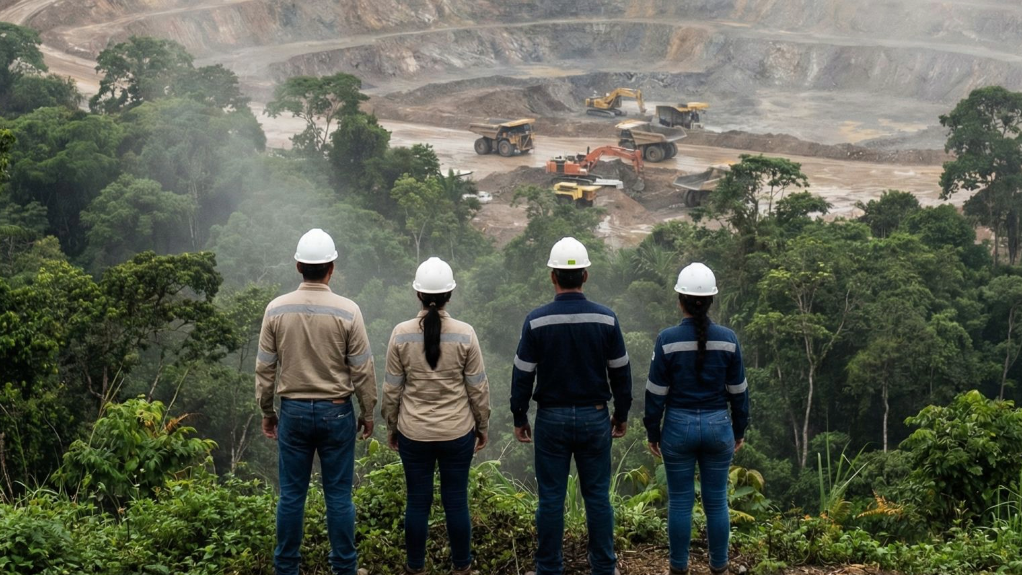
ESG TRENDS Freele and Dekker believe that mining operation owners ought to focus on access to capital, licence to operate, competitiveness and resilience


A volatile global order, intensifying climate extremes and the race for critical minerals are reshaping mining in 2026, say Canadian sustainability consultancy Sympact co-founders Elizabeth Freele and Rachel Dekker.
Geopolitics, investor expectations and social tensions are converging on mines and supply chains worldwide, while environmental, social and governance (ESG) continues to be politically contentious in some jurisdictions. Yet the underlying drivers of risk, regulation, capital and community expectation are “as relevant as ever”.
“For 2026, the real question is less whether ESG matters and more how mining leaders focus on what really moves the dial: resilience, access to capital, licence to operate and competitiveness.”
This piece focuses on Freele and Dekker’s top five global trends shaping ESG in mining.
Geopolitics and Mining’s Risk Landscape
Geopolitics is becoming a primary driver of mining risk; nearly half of respondents to White & Case’s ‘Mining & Metals 2025’ survey see geopolitical fragmentation as a key determinant of sector activity, ahead of traditional market fundamentals. “Russia’s war in Ukraine, conflict in the Middle East and recurring coups in parts of Africa are altering trade routes, raising costs and complicating project delivery.”
Freele and Dekker note that strategic security analyses now position critical minerals as a “theatre of great-power rivalry”, with export controls, investment screening, stockpiling and “friend-shoring” becoming fundamental tools of statecraft. This magnifies ESG risk, particularly across governance and human rights.
“In the year ahead, most mining leaders will need to treat geopolitics as core board-level risk, diversifying supply chains, scenario-planning for sanctions and conflict, and integrating geopolitical risk assessment into due diligence and strategic decision-making,” they note.
ESG Backlash and Strategic Recalibration
ESG and diversity, equity and inclusion (DEI) have become ‘lightning rods’ in wider political debates, yet most companies are refining rather than abandoning their strategies. While the current US administration's efforts to de‑emphasise climate and social risk in financial regulation have material impacts for companies with US-based financing, they have not eliminated ESG as a global capital requirement.
Eighty percent of large companies are “reworking, not exiting” ESG, with a similar number of corporate leaders seeing climate transition as a source of growth, according to a recent HSBC survey. Further, nearly all survey respondents expect sustainability to be critical to competitiveness.
AI Governance Gaps Create Liability Risk
Freele and Dekker point out that AI is “rapidly becoming core to mining ESG management and an ESG topic in its own right”.
While ESG-focused analyses continue to warn of significant environmental footprint complexities, social and labour issues, bias and explainability challenges and cybersecurity vulnerabilities, recent AI governance surveys suggest that two-thirds of organisations cannot reliably enforce limits on how AI systems are used, and six in ten lack effective kill switches. Left unchecked, AI quickly becomes a major governance liability.
Tailings Governance Shifts from Voluntary
The ICMM’s November 2025 progress report confirmed that 67% of member facilities have achieved full Global Industry Standard on Tailings Management conformance, with the remainder progressing more slowly than anticipated.
Meanwhile, the November 2025 UK High Court ruling on BHP's liability for Samarco shows that failure to meet standard-of-care tailings management standards can constitute negligence across multiple jurisdictions.
Freele and Dekker add that the World Mine Tailings Failures database forecasts a further 13 catastrophic failures between 2025 and 2029, “signalling that tailings governance is now an enterprise risk imperative”. They expect lenders and regulators to increase focus on conformance for non-compliant facilities; scenario analyses exploring climate-induced failure triggers; third-party assurance; and proper integration of tailings risk into capital allocation and financing decisions.
Critical Minerals Rush Deepens Social Tensions
“The rush for critical minerals is intensifying mining’s long-standing social and security risks,” Freele and Dekker state. They cite the International Energy Agency's ‘Global Critical Minerals Outlook 2025’, which forecasts steep demand growth and, absent stronger governance, more social conflicts over land, water and labour.
The Business & Human Rights Resource Centre's Transition Minerals Tracker 2025 documents 835 allegations of abuse linked to major critical minerals operations over the past 15 years, including 157 attacks on human rights defenders, 225 worker impacts and ongoing disproportionate harm to Indigenous Peoples.
Further, the UN’s Office on Drugs and Crime’s 2025 Minerals Crime report highlights expanding criminal and conflict-linked activity in artisanal mining, further heightening security and human rights risks.
“The industry faces an uncomfortable tension: how to secure minerals essential to defence, energy and technology without repeating the inequality, violence, environmental devastation and corruption of past mining booms.”
Other trends include climate change-related impacts and their effects on operations and transition plans; increased focus on nature and water risks, including biodiversity loss and ecosystem degradation; increased shareholder scrutiny; regulators ramping up pressure on companies to demonstrate value chain accountability; and standardisation of ESG frameworks and reporting leading to increased enforcement from regulators.
Freele and Dekker note that 2026 will continue to challenge mining companies to move beyond generic ESG narratives and aspirations to disciplined execution in an environment of political polarisation and tighter regulation. This challenge will be less about “doing good” and more about protecting and creating value by reducing downside risk, securing scarce capital, winning permits and offtakes and maintaining the trust of workers, communities and governments.
Article Enquiry
Email Article
Save Article
Feedback
To advertise email advertising@creamermedia.co.za or click here
Research Reports
Projects

Latest Multimedia

Latest News
Showroom
We supply customers with practical affordable solutions for their testing needs. Our products include benchtop, portable, in-line process control...
VISIT SHOWROOM
Your global lifecycle technology & service partner for materials & minerals processing equipment for coal, iron ore, copper, manganese & other...
VISIT SHOWROOM
Press Office
Announcements
What's On
Subscribe to improve your user experience...
Option 1 (equivalent of R125 a month):
Receive a weekly copy of Creamer Media's Engineering News & Mining Weekly magazine
(print copy for those in South Africa and e-magazine for those outside of South Africa)
Receive daily email newsletters
Access to full search results
Access archive of magazine back copies
Access to Projects in Progress
Access to ONE Research Report of your choice in PDF format
Option 2 (equivalent of R375 a month):
All benefits from Option 1
PLUS
Access to Creamer Media's Research Channel Africa for ALL Research Reports, in PDF format, on various industrial and mining sectors
including Electricity; Water; Energy Transition; Hydrogen; Roads, Rail and Ports; Coal; Gold; Platinum; Battery Metals; etc.
Already a subscriber?
Forgotten your password?
Receive weekly copy of Creamer Media's Engineering News & Mining Weekly magazine (print copy for those in South Africa and e-magazine for those outside of South Africa)
➕
Recieve daily email newsletters
➕
Access to full search results
➕
Access archive of magazine back copies
➕
Access to Projects in Progress
➕
Access to ONE Research Report of your choice in PDF format
RESEARCH CHANNEL AFRICA
R4500 (equivalent of R375 a month)
SUBSCRIBEAll benefits from Option 1
➕
Access to Creamer Media's Research Channel Africa for ALL Research Reports on various industrial and mining sectors, in PDF format, including on:
Electricity
➕
Water
➕
Energy Transition
➕
Hydrogen
➕
Roads, Rail and Ports
➕
Coal
➕
Gold
➕
Platinum
➕
Battery Metals
➕
etc.
Receive all benefits from Option 1 or Option 2 delivered to numerous people at your company
➕
Multiple User names and Passwords for simultaneous log-ins
➕
Intranet integration access to all in your organisation