Minerals Council pushes for structural reform acceleration

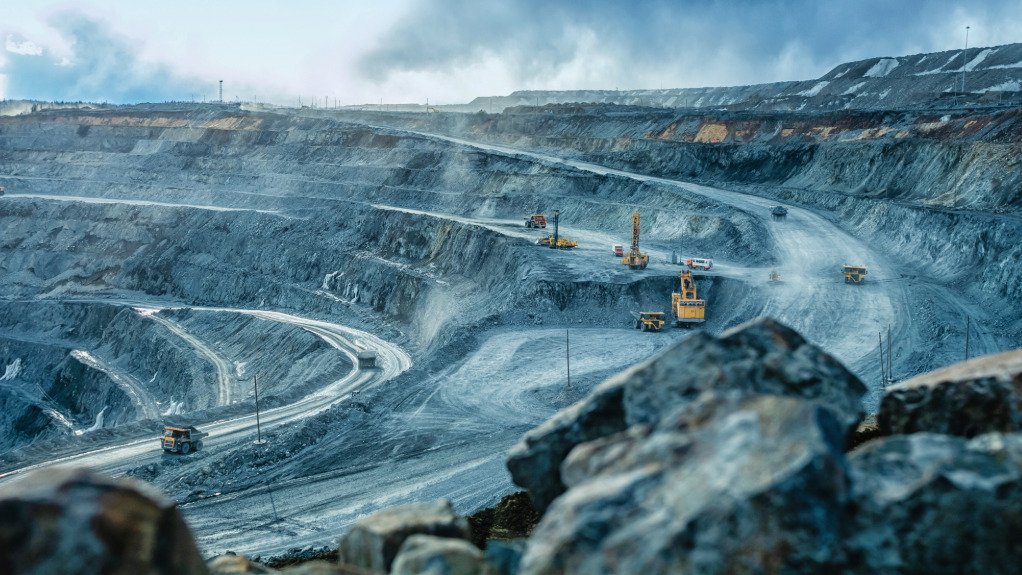
REFORMS NEEDED FOR COMPETITIVENESS Without urgent improvements in energy reliability, logistics performance and regulatory efficiency, Africa risks losing further ground to global mining competitors


This year must be one of decisive, demonstrable progress in stabilising energy supply, improving logistics performance and restoring regulatory efficiency as South Africa prepares to engage investors at this year’s Investing in African Mining Indaba, says mining industry employer organisation Minerals Council South Africa.
The advocacy organisation reiterates that without a materially improved operating environment, the country will continue to diminish in competitiveness compared to peer jurisdictions.
The Minerals Council notes with concern that exploration activity remains subdued, with South Africa attracting less than 1% of global exploration spend for several consecutive years.
This trend, it argues, is inconsistent with the country’s geological endowment and poses long-term risks to the sustainability of mining, employment, regional economic development and future production.
The mining sector directly employs more than 470 000 people, rising to nearly 900 000 when the associated supply chain employment is included.
Using a conservative multiplier formula, the Minerals Council notes that mining and its related industries support about 3.6-million dependants, underscoring the national importance of revitalising exploration so that future mines can materialise.
The industry is heavily involved in training its employees, and, equally importantly, within mine-host communities, with a special emphasis on unemployed youths.
Training provided to mine employees more than doubled in 2024 from the previous year, with companies delivering nearly 860 000 training interventions, up from 407 899 in 2023, according to a study by the Mining Qualifications Authority (MQA).
Between 2021 and 2024, the mining industry implemented an average of more than 601 000 training programmes a year for employees, the Minerals Council highlights, adding that most of the training was short courses, with safety as the dominant theme.
In the five years to 2025, more than R1-billion was spent on providing higher- education bursaries.
In 2024, 51 430 community members – nearly 78% of whom were unemployed – received training funded by mining companies, rising steadily from 41 130 in 2021 as the industry increases its focus on developing local skills, education and capacity for work within mining or in other businesses.
The training was focused on young people, with the provision of more than 12 800 bursaries in 2024 and nearly 10 800 short courses, which are designed to provide skills in a time-efficient manner.
In total, 36 520 youth and 3 300 school children received training during 2024. This is critical for the creation of sustainable communities and local economies, post-mining.
This year, the Minerals Council will continue working with government, industry partners and the Presidency through the coordinated crisis structures to address energy, logistics, crime and corruption.
While the organisation acknowledges improvements in electricity availability, it warns that the cost of power remains “structurally uncompetitive”, as electricity tariffs for large industrial users have risen by more than 900% since 2008, thereby eroding operational margins and constraining smelting capacity.
On logistics, the Minerals Council observes that the “alarming decline” in rail performance has stabilised, with early indications of recovery of key rail corridors; however, deep structural reform remains essential to further revitalisation.
Including the private sector in rail and port operations through transparent, timely concessioning processes is a core component of the Minerals Council’s advocacy, as reliable and predictable export corridors are critical for bulk producers aiming to optimise output and reinvest in South African operations.
Policy Reform Imperative
Regulatory reform remains a central priority for the Minerals Council, as it continues to push for policy certainty and improved investment conditions in the mining sector.
With members accounting for 90% of South Africa’s yearly mineral production by value, it will continue to engage the Department of Mineral and Petroleum Resources on the Mineral Resources Development Bill.
The Minerals Council has submitted concerns pertaining to the Bill in its current form, saying it does not provide the clarity, predictability or investment incentives required to stimulate new minerals exploration and mining project development.
Central to the Minerals Council’s regulatory agenda is the implementation of a modern and transparent mining cadastre that aligns with international best practice. Such a system, it stresses, is essential for reducing administrative backlogs, improving rights management and restoring investor confidence.
Further, the Minerals Council emphasises the need for integrated and time-bound permitting processes across environmental, water-use and mining legislation.
Continental Cooperation
In keeping with the Investing in African Mining Indaba 2026’s emphasis on continental cooperation, the Minerals Council highlights its participation in the Mining Industry Association of Southern Africa, which brings together ten national mining associations.
Although cross-border corridor development, critical minerals integration and green-energy frameworks remain governmental responsibilities, the Minerals Council believes that coordinated regional advocacy is necessary to support stable and competitive mining jurisdictions across sub-Saharan Africa.
Learning from each jurisdiction and adopting best practices in the region will stimulate investment and growth to the benefit of all living there.
On social performance, the organisation will again call for reform of social and labour plans (SLPs), as it has long argued that the strict ringfencing of SLPs to single operations limits impact, while shared, area-based SLPs would allow for larger-scale, more sustainable community development.
The Minerals Council also stresses that improved municipal governance capacity is essential for the effective design and implementation of community programmes.
Article Enquiry
Email Article
Save Article
Feedback
To advertise email advertising@creamermedia.co.za or click here
Research Reports

Projects

Latest Multimedia

Latest News

Showroom
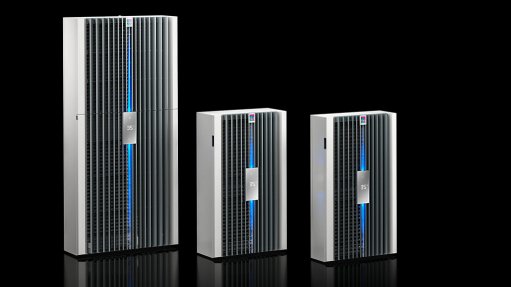
Rittal is a world leading provider of top-quality integrated systems for enclosures, power distribution, climate control, IT infrastructure and...
VISIT SHOWROOM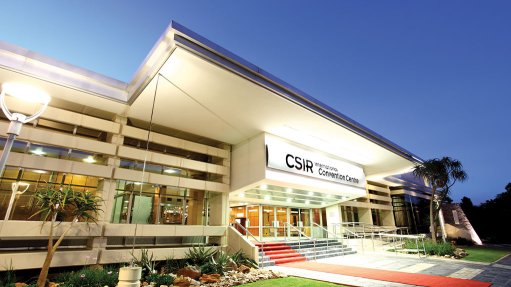
CSIR International Convention Centre (CSIR ICC) - the leading conference and events venue in Pretoria/Tshwane.
VISIT SHOWROOM


Announcements
What's On
Subscribe to improve your user experience...
Option 1 (equivalent of R125 a month):
Receive a weekly copy of Creamer Media's Engineering News & Mining Weekly magazine
(print copy for those in South Africa and e-magazine for those outside of South Africa)
Receive daily email newsletters
Access to full search results
Access archive of magazine back copies
Access to Projects in Progress
Access to ONE Research Report of your choice in PDF format
Option 2 (equivalent of R375 a month):
All benefits from Option 1
PLUS
Access to Creamer Media's Research Channel Africa for ALL Research Reports, in PDF format, on various industrial and mining sectors
including Electricity; Water; Energy Transition; Hydrogen; Roads, Rail and Ports; Coal; Gold; Platinum; Battery Metals; etc.
Already a subscriber?
Forgotten your password?
Receive weekly copy of Creamer Media's Engineering News & Mining Weekly magazine (print copy for those in South Africa and e-magazine for those outside of South Africa)
➕
Recieve daily email newsletters
➕
Access to full search results
➕
Access archive of magazine back copies
➕
Access to Projects in Progress
➕
Access to ONE Research Report of your choice in PDF format
RESEARCH CHANNEL AFRICA
R4500 (equivalent of R375 a month)
SUBSCRIBEAll benefits from Option 1
➕
Access to Creamer Media's Research Channel Africa for ALL Research Reports on various industrial and mining sectors, in PDF format, including on:
Electricity
➕
Water
➕
Energy Transition
➕
Hydrogen
➕
Roads, Rail and Ports
➕
Coal
➕
Gold
➕
Platinum
➕
Battery Metals
➕
etc.
Receive all benefits from Option 1 or Option 2 delivered to numerous people at your company
➕
Multiple User names and Passwords for simultaneous log-ins
➕
Intranet integration access to all in your organisation