Modern fire-fighting systems improve mine safety

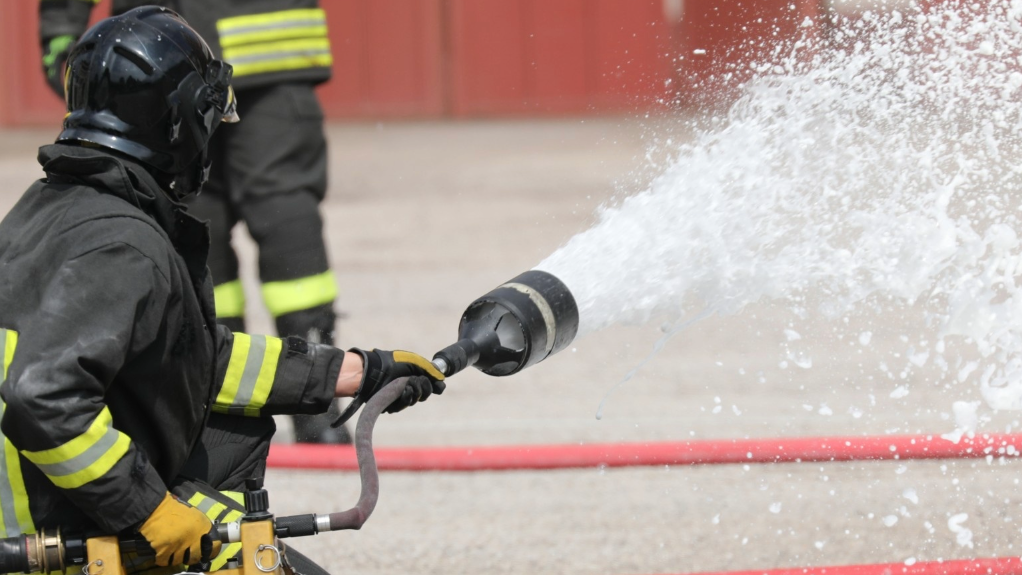
FORTIFIED FIRE SOLUTIONS ASP Fire’s aqueous film-forming foam spreads quickly across the surface of the fuel, forming a thin film that seals the surface and suppresses the release of flammable vapours


Fires and potential explosions at mine sites can be averted and mitigated against with the proper use of fire- suppressing technologies, such as water-mist and aqueous film-forming foam (AFFF) systems, reports fire detection and suppression solutions company ASP Fire CEO Michael van Niekerk.
Mines and mining plant are hazardous environments, with high temperatures, heavy machinery and the presence of hydrocarbon fuels, thereby presenting various fire initiation possibilities.
ASP Fire provides a wide range of water-mist and AFFF systems developed to effectively deal with fires at mining operations, consequently improving the safety and protection levels for on-the-ground mine personnel.
ASP Fire’s AFFF system is effective in mining environments, especially where equipment and machinery use flammable products, such as fuels.
This solution plays a “vital” role in suppressing flammable vapours and disallowing reignition, which are commonplace risks at refuelling areas, ruptured hoses and leaking tanks.
The AFFF systems produce a low-expansion and free-flowing foam, with a vapour-suppressing film for resisting heat and stopping oxygen from reaching fuel, which, Van Niekerk says, is efficient for dispersing across liquid fuel surfaces.
“AFFF is designed specifically for flammable liquid and hydrocarbon fires. When discharged, the foam spreads quickly across the surface of the fuel, forming a thin film that seals the surface and suppresses the release of flammable vapours. This separates the fuel from oxygen, cools the surface and helps extinguish the fire while preventing re-ignition,” he explains.
Meanwhile, ASP Fire’s water-mist system is effective for confined or enclosed spaces, such as those associated with mining operations, notes Van Niekerk.
This system produces small water droplets that create a large surface area, allowing for the rapid absorption of heat from flames, hot gases and other surfaces, consequently suppressing fires effectively, he states.
These systems make use of low-volume, but high-pressure, water-flow rates.
Van Niekerk notes that the water-mist systems produce the fine droplets through specially-engineered nozzles, which allow for high-heat absorption and quick cooling, while reducing water damage and clean-up, post-fire incidents.
“As the droplets evaporate, they cool the fire and displace oxygen locally, slowing the combustion process. This combination of rapid cooling, heat absorption and oxygen displacement enables water mist to control or extinguish fires using significantly less water than conventional sprinklers,” he elaborates.
Unlike conventional fire suppression and cooling methods, such as sprinklers and dry chemical powder, Van Niekerk says that AFFF systems are effective in extinguishing the fire at the point-of-origin, while water-mist systems provide effective cooling and heat absorption with little to no residue.
In designing firefighting systems at mines, Van Niekerk suggests that mining operations should conduct related continuous inspections, firefighting system maintenance and associated personnel training, and to shift away from foams that contain polyfluoroalkyl substances.
Here, a detailed risk assessment can be conducted at the mining operation before selecting a fire suppression system, he suggests.
“Working with experienced fire engineering specialists, such as ASP Fire, who understand both international standards and the realities of African mining operations, is critical to achieving solutions that are not only compliant, but practical, reliable and sustainable over the long term,” concludes Van Niekerk.
Article Enquiry
Email Article
Save Article
Feedback
To advertise email advertising@creamermedia.co.za or click here
Research Reports
Projects

Latest Multimedia

Latest News

Showroom

Sulzer South Africa, established in 1922, partners with critical industries like power, oil & gas, water, mining, and chemicals to boost...
VISIT SHOWROOM
Stewarts & Lloyds is a leading steel, tube, and engineering product supplier in South Africa.
VISIT SHOWROOM



Announcements
What's On
Subscribe to improve your user experience...
Option 1 (equivalent of R125 a month):
Receive a weekly copy of Creamer Media's Engineering News & Mining Weekly magazine
(print copy for those in South Africa and e-magazine for those outside of South Africa)
Receive daily email newsletters
Access to full search results
Access archive of magazine back copies
Access to Projects in Progress
Access to ONE Research Report of your choice in PDF format
Option 2 (equivalent of R375 a month):
All benefits from Option 1
PLUS
Access to Creamer Media's Research Channel Africa for ALL Research Reports, in PDF format, on various industrial and mining sectors
including Electricity; Water; Energy Transition; Hydrogen; Roads, Rail and Ports; Coal; Gold; Platinum; Battery Metals; etc.
Already a subscriber?
Forgotten your password?
Receive weekly copy of Creamer Media's Engineering News & Mining Weekly magazine (print copy for those in South Africa and e-magazine for those outside of South Africa)
➕
Recieve daily email newsletters
➕
Access to full search results
➕
Access archive of magazine back copies
➕
Access to Projects in Progress
➕
Access to ONE Research Report of your choice in PDF format
RESEARCH CHANNEL AFRICA
R4500 (equivalent of R375 a month)
SUBSCRIBEAll benefits from Option 1
➕
Access to Creamer Media's Research Channel Africa for ALL Research Reports on various industrial and mining sectors, in PDF format, including on:
Electricity
➕
Water
➕
Energy Transition
➕
Hydrogen
➕
Roads, Rail and Ports
➕
Coal
➕
Gold
➕
Platinum
➕
Battery Metals
➕
etc.
Receive all benefits from Option 1 or Option 2 delivered to numerous people at your company
➕
Multiple User names and Passwords for simultaneous log-ins
➕
Intranet integration access to all in your organisation