Potential update could increase compliance costs

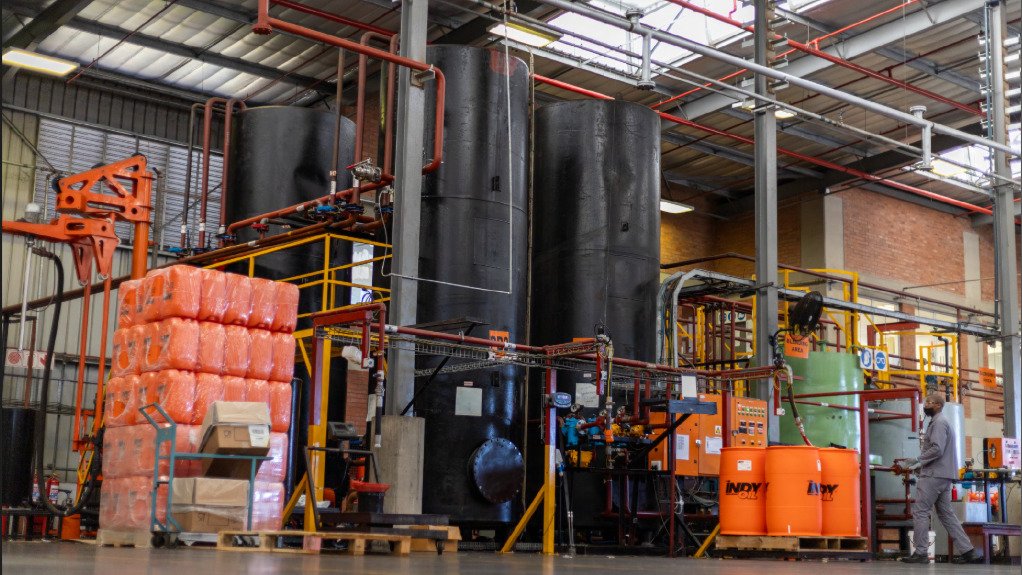
INDUSTRY RIPPLES Automotive suppliers and OEMs will likely face tighter regulatory oversight on how lubricants are sourced, stored, documented and handled


While the Draft Petroleum Products Bill aims to replace the outdated 1977 Petroleum Products Act, its stricter regulations could increase compliance costs to varying degrees across the downstream petroleum value chain, says industry association National Association of Automotive Component and Allied Manufacturers (NAACAM) analyst Nomqhele JD Dube.
The Bill is expected to strengthen licensing, compliance and enforcement mechanisms across the downstream petroleum value chain, including the blending and distributing of lubricants and base oils, she adds.
Consequently, automotive suppliers and original-equipment manufacturers (OEMs) will likely face tighter regulatory oversight on how lubricants are sourced, stored, documented and handled.
Dube adds that stricter licensing and traceability could increase compliance costs associated with documenting quality assurance and environmental reporting, as well as health and safety inspections for suppliers and lubricant producers.
“For globally competitive, export-oriented OEM programmes, this means higher administrative and quality-control overheads to maintain compliance and demonstrate adherence to both local and foreign regulatory regimes.”
She elaborates that suppliers may need to invest in digital tracking systems; third-party testing, particularly for chemical content; and integrate compliance data into OEM qualification processes, which raises operating costs, but mitigates export-related risks.
This could also disadvantage smaller suppliers that lack capital for compliance infrastructure without policy support or shared industry initiatives, where failure to align with global standards could result in losing OEM contracts.
International Impact
South African components manufacturers and lubricant formulators must meet global safety and performance specifications set out by international standards organisations, such as the American Petroleum Institute, the European Automobile Manufacturers’ Association and International Organisation for Standardisation, to remain eligible as suppliers in global programmes.
Compliance with global safety and performance specifications ensures that local products can be used in OEM engines and systems without performance or warranty issues, and will not be blocked by export restrictions elsewhere, Dube says.
She notes that international chemical regulation is dynamic and often stricter than local policy. Compliance often demands ongoing monitoring, testing and reformulation, which requires technical expertise and investment in research and development and testing facilities.
One such case is increased restrictions on per- and polyfluoroalkyl substances (PFAS) and other persistent chemistries used in certain high-performance lubricant and fluid applications, owing to their high- temperature resistance.
Increased global restrictions are prompting the reformulation of additives and hydraulic fluids, with suppliers having to balance sustainability with mechanical performance, and secure OEM qualification for new formulations, she adds.
However, reformulating away from PFAS requires longer testing cycles and validation to ensure chemical alternatives meet performance and durability specifications, particularly for high-load engine parts and transmission systems.
“NAACAM members can leverage global regulatory alignment as a differentiator for export markets, while expanded on-site oil management, oil analysis and digital monitoring services can create new service lines that enhance competitiveness,” she concludes.
Article Enquiry
Email Article
Save Article
Feedback
To advertise email advertising@creamermedia.co.za or click here
Research Reports

Projects

Latest Multimedia

Latest News


Showroom
The Steel Tube Export Association of South Africa was established to develop sustainable, internationally competitive carbon steel tube and pipe...
VISIT SHOWROOM
Established on 1 March, 2000, by Barries Barnard, Advanced Fire Suppression Technologies (AFST) and the Advanced Group stands as Sub-Saharan...
VISIT SHOWROOM


Press Office
Announcements
What's On
Subscribe to improve your user experience...
Option 1 (equivalent of R125 a month):
Receive a weekly copy of Creamer Media's Engineering News & Mining Weekly magazine
(print copy for those in South Africa and e-magazine for those outside of South Africa)
Receive daily email newsletters
Access to full search results
Access archive of magazine back copies
Access to Projects in Progress
Access to ONE Research Report of your choice in PDF format
Option 2 (equivalent of R375 a month):
All benefits from Option 1
PLUS
Access to Creamer Media's Research Channel Africa for ALL Research Reports, in PDF format, on various industrial and mining sectors
including Electricity; Water; Energy Transition; Hydrogen; Roads, Rail and Ports; Coal; Gold; Platinum; Battery Metals; etc.
Already a subscriber?
Forgotten your password?
Receive weekly copy of Creamer Media's Engineering News & Mining Weekly magazine (print copy for those in South Africa and e-magazine for those outside of South Africa)
➕
Recieve daily email newsletters
➕
Access to full search results
➕
Access archive of magazine back copies
➕
Access to Projects in Progress
➕
Access to ONE Research Report of your choice in PDF format
RESEARCH CHANNEL AFRICA
R4500 (equivalent of R375 a month)
SUBSCRIBEAll benefits from Option 1
➕
Access to Creamer Media's Research Channel Africa for ALL Research Reports on various industrial and mining sectors, in PDF format, including on:
Electricity
➕
Water
➕
Energy Transition
➕
Hydrogen
➕
Roads, Rail and Ports
➕
Coal
➕
Gold
➕
Platinum
➕
Battery Metals
➕
etc.
Receive all benefits from Option 1 or Option 2 delivered to numerous people at your company
➕
Multiple User names and Passwords for simultaneous log-ins
➕
Intranet integration access to all in your organisation