Reducing Time-to-Production in Mining Through Deployable Infrastructure




This article has been supplied.
Key Highlights
- Why infrastructure delays are one of the biggest barriers to early production
- How deployable systems allow mining projects to mobilise faster
- The role of flexibility in earlystage and evolving mine plans
- Why local experience matters when deploying infrastructure in Australia
Time-to-production has become one of the defining pressures in modern mining. With capital costs rising and market conditions shifting quickly, delays between project approval and operational readiness can significantly affect project viability. Every week spent waiting for infrastructure to be built, approved, or commissioned is a week where value is not being realised.
In response, mining operators are rethinking how early-stage infrastructure is delivered. Rather than relying solely on permanent construction from day one, many projects are turning to deployable infrastructure to establish capability sooner and reduce exposure to delays. This shift is changing how mining sites are mobilised and how quickly they can move toward production.
Why traditional mining infrastructure slows production timelines
Conventional mining infrastructure is often designed for long-term certainty. Permanent buildings, utilities, and facilities require detailed planning, approvals, construction schedules, and specialist labour. In remote or regional locations, these challenges are amplified by logistics, weather, and workforce constraints.
For early-stage projects, this approach can create a mismatch between infrastructure timelines and operational needs. Exploration, feasibility, and early development phases still require offices, control rooms, workshops, and accommodation, but committing to permanent builds too early can introduce unnecessary risk.
As a result, infrastructure delivery becomes a critical path item that can delay mobilisation and push back production targets.
What deployable infrastructure changes at the project outset
Deployable infrastructure shifts the timeline forward. By using modular, relocatable systems, mining projects can establish essential operational capability much earlier in the lifecycle. Facilities can be delivered, installed, and commissioned in a fraction of the time required for traditional construction.
This allows teams to begin site activities while longer-term infrastructure planning continues in parallel. Rather than waiting for permanent facilities to be completed, operations can move ahead with fit-for-purpose infrastructure that meets immediate needs.
For project teams, this parallel approach reduces idle time and helps maintain momentum during critical early phases.
Early-stage mining operations and rapid site establishment
In the early stages of a mining project, speed and adaptability matter more than permanence. Deployable infrastructure supports rapid establishment of site offices, control rooms, workshops, storage facilities, and utilities infrastructure that allow teams to operate effectively from day one.
Exploration camps, temporary processing support, and operational hubs can be set up quickly, providing a functional base for decision-making and coordination. This is particularly valuable in remote locations where access to services is limited and construction windows are narrow.
By enabling faster site establishment, deployable infrastructure helps bridge the gap between approval and active operations.
Flexibility as mine plans evolve
Mine plans rarely remain static. As geological understanding improves and production priorities shift, infrastructure requirements often change. Permanent builds designed early can become misaligned with later operational realities.
Deployable infrastructure offers a level of flexibility that traditional construction cannot. Facilities can be relocated, reconfigured, or expanded as the project evolves. This reduces the risk of stranded assets and allows infrastructure to move with the operation rather than constrain it.
For mining projects progressing through staged development, this adaptability supports better alignment between infrastructure investment and project certainty.
Risk reduction through modular and relocatable systems
Reducing time-to-production is closely linked to managing risk. Large upfront capital commitments to permanent infrastructure increase exposure during periods of uncertainty. Deployable infrastructure allows for staged investment, where capacity is added as confidence in the project grows.
This approach limits exposure to delays caused by construction issues, weather events, or labour shortages. It also provides an exit strategy if project conditions change, as infrastructure can be redeployed to other sites rather than written off.
From a risk management perspective, modular systems support more disciplined capital allocation.
The role of experienced local providers in deployment success
The success of deployable infrastructure in mining depends heavily on local knowledge and execution capability. For example, Australian mining environments present unique challenges, from remote logistics and extreme conditions to regulatory and safety requirements.
Working with a local provider such as SCS Global helps ensure deployable infrastructure is designed, delivered, and supported with these realities in mind. Local experience supports smoother mobilisation, better compliance outcomes, and infrastructure that is fit for Australian operating conditions.
This local understanding becomes especially important when timelines are tight and operational disruption must be minimised.
From mobilisation to production readiness
By enabling earlier mobilisation, deployable infrastructure compresses the timeline between project approval and production readiness. Teams can establish operations, gather data, and refine plans while permanent infrastructure decisions are still being finalised.
This staged approach allows mining projects to move toward production with greater confidence and less delay. Rather than infrastructure acting as a bottleneck, it becomes an enabler of progress.
A smarter approach to accelerating production
Reducing time-to-production is not just about building faster. It’s about aligning infrastructure decisions with the realities of how mining projects develop. Deployable infrastructure supports this alignment by offering speed, flexibility, and risk control in the early stages of a project.
As mining operations continue to face pressure to deliver value sooner, deployable infrastructure is becoming a strategic tool rather than a temporary solution. For projects seeking to move from mobilisation to production efficiently, it provides a practical pathway to faster, more resilient outcomes.
Article Enquiry
Email Article
Save Article
Feedback
To advertise email advertising@creamermedia.co.za or click here
Research Reports

Projects
Latest Multimedia

Latest News
Showroom

The Steel Tube Export Association of South Africa was established to develop sustainable, internationally competitive carbon steel tube and pipe...
VISIT SHOWROOM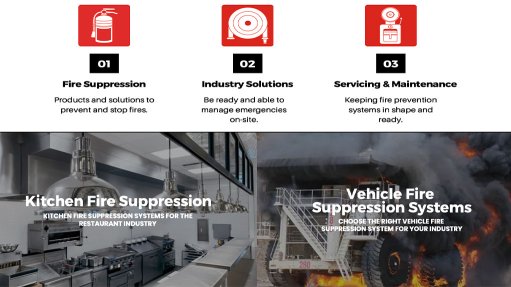
Established on 1 March, 2000, by Barries Barnard, Advanced Fire Suppression Technologies (AFST) and the Advanced Group stands as Sub-Saharan...
VISIT SHOWROOM


Press Office
Announcements
What's On
Subscribe to improve your user experience...
Option 1 (equivalent of R125 a month):
Receive a weekly copy of Creamer Media's Engineering News & Mining Weekly magazine
(print copy for those in South Africa and e-magazine for those outside of South Africa)
Receive daily email newsletters
Access to full search results
Access archive of magazine back copies
Access to Projects in Progress
Access to ONE Research Report of your choice in PDF format
Option 2 (equivalent of R375 a month):
All benefits from Option 1
PLUS
Access to Creamer Media's Research Channel Africa for ALL Research Reports, in PDF format, on various industrial and mining sectors
including Electricity; Water; Energy Transition; Hydrogen; Roads, Rail and Ports; Coal; Gold; Platinum; Battery Metals; etc.
Already a subscriber?
Forgotten your password?
Receive weekly copy of Creamer Media's Engineering News & Mining Weekly magazine (print copy for those in South Africa and e-magazine for those outside of South Africa)
➕
Recieve daily email newsletters
➕
Access to full search results
➕
Access archive of magazine back copies
➕
Access to Projects in Progress
➕
Access to ONE Research Report of your choice in PDF format
RESEARCH CHANNEL AFRICA
R4500 (equivalent of R375 a month)
SUBSCRIBEAll benefits from Option 1
➕
Access to Creamer Media's Research Channel Africa for ALL Research Reports on various industrial and mining sectors, in PDF format, including on:
Electricity
➕
Water
➕
Energy Transition
➕
Hydrogen
➕
Roads, Rail and Ports
➕
Coal
➕
Gold
➕
Platinum
➕
Battery Metals
➕
etc.
Receive all benefits from Option 1 or Option 2 delivered to numerous people at your company
➕
Multiple User names and Passwords for simultaneous log-ins
➕
Intranet integration access to all in your organisation