Shaft scanner sheds light on issues, safety

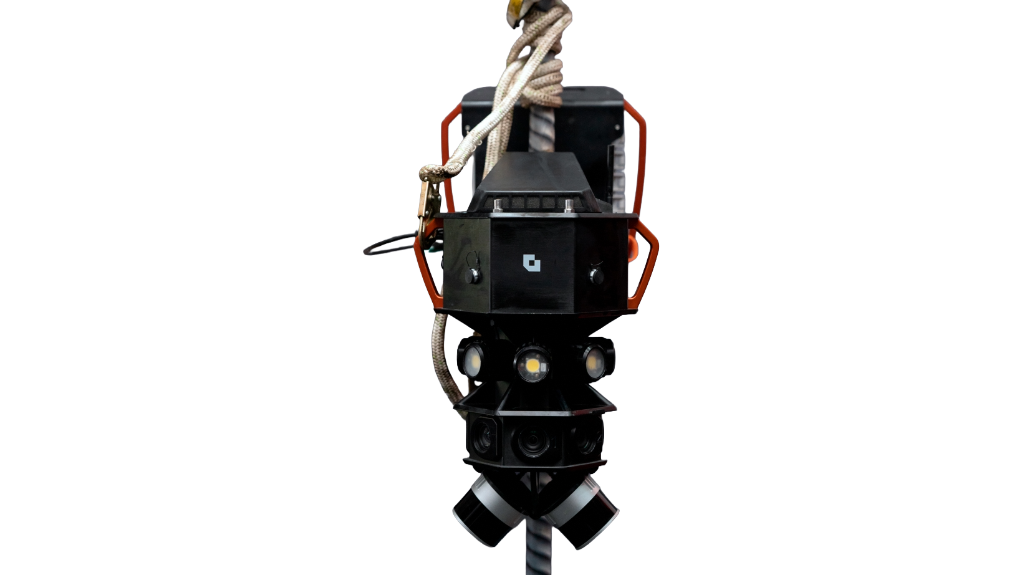
LAZARUSS SCANNER The Lazaruss Scanner optimises mine shaft inspection with visual representations and cloud-based datasets
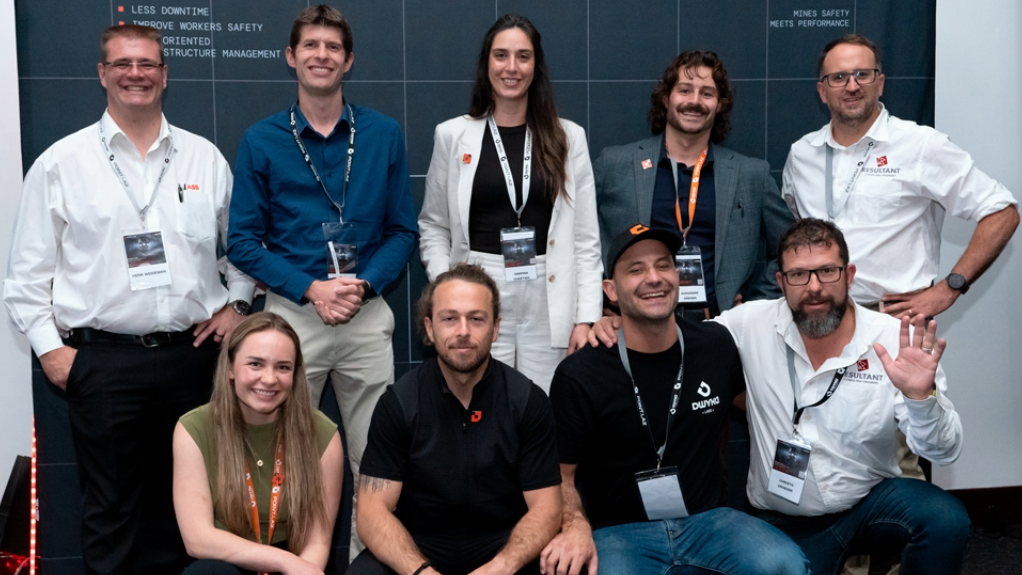
SHAFT SAFETY The members involved with the launch of the Lazaruss Scanner in South Africa


To enhance mine shaft safety, mining technology integration company Dwyka Mining Services (Dwyka), in partnership with mine shaft and mine safety solutions company Point.Laz, launched Point.Laz’s Lazaruss Scanner in Africa. The Lazaruss scanner uses advanced scanning technology to inspect mine shafts and creates a better understanding of the dynamic environments of this complex underground mining infrastructure.
The scanner enhances mine shaft inspection, as it allows for access to visual representations of a shaft’s condition and, subsequently, sends large datasets to a cloud-based platform. Mine personnel then analyses the data to make informed decisions about irregularities in a shaft.
The scanner can be installed in less than 10 minutes and is attached to a mine’s winder shaft cable, following which it passes through the mine shaft to conduct inspections.
During the Shaft 4.0 event on November 12, 2025, at Dwyka’s South Africa headquarters in Midrand, Dwyka CEO Jamie van Schoor said traditional shaft inspection could be “drastically improved” by the Lazaruss Scanner, as it provided video material for the entire length of a mine shaft, where problem areas could be earmarked for further inspection and remedial work.
“Where traditional methods were time-consuming and delivered patchy results, the scanner now allows for full visibility and traceability for progress and remediation work. We feel that this is the future of shaft inspection.”
Using the scanner saves time in reallocating maintenance efforts in deep-level shafts when compared to using traditional methods such as manual shaft inspections, he adds.
The Lazaruss Scanner is equipped with various application benefits that will optimise and streamline mine shaft inspection processes while improving safety measures for mine shaft personnel, says Point.Laz CEO and founder Alexandre Grenier.
“The shaft is a dynamic place, with many ways in which you can hurt yourself . . . You’re sitting in a cage, there are buntons [a horizontal steel or timber beam fixed across the shaft lining] moving, and humans are exposed to these and other risks. The environment is a bit [more] riskier than any other mining environment.”
The visualisation provided by the scanner allows for seamless visual inspections, with a 360º view of the shaft, which is then translated into fact-based data, adds Grenier.
The data can then be used to plan accurately for condition improvement or shaft predictive maintenance, making it easy to identify issues in the shaft, track progress on remediation over time and priortise how much time should be spent by shaft personnel on repair work, says Van Schoor.
He adds that the scanner is a “revolutionary” product, as mine shaft managers and personnel maintaining such infrastructure can conduct remote shaft inspections.
“The laser scanning output can be used for scanning geometries within that environment without having to put humans in harm’s way,” says Van Schoor.
As a result, mine shaft maintenance personnel are empowered to select the correct tools for site-specific repair work and are provided with the exact location of the problem areas.
“The [longer] you are exposed to the environment, the more likely it is that there are going to be incidents. Helping the miners reduce their exposure to the mine shaft . . . allows for the reducing of [that] risk . . .” adds Van Schoor.
Identifying Guide Issues
The Lazaruss Scanner also addresses potential issues caused by guide misalignment using sensors to provide an alignment analysis in the form of a PDF report that highlights the irregularities. Point.Laz is also developing a flagging system to indicate critical guides and a profiling tool to profile guides from gauge.
This also allows for a change detection in the mine shaft, including baseline deviation for detecting nominal shaft diameter changes, which is translated into automated PDF reports to identify the position of personnel in the shaft.
The scanner also allows for the automatic detection of changes between current and prior scans, making tracking changes over time an easy task, says Grenier.
The change detection capability also provides overview graphics that highlight shaft depth ranges that have the most common changes, enabling personnel to monitor overall changes in shafts.
The launch of the Lazaruss Scanner – which received investment support from automation company ABB Process Automation – will promote safer, more efficient and more sustainable mining operations in South Africa.
ABB project engineer Henk Weidemann says that there is a need for the validation and operational use of data in the South African mining sector, adding that sensor capability is no longer the main hurdle.
“Our partnership focus is on integrating autonomous inspection data into hoisting, safety and asset management systems, particularly in deep-level mining environments common in South Africa,” he says.
Further, Van Schoor says that a few South African mines have adopted the Lazaruss Scanner, and while human interaction remains a requirement for shaft inspections, this task can be made more autonomous and less hazardous using fit-for-purpose inspection equipment such as the scanner.
“[The] Lazaruss Scanner aims to give [mine shaft inspectors] ‘superpowers’, so that they can see in the dark, measure in the dark and . . . report with confidence around the entire shaft condition and health,” concludes Van Schoor.
Article Enquiry
Email Article
Save Article
Feedback
To advertise email advertising@creamermedia.co.za or click here
Research Reports

Projects
Latest Multimedia

Latest News
Showroom
Your global lifecycle technology & service partner for materials & minerals processing equipment for coal, iron ore, copper, manganese & other...
VISIT SHOWROOM
Rio Carb is an OEM (Original Equipment Manufacturer) of R-C700 Chromium Carbide (CrC) alloy clad wear plates and pipes used for heavy materials...
VISIT SHOWROOM


Announcements
What's On
Subscribe to improve your user experience...
Option 1 (equivalent of R125 a month):
Receive a weekly copy of Creamer Media's Engineering News & Mining Weekly magazine
(print copy for those in South Africa and e-magazine for those outside of South Africa)
Receive daily email newsletters
Access to full search results
Access archive of magazine back copies
Access to Projects in Progress
Access to ONE Research Report of your choice in PDF format
Option 2 (equivalent of R375 a month):
All benefits from Option 1
PLUS
Access to Creamer Media's Research Channel Africa for ALL Research Reports, in PDF format, on various industrial and mining sectors
including Electricity; Water; Energy Transition; Hydrogen; Roads, Rail and Ports; Coal; Gold; Platinum; Battery Metals; etc.
Already a subscriber?
Forgotten your password?
Receive weekly copy of Creamer Media's Engineering News & Mining Weekly magazine (print copy for those in South Africa and e-magazine for those outside of South Africa)
➕
Recieve daily email newsletters
➕
Access to full search results
➕
Access archive of magazine back copies
➕
Access to Projects in Progress
➕
Access to ONE Research Report of your choice in PDF format
RESEARCH CHANNEL AFRICA
R4500 (equivalent of R375 a month)
SUBSCRIBEAll benefits from Option 1
➕
Access to Creamer Media's Research Channel Africa for ALL Research Reports on various industrial and mining sectors, in PDF format, including on:
Electricity
➕
Water
➕
Energy Transition
➕
Hydrogen
➕
Roads, Rail and Ports
➕
Coal
➕
Gold
➕
Platinum
➕
Battery Metals
➕
etc.
Receive all benefits from Option 1 or Option 2 delivered to numerous people at your company
➕
Multiple User names and Passwords for simultaneous log-ins
➕
Intranet integration access to all in your organisation