Wetlands: A foundation for all livelihoods





This article has been supplied.
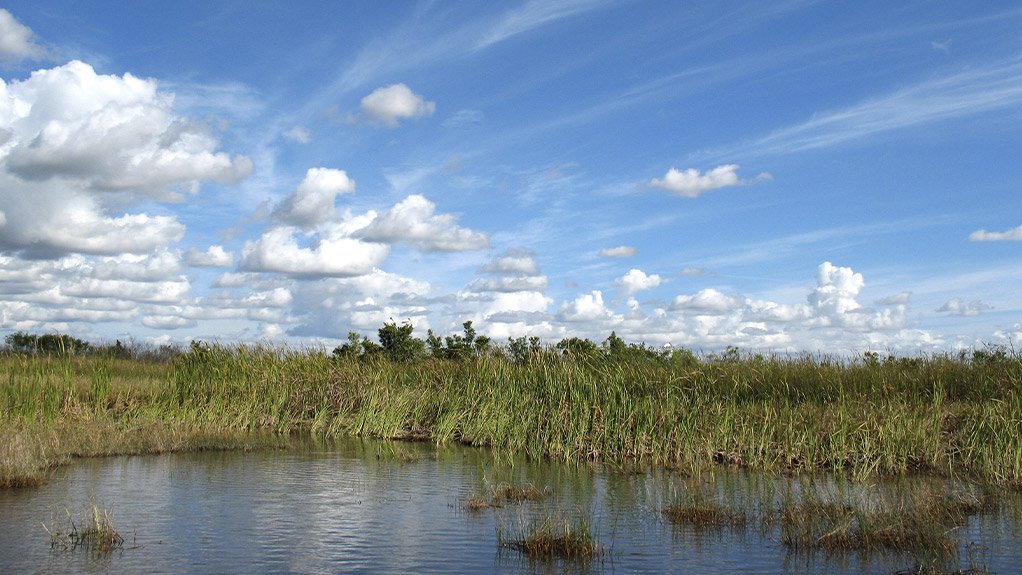
Wetlands make a special water resource type protected internationally under the Ramsar Convention, which was established in 1971. South Africa joined the convention in 1975 as one of the first five countries to ratify the convention. Ramsar defines wetlands as all the wet surfaces from source (usually mountains) to 6-meters into the ocean. As such, the Ramsar secretariat for 2026 summarised the role and value of wetlands as “Life thrives in wetlands”. To ensure particular legal and national protection of the wetlands, the National Water Act (1998) defines wetlands as “ land which is transitional between terrestrial and aquatic ecosystems, where the water table is usually at or near the surface, or the land is periodically covered with shallow water, and which land in normal circumstances support or would support vegetation typically adapted to life in (water or) saturated soil.” Globally, these ecosystems make up 257,994,728 hectares, while in South Africa the Water Research Commission reported a total of 4 596 509 ha mapped by 2019. This is a total of thirty one (31) internationally declared Ramsar sites in South Africa. Undoubtedly, these sites overlap with the lands of numerous Indigenous peoples who rely heavily on them for water and food security. The cultural values, traditional knowledge systems and livelihoods of the marginalized communities are intricately tied to these ecosystems. Similarly, more than 40% of biota (plants and animals), globally depend on these ecosystems. The threats to the integrity of these ecosystems directly affect the economic development and survival of societies and business, particularly tourism. Since 1971, about 81% of wetlands species showed declined, which is worsened by climate change, particularly droughts and consequential loss of habitats and biodiversity. Is therefore by no coincident that the Ramsar Convention decided on the year 2026 Theme as "Wetlands and Traditional Knowledge: Celebrating Cultural Heritage". This theme highlights the important role of traditional and indigenous knowledge in wetland management and conservation. It aims to encourage dialogue and understanding of the connection between wetlands and cultural practices.
World Wetlands Day (WWD) is a global event, celebrated annually on the 2nd day of February. It is dedicated to recognizing the significance of wetlands, which encompass a wide range of habitats, covering inland waters, estuaries and shallow coastal waters. These ecosystems play a crucial role in water quality purification at no costs as natural kidneys in the landscape (ecological infrastructure), sustain flows downstream way into droughts before they are completely drained, alleviating disastrous impacts caused by floods, support biodiversity which is central in eco-tourism, mitigate climate change through carbon sequestration, provide cultural and traditional areas including medicinal plants, harvestable material or fibre for making crafts, fishing areas and other various forms of livelihoods for millions of people. In South Africa, as in the international space, wetlands are the priority water focal areas when considering water security through ecological infrastructure restoration. As such, the Water Research Commission (WRC) in partnership with policy has developed several wetland rehabilitation guidelines, first published in 2009 and continues to improve on these tools as the science advances. Despite all the published and observed ecosystem services provided by healthy wetlands, these systems are continuously under serious threats and neglect. In many cases the drivers of degradation are anthropogenic or human driven. Lack of community awareness on the value and benefits of wetlands often leads to their transformation by the society and business. Millions are spent by the Government departments in an attempt to reverse the tragedy, but seem to be inadequate, particularly with missing wetlands stewardship.
This year, 2026, the WRC and Agricultural Research Council (ARC) joined efforts in workshopping how to identify peatland fires, manage them and rehabilitate these ecosystems. Peatlands are a sub-set of wetlands, they form as a result of plant material that remains in a wetland being permanently saturated. To date 49 peatland systems across South Africa have experienced peat fires. Furthermore, the number and frequency of peat degradation and resulting peat fires are expected to increase in South Africa with climate change and influence of alien invasive plants. South Africa therefore needs to adapt to these changes, and build resilience to environmental stressors, for water security purposes. Peatlands are vital for South Africa’s water security, acting as natural reservoirs that regulate streamflow, filter water, and store large amounts of carbon. When they degrade—most commonly through lowered water tables, poor land-use practices, and mismanagement—their ability to perform these functions decline sharply. This has contributed to increasing peat fires, which release toxic smoke, alter hydrology, and pose safety risks to nearby communities. Despite their importance, many government officials, landowners, and fire-response teams still struggle to identify peat or recognise early signs of degradation. Furthermore, many fire brigade services and mandated government departments are unaware of how to extinguish peat fires, demonstrated by the continuous burning of peatlands (such as the Onrus peatland that burnt for over 12 months). Strengthening early detection, preventative action, practical capacity, and knowing how to extinguish peat fires are therefore essential for protecting these systems before damage escalates. The WRC supported peatland studies as far back as 2014 and continues to do so. This dedicated investment in fire management and rehabilitation has further leveraged GEF:8 funding into South Africa and other participating countries, The protocol on this effort is currently being piloted.
To support WWD, the event will combine a hands-on field excursion with a focused workshop on the 2nd of February 2026. The field session will take place at the Colbyn peatland, City of Tshwane, where DWS, DFFE, Local Municipality officials, NGOs, citizen scientists and other stakeholders will be guided through peat identification and observe a live demonstration of peat-fire suppression using the protocol spike tool. The usability and accessibility of the tool will be enhanced by the advanced understanding of peatland fires and management studies currently underway. The stakeholders will finish of the day by running a workshop featuring a brief overview of South Africa’s peatlands and the presentation of a WRC-funded protocol decision tree on Managing Peatland Fires in South Africa. This decision tree management tool and related information products will be workshopped with the government officials, international peatland experts and other national experts. The output of the workshop will be a report that will enhance the development of peatland rehabilitation guidelines which will be completed and be ready for application by November 2026.
Strengthening foundational knowledge and skills are essential for early detection and timely intervention, and the development of management tools is important for effective long-term protection of peatlands. Further interactions will be targeted at communities where peatlands are currently burning /or threatened, such as in Strand in the Western Cape, Maputaland in KZN.
Article Enquiry
Email Article
Save Article
Feedback
To advertise email advertising@creamermedia.co.za or click here
Research Reports

Projects

Latest Multimedia


Latest News
Showroom

Your global lifecycle technology & service partner for materials & minerals processing equipment for coal, iron ore, copper, manganese & other...
VISIT SHOWROOM
Rio Carb is an OEM (Original Equipment Manufacturer) of R-C700 Chromium Carbide (CrC) alloy clad wear plates and pipes used for heavy materials...
VISIT SHOWROOM


Announcements
What's On
Subscribe to improve your user experience...
Option 1 (equivalent of R125 a month):
Receive a weekly copy of Creamer Media's Engineering News & Mining Weekly magazine
(print copy for those in South Africa and e-magazine for those outside of South Africa)
Receive daily email newsletters
Access to full search results
Access archive of magazine back copies
Access to Projects in Progress
Access to ONE Research Report of your choice in PDF format
Option 2 (equivalent of R375 a month):
All benefits from Option 1
PLUS
Access to Creamer Media's Research Channel Africa for ALL Research Reports, in PDF format, on various industrial and mining sectors
including Electricity; Water; Energy Transition; Hydrogen; Roads, Rail and Ports; Coal; Gold; Platinum; Battery Metals; etc.
Already a subscriber?
Forgotten your password?
Receive weekly copy of Creamer Media's Engineering News & Mining Weekly magazine (print copy for those in South Africa and e-magazine for those outside of South Africa)
➕
Recieve daily email newsletters
➕
Access to full search results
➕
Access archive of magazine back copies
➕
Access to Projects in Progress
➕
Access to ONE Research Report of your choice in PDF format
RESEARCH CHANNEL AFRICA
R4500 (equivalent of R375 a month)
SUBSCRIBEAll benefits from Option 1
➕
Access to Creamer Media's Research Channel Africa for ALL Research Reports on various industrial and mining sectors, in PDF format, including on:
Electricity
➕
Water
➕
Energy Transition
➕
Hydrogen
➕
Roads, Rail and Ports
➕
Coal
➕
Gold
➕
Platinum
➕
Battery Metals
➕
etc.
Receive all benefits from Option 1 or Option 2 delivered to numerous people at your company
➕
Multiple User names and Passwords for simultaneous log-ins
➕
Intranet integration access to all in your organisation