A lesson in the history and evolution of industrial safety systems




This article has been supplied.
By: Kobus Vermeulen - Direct Sales Executive, Process Automation at Schneider Electric
One only has to briefly page through the annals of our industrial history, to come across truly hair-raising stories of safety systems failing or underperforming with catastrophic repercussions.
Fortunately, industrial safety the last few decades undergone some truly profound development. What began as simple hardwired trips - designed to prevent disasters - has become sophisticated ecosystems comprised of fault-tolerant, high-integrity platforms, all driving modern operational resilience.
But as the well-known saying goes: “to move forward, you must first look back”. In the 1980s, safety systems were dominated by hardwired shutdown circuits and early PLC-based schemes. Their limitations were widely felt across petrochemicals, power generation, and other high-risk sectors.
The result, singe-point-of-failures were endemic; one faulty relay or controller could compromise the entire safety function. With no fault tolerance, even a minor component issue could force a plant shutdown, producing huge availability penalties.
Also, diagnostics were rudimentary, making latent failures hard to detect, while systems were rigid and difficult to modify. Any change required physical rewiring which was expensive, slow, and downright disruptive.
Whichever way you look at it, these systems were not designed to meet the integrity expectations we now associate with modern functional safety frameworks. With no recognised Safety Integrity Level (SIL) structure at the time, operators were often forced to choose between higher risk or reduced uptime.
TMR and the advent of high-integrity safety
Enter Triconex; founded September 1983 by Jon Wimer in Santa Ana, California, US the company aimed to create a fault-tolerant safety controller for industrial processes. The goal was to eliminate the weaknesses of early systems by introducing Triple Modular Redundancy (TMR)—a concept that would reshape the global safety landscape.
Instead of relying on a single controller, Triconex’s TMR architecture executed logic on three independent channels, using two-out-of-three voting to validate every decision. This meant:
- No single point of failure.
- Higher availability and fewer spurious trips.
- Continuous diagnostics and online maintenance.
- Fault tolerance without sacrificing uptime.
For the first time, a programmable platform could deliver SIL3-level integrity (a high level of risk reduction provided by a safety system) while remaining practical for large-scale industrial use.
Indeed, when the first TMR-based system shipped in 1986, it redefined what a safety instrumented system could be.
TÜV Certification
The next important step was the introduction of TÜV (Technisch Überwachungsverein) certification, which provided third-party assurance that systems met rigorous international safety and cybersecurity standards certification. And in parallel with TMR, it provided a powerful assurance combination.
With TÜV, vendors could demonstrate compliance with emerging standards, regulators gained confidence in new technologies, and customers received clarity on lifecycle expectations and system integrity.
As a result, TÜV-certified TMR became a global benchmark, a gateway to international markets, and a cornerstone of what would later evolve into standards such as IEC 61508 and IEC 61511.
Together, TMR and TÜV certification shifted the industry away from fail-safe designs that halted production towards fault-tolerant systems capable of keeping plants running safely even in the presence of faults.
Trident and Safety View
As industries modernised through the 1990s and 2000s, expectations went beyond basic hardware reliability. The result, milestones like the Triconex’ Trident platform which demonstrated how safety systems could deliver high availability, cybersecurity resilience, and scalability, while still maintaining SIL3 certification.
Meanwhile, software innovation recognised that operator performance was equally critical. Tools like Triconex’ Safety View provided real-time visibility into bypasses and alarms, improving decision-making and reducing the likelihood of human error.
The move from hardwired circuits to programmable platforms has undoubtedly reshaped not only technology but also safety culture.
Hardwired systems encouraged a reactive mindset, making change difficult and often prompting operators to bypass safety logic for production’s sake. Programmable platforms changed that. They enabled:
- Dynamic risk-based design.
- Predictive diagnostics and monitoring.
- Better operator insight into system behaviour.
- Integration with digital tools, HMIs, and SCADA.
At the same time, the rise of standards like IEC 61508 embedded formal lifecycle management into organisational processes. Safety became proactive, transparent, and data-driven, supported by collaboration between engineering, operations, and management.
Fast forward to 2025 and Triconex – acquired by Schneider Electric is 2014 - is installed in more than 80 countries and still offers lessons today’s safety conversations.
Article Enquiry
Email Article
Save Article
Feedback
To advertise email advertising@creamermedia.co.za or click here
Research Reports

Projects


Latest Multimedia


Latest News

Showroom
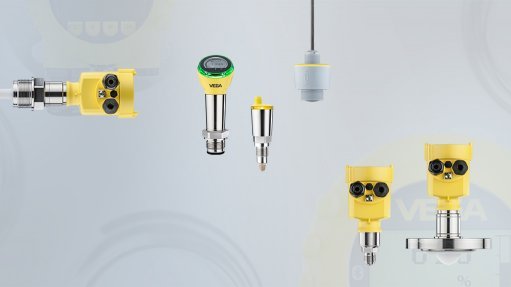
For over 60 years, VEGA has provided industry-leading products for the measurement of level, density, weight and pressure. As the inventor of the...
VISIT SHOWROOM
Industrial Nozzles & Systems (Pty) Ltd (Est. 2000) exclusive representative in Southern Africa for LECHLER GmbH (Est. 1879) - Europe's leading...
VISIT SHOWROOM
Press Office
Announcements
What's On
Subscribe to improve your user experience...
Option 1 (equivalent of R125 a month):
Receive a weekly copy of Creamer Media's Engineering News & Mining Weekly magazine
(print copy for those in South Africa and e-magazine for those outside of South Africa)
Receive daily email newsletters
Access to full search results
Access archive of magazine back copies
Access to Projects in Progress
Access to ONE Research Report of your choice in PDF format
Option 2 (equivalent of R375 a month):
All benefits from Option 1
PLUS
Access to Creamer Media's Research Channel Africa for ALL Research Reports, in PDF format, on various industrial and mining sectors
including Electricity; Water; Energy Transition; Hydrogen; Roads, Rail and Ports; Coal; Gold; Platinum; Battery Metals; etc.
Already a subscriber?
Forgotten your password?
Receive weekly copy of Creamer Media's Engineering News & Mining Weekly magazine (print copy for those in South Africa and e-magazine for those outside of South Africa)
➕
Recieve daily email newsletters
➕
Access to full search results
➕
Access archive of magazine back copies
➕
Access to Projects in Progress
➕
Access to ONE Research Report of your choice in PDF format
RESEARCH CHANNEL AFRICA
R4500 (equivalent of R375 a month)
SUBSCRIBEAll benefits from Option 1
➕
Access to Creamer Media's Research Channel Africa for ALL Research Reports on various industrial and mining sectors, in PDF format, including on:
Electricity
➕
Water
➕
Energy Transition
➕
Hydrogen
➕
Roads, Rail and Ports
➕
Coal
➕
Gold
➕
Platinum
➕
Battery Metals
➕
etc.
Receive all benefits from Option 1 or Option 2 delivered to numerous people at your company
➕
Multiple User names and Passwords for simultaneous log-ins
➕
Intranet integration access to all in your organisation