China’s ‘encouraging’ hydrogen progress witnessed first-hand by Northam Platinum

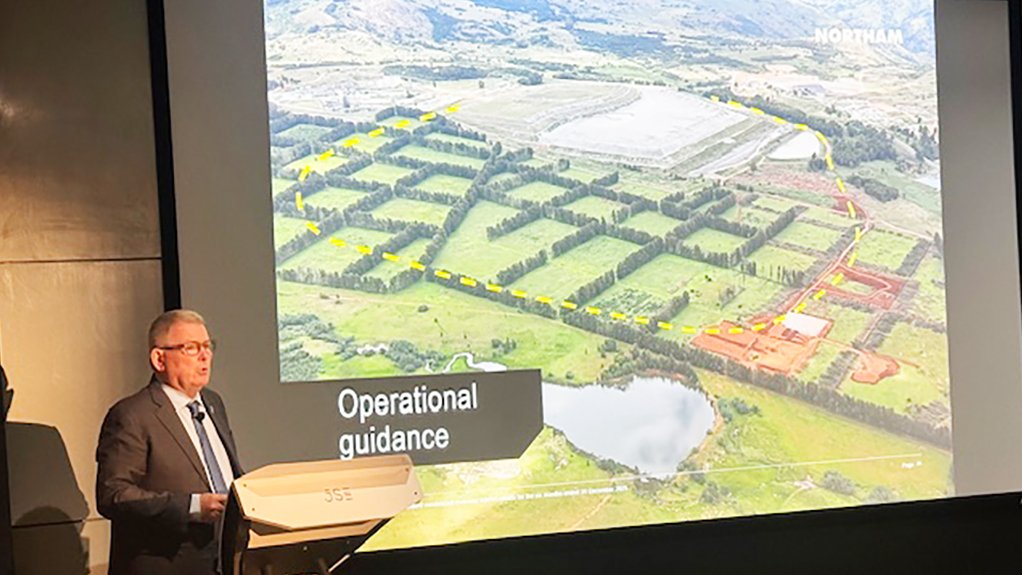
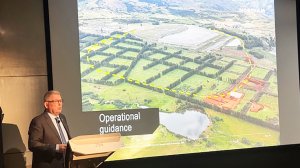
Northam CEO Paul Dunne talking tailings expansion.
Photo by Creamer Media
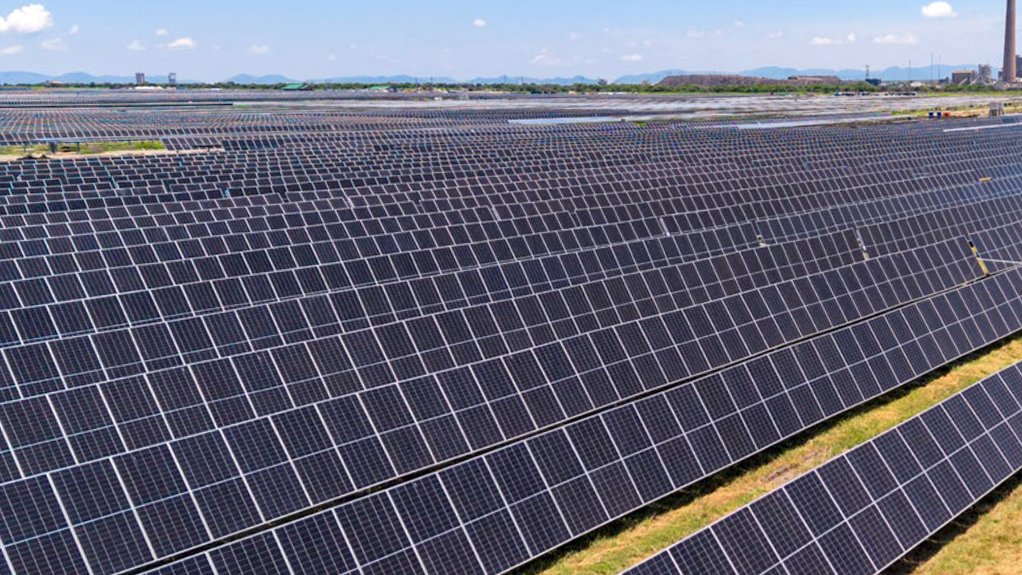
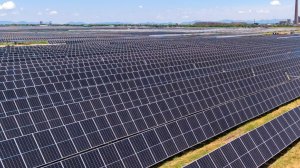
Northam solar.
Photo by Creamer Media
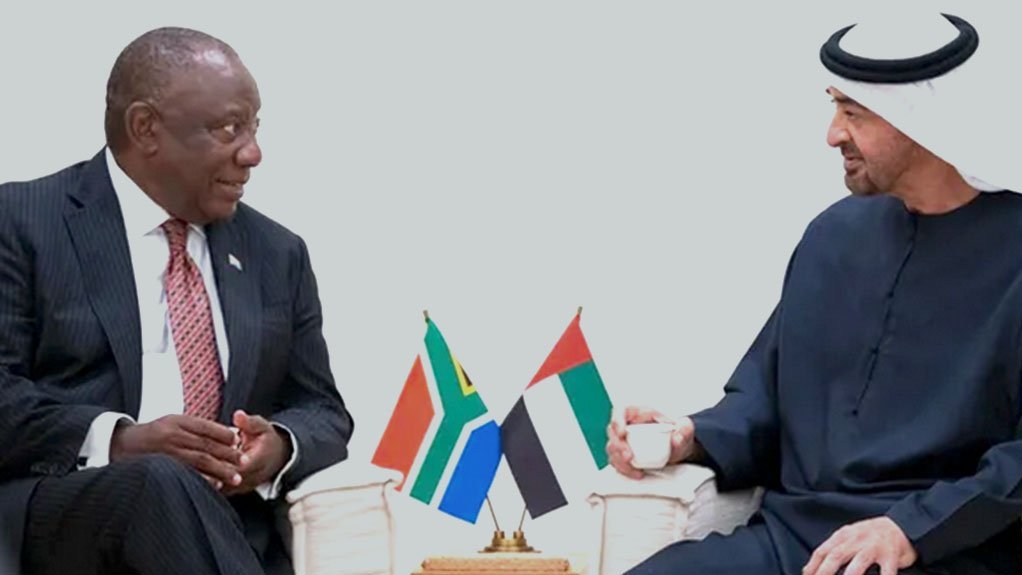
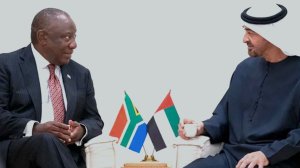
President Cyril Ramaphosa (left) on Africa's green hydrogen potential UAE President Sheikh Mohamed bin Zayed Al Nahyan (right).


JOHANNESBURG (miningweekly.com) – The ‘encouraging’ recent developments of the hydrogen economy in China have been witnessed first-hand by South Africa’s platinum group metals (PGM) miner and marketer Northam Platinum.
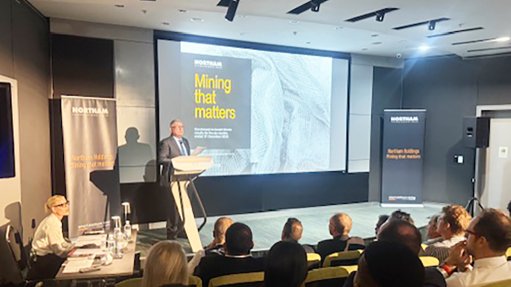
This was highlighted by the Johannesburg Stock Exchange-listed company during last week’s presentation of record production and record sales volumes for the six months to December 31.
Hydrogen is now firmly embedded in the plans of the central government of China for the next 15 years, Northam CEO Paul Dunne reported at the event, where a 60% revenue upsurge to R23.3-billion was reported.
“I believe the world has moved from over-estimating hydrogen to now under-estimating current development,” said Dunne, who spoke of the need for more extensive China travel to further witness the emergence of the hydrogen economy, which creates valuable demand for PGMs in the form of platinum and iridium in the electrolysers that generate green hydrogen, and of platinum and ruthenium for the fuel cells that convert the green hydrogen into clean electricity that can be used to drive fuel cell electric vehicles (FCEVs) or stationary power platforms.
Regarding Dunne’s observation of the need for more extensive China travel to further witness the implementation of the hydrogen economy in the Asian country, Mining Weekly put this question to the Northam CEO during the media roundtable that followed the presentation of results.
Mining Weekly: What will more travel reveal when it comes to the development of the hydrogen economy in China?
Dunne: You’ll see something very interesting. We actually picked this up first in Japan from our customer, Mitsubishi, against the background of the many historic trade relationships between Japan and China. There are lots of these relationships so when we visited Japan, we were introduced to a Chinese company operating in north China and the company raised the topic of hydrogen. We then asked if we could pay north China a visit and received a very positive response. As a result, we had a hydrogen-dedicated follow-up visit and what we found there was really quite incredible. It's a coking coal producing area, and the Chinese government has in recent times issued a directive that if you mine coal, you must make chemical building blocks out of the coal, similar to what Sasol does in South Africa. The process releases lots and lots of grey hydrogen for free and the north China company is using up only 1% or 2% of the grey hydrogen that it captures to run literally hundreds and hundreds of trucks on fuel cells. Very interesting, by the way, is that the fuel cells are Toyota fuel cells, and the north China company has literally created a fuel cell micro-economy in and around the grey hydrogen. We then went back to Beijing to meet the head of China’s big hydrogen drive, an amazingly well-educated lady with a proper, solid PhD, who assured our new business analyst Hurbey Geldenhuys that while it was only grey hydrogen being seen now, green hydrogen would definitely follow and that green hydrogen is very much part of the near-term plan. Interestingly enough, Northam’s seeing strong demand for iridium and that iridium demand can only really come from electrolysers that are used to split water to make green hydrogen, and that iridium demand is coming from China.
Mining Weekly: Interesting, too, is that South Africa’s President Cyril Ramaphosa last month held public discussions at the Abu Dhabi Sustainability Week with UAE President Sheikh Mohamed bin Zayed Al Nahyan, where he emphasised the massive energy opportunity that green hydrogen is for an Africa with superior sun, prime wind, fast-moving water and a great PGM endowment. Can’t PGM mining companies like Northam, which already have renewable-energy capacity, make use of their own PGMs to electrolyse green hydrogen to power PGM-using FCEV trucks, as you witnessed being done in the coking coalfield of north China. Not long ago South Africa witnessed this being attempted at the Mogalakwena PGMs mine in Limpopo. What are Northam’s thoughts when it comes to generating green hydrogen on Northam’s own mine sites to drive Northam’s own trucks and at the same time help to decarbonise the planet?
Dunne: Northam is a smaller platinum mining company and a quick follower, so if we see it working, we’ll adopt it, and I believe it's coming.
The headlines doing the rounds after the UAE summit included ‘Ramaphosa touts green hydrogen as cornerstone of Africa’s energy, growth future’ and 'Africa is where green hydrogen can be utilised to a highly significant extent'.
BOOSENDAL SOUTH TAILINGS EXPANSION
During the media roundtable, Mining Weekly also put questions about the expansion of the Booysendal South tailings facility, which is poised to unlock considerable new PGM output.
In response, Northam executive new business Damian Smith pointed out that the South concentrator for the Booysendal South mine concentration used to be the concentrator for Aquarius’ Everest mine and the tailings dam is thus the old Everest tailings dam, which was sized for the relatively small Everest operation.
“We've got large operations that are happening at Booysendal South and what's important on a tailings dam is how much material you deposit on to that dam, divided by the area of the dam, which gives you the rate of rise of that dam. The rate of rise of the dam then talks to the stability of the dam.
"We need a bigger dam to ensure that we have a rate of rise that gives us the correct life-of-mine solution for stability of that dam to ensure that it's safe over the life-of-mine. That's why we're expanding that dam. If we don't expand the dam, we’ll have to throttle back the concentrator. We can't open the concentrator up to its full capacity, because we're having to limit what we can deposit onto the tailings dam.
"That's the debottlenecking of the South concentrator and that debottlenecking means that we can mine more. We've got 100-million ounces in the ground at Booysendal. We've got six mining modules there and so there’s a potential for us to up the mining rate and get it milled, because it doesn't help mining it if you can't ultimately mill it, and that's really where the value-add is, from that initiative. There's been an 18-month wait until we could start depositing on to that, so we're not going to get immediate pickup. We'll get that in time," Smith explained.
Mining Weekly: Are you also able to recover PGMs from the tailings Everest left behind?
Dunne: We’ve reprocessed that once already, but only recovered small quantities of PGMs and the tailings had to be re-deposited on the same area, so it's still pretty much the same size of material but already denuded of recoverable PGMs.
STRONG POSITION
Northam’s top brass talk of the company being in a very competitive and strategically strong position, with quality operations and a growth path.
In addition to the expansion of the Booysendal South tailings facility, Northam is developing promising projects at its Zondereinde and Eland mines as well as implementing renewable-energy initiatives.
Capital expenditure for the full year is forecast at R6.6-billion rand.
Article Enquiry
Email Article
Save Article
Feedback
To advertise email advertising@creamermedia.co.za or click here
Research Reports

Projects
Latest News
Showroom
ATI systems comprises five divisions: electrical assemblies, drives and controls, feedback sensors, enclosures, and strip guiding.
VISIT SHOWROOM
Sika South Africa is a trusted partner for the nation’s infrastructure, commercial, residential, and industrial sectors.
VISIT SHOWROOM
Announcements
What's On
Subscribe to improve your user experience...
Option 1 (equivalent of R125 a month):
Receive a weekly copy of Creamer Media's Engineering News & Mining Weekly magazine
(print copy for those in South Africa and e-magazine for those outside of South Africa)
Receive daily email newsletters
Access to full search results
Access archive of magazine back copies
Access to Projects in Progress
Access to ONE Research Report of your choice in PDF format
Option 2 (equivalent of R375 a month):
All benefits from Option 1
PLUS
Access to Creamer Media's Research Channel Africa for ALL Research Reports, in PDF format, on various industrial and mining sectors
including Electricity; Water; Energy Transition; Hydrogen; Roads, Rail and Ports; Coal; Gold; Platinum; Battery Metals; etc.
Already a subscriber?
Forgotten your password?
Receive weekly copy of Creamer Media's Engineering News & Mining Weekly magazine (print copy for those in South Africa and e-magazine for those outside of South Africa)
➕
Recieve daily email newsletters
➕
Access to full search results
➕
Access archive of magazine back copies
➕
Access to Projects in Progress
➕
Access to ONE Research Report of your choice in PDF format
RESEARCH CHANNEL AFRICA
R4500 (equivalent of R375 a month)
SUBSCRIBEAll benefits from Option 1
➕
Access to Creamer Media's Research Channel Africa for ALL Research Reports on various industrial and mining sectors, in PDF format, including on:
Electricity
➕
Water
➕
Energy Transition
➕
Hydrogen
➕
Roads, Rail and Ports
➕
Coal
➕
Gold
➕
Platinum
➕
Battery Metals
➕
etc.
Receive all benefits from Option 1 or Option 2 delivered to numerous people at your company
➕
Multiple User names and Passwords for simultaneous log-ins
➕
Intranet integration access to all in your organisation