Advanced PVC meets evolving system requirements

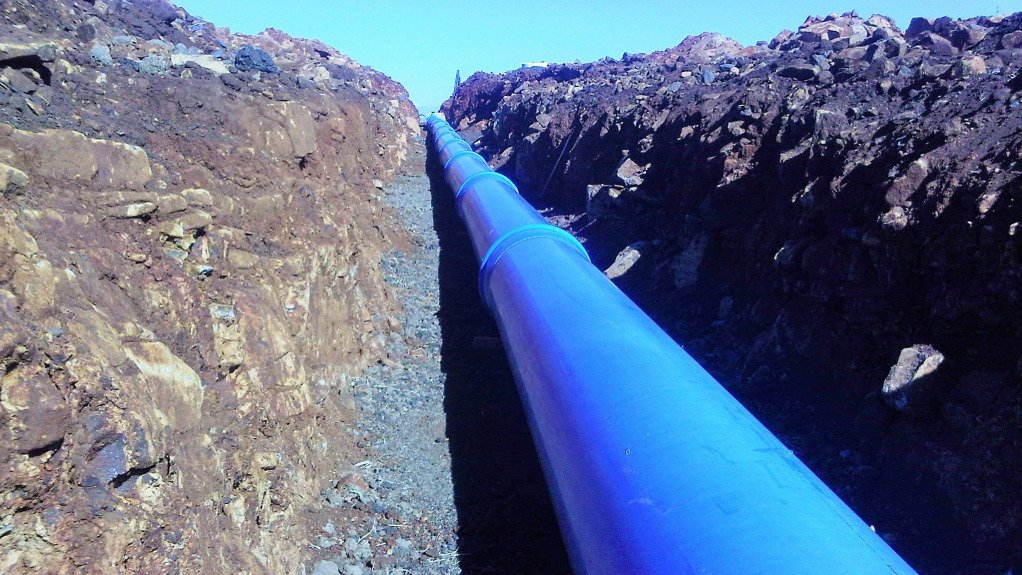
DISTINCT ADVANTAGES PVC is being increasingly preferred over traditional materials owing to its durable, lightweight and efficient capabilities


Advanced polyvinyl chloride (PVC) pipes offer the durability, sustainability and cost-effectiveness required for bulk water and wastewater systems, amid increased strain on water systems, says plastic piping and drainage solutions manufacturer Sizabantu Piping Systems group commercial director Sean Harmse.
Driven by urbanisation and infrastructure development, alongside industrial and agricultural expansion, there is a consistent need for reliable water supply, sewage and stormwater systems, he adds.
Consequently, municipalities are investing in upgrading ageing infrastructure and expanding essential services, which, in turn, is boosting pipe demand.
Increasing focus on environmental responsibility is also shifting the pipe industry towards using eco-friendly materials, energy efficient manufacturing and recyclable products.
“Regulations and environmental awareness promote the use of non-toxic, low- impact materials,” Harmse adds.
Further, there is a shift towards durable, lightweight and long-lasting pipe systems, consequently resulting in advanced plastic pipes, such as PVC and high-density polyethylene, being increasingly preferred over traditional materials.
“PVC pipes are a leading choice for infrastructure, especially in bulk water processes, such as water supply and sewage systems, owing to their distinct advantages,” says Harmse.
PVC is a stable polymer that does not leach harmful substances or biodegrade, making it environmentally suitable for water and wastewater applications. In particular, “innovative products” such as oriented PVC (PVC-O) are gaining traction because of their enhanced mechanical properties.
“In bulk water applications, PVC’s corrosion resistance is paramount, as aggressive environments would quickly degrade metallic pipes,” he notes.
PVC’s durability and long-term performance ensures reliable operation and minimises disruptions, while PVC pipes are also generally more cost-effective, owing to lower manufacturing, transportation and installation costs, offering a more economical option for large projects.
The pipes are easy to handle, cut and join, speeding up installation and requiring less heavy machinery, Harmse adds.
They also boast a low breakage rate, which reduces replacement and maintenance costs, as well as fewer leaks and reduced water loss.
“Their flexibility can also accommodate minor ground shifts,” Harmse comments.
Moreover, their smooth interior minimises friction, ensuring efficient flow rates and reducing energy consumption in pumping while preventing scale and biological build-up.
“Advanced forms, such as Sizabantu’s TOM500 PVC-O pipes, further enhance these benefits with improved impact and fatigue resistance, making them ideal for high-pressure applications and offering a life span often exceeding 100 years,” Harmse says.
Modern PVC-O pipes also offer superior impact resistance – reducing damage during handling and installation and from external forces – alongside improved endurance during pressure fluctuations and cyclic stresses.
Locally Manufactured
Noticing a need for locally manufactured PVC-O, Sizabantu invested in Africa’s first PVC-O factory in 2014. In a joint venture with infrastructure, sanitation and edification solutions specialist Molecor Canalizaciones, Sizabantu developed the TOM500 PVC-O manufacturing facility in Richards Bay, in KwaZulu-Natal.
“The availability of these locally produced PVC-O sizes has expanded options for bulk water supply pipeline materials.”
Harmse adds that local manufacturing is crucial for infrastructure projects and offers significant benefits in several areas.
Local production reduces reliance on complex international supply chains – which are prone to disruptions and delays – ensuring a more stable and predictable supply of materials and minimising project delays. It also allows for quicker responses to project demands.
Consequently, local manufacturing often results in overall cost savings, owing to reduced transportation costs, lower import duties and minimised currency exchange risks, while producing on-demand pipes and components optimises capital expenditure, he adds.
Further, local production facilities can more easily adapt to unique project specifications, manufacturing pipes with specific diameters, pressure ratings or lengths. This reduces waste and optimises supply performance.
Harmse avers that local production allows for stringent quality control throughout the manufacturing process, thereby ensuring reliability and longevity; it also creates direct and indirect employment, fosters skills development and stimulates local economies, thereby contributing to industrial growth and self-sufficiency.
Local manufacturers can also more easily implement sustainable practices aligned with regional environmental regulations.
Harmse asserts that Sizabantu’s focus is to improve water security and infrastructure development in Southern Africa by providing durable, cost-effective and sustainable piping solutions.
The Sizabantu team, equipped with extensive thermoplastics experience, provides technical support and tailored solutions for complex projects. The company is involved in various ongoing large bulk water projects across Southern Africa.
Article Enquiry
Email Article
Save Article
Feedback
To advertise email advertising@creamermedia.co.za or click here
Research Reports

Projects

Latest Multimedia


Latest News

Showroom

For over 15 years, Lilak Aluminium, a trusted leader in architectural extrusion supply, has delivered excellence to businesses like yours.
VISIT SHOWROOM
Leading condition monitoring specialists, WearCheck, help boost machinery lifespan and reduce catastrophic component failure through the scientific...
VISIT SHOWROOM
Announcements
What's On
Subscribe to improve your user experience...
Option 1 (equivalent of R125 a month):
Receive a weekly copy of Creamer Media's Engineering News & Mining Weekly magazine
(print copy for those in South Africa and e-magazine for those outside of South Africa)
Receive daily email newsletters
Access to full search results
Access archive of magazine back copies
Access to Projects in Progress
Access to ONE Research Report of your choice in PDF format
Option 2 (equivalent of R375 a month):
All benefits from Option 1
PLUS
Access to Creamer Media's Research Channel Africa for ALL Research Reports, in PDF format, on various industrial and mining sectors
including Electricity; Water; Energy Transition; Hydrogen; Roads, Rail and Ports; Coal; Gold; Platinum; Battery Metals; etc.
Already a subscriber?
Forgotten your password?
Receive weekly copy of Creamer Media's Engineering News & Mining Weekly magazine (print copy for those in South Africa and e-magazine for those outside of South Africa)
➕
Recieve daily email newsletters
➕
Access to full search results
➕
Access archive of magazine back copies
➕
Access to Projects in Progress
➕
Access to ONE Research Report of your choice in PDF format
RESEARCH CHANNEL AFRICA
R4500 (equivalent of R375 a month)
SUBSCRIBEAll benefits from Option 1
➕
Access to Creamer Media's Research Channel Africa for ALL Research Reports on various industrial and mining sectors, in PDF format, including on:
Electricity
➕
Water
➕
Energy Transition
➕
Hydrogen
➕
Roads, Rail and Ports
➕
Coal
➕
Gold
➕
Platinum
➕
Battery Metals
➕
etc.
Receive all benefits from Option 1 or Option 2 delivered to numerous people at your company
➕
Multiple User names and Passwords for simultaneous log-ins
➕
Intranet integration access to all in your organisation