Africa faces a two-decade catch-up as it buckles under the cost of poor engineering




South Africa is at least 15 to 20 years behind Europe and the US in material engineering, and, in an environment of rapidly expanding infrastructure and increasing industrialisation, the current dearth of formally trained materials engineers and physical metallurgists is seriously impacting growth opportunities on the continent.
“For the past 30 years, South Africa’s universities have focused on extractive metallurgy, particularly for mining, rather than physical metallurgy and materials engineering, leaving major civil and infrastructure projects without in‑house specialists who understand how different materials behave, fail, and need to be specified, tested and monitored,” explains Dr Janet Cotton, founder and CEO at One Eighty Materials Engineering Solutions.
Cotton estimates there are around 3 000 specialist materials engineering firms in the United States alone, employing in the region of 200 000 to 300 000 professional materials engineers. By contrast, Africa’s 1.5 billion people are served by only a handful of commercial materials engineering laboratories of meaningful scale.
According to Cotton, Africa’s scarcity of specialist materials engineers and accredited labs means that everyday business decisions are being taken with a dangerously incomplete view of how assets will behave over time.
“Without in‑house expertise, Engineering, Procurement, and Construction (EPC) professionals will cut and paste old specifications, opting for indiscriminate material selection and defaulting to whatever worked on the last 10 projects. For operators, this translates into assets that were modelled for 25‑year lifespans quietly failing after five or ten years, with no reliable life‑prediction or wear modelling to warn them. Where newer, better‑performing materials exist, they are frequently not considered, and where global standards call for higher‑grade materials, local work‑arounds are common,” she warns.
The cost of the knowledge deficit
Cotton points to Eskom’s Medupi and Kusile power stations as typical examples of gross failures due to a lack of understanding of appropriate metallurgy, which she says left the country with two power stations that will never run at full capacity.
But it’s not just construction projects that are at risk. Cotton explains that similar issues are playing out across multiple industries across the continent.
In food, renewables, and broader manufacturing, she says under‑specified materials and superficial quality assurance and quality control have led to total product recalls, environmental spills and delayed commissioning - sometimes triggering late‑delivery payouts worth hundreds of millions of rands.
For financiers, the shortage of credible materials engineering and root cause expertise translates into higher technical risk on every deal, undermining projected returns and triggering costly remediation or replacement.
For insurers, even small, under‑tested components can drive outsized claims and Cotton shares an example of a renewables plant where failed elbow joints led to a R500‑million late‑delivery payout.
What’s more, she warns that for legal firms, weak or technically incorrect failure reports drive long, complex disputes, forcing clients to bring in costly overseas experts, which raises litigation costs and makes it harder to resolve engineering‑related claims.
“The net result is that our African industries are carrying higher technical risk, higher insurance and project costs, and more downtime and potential reputational damage. More than this, we are now exporting high‑value engineering and root cause analysis work offshore instead of building vital local capital expertise,” Cotton says.
Industry experts gather to address the challenge
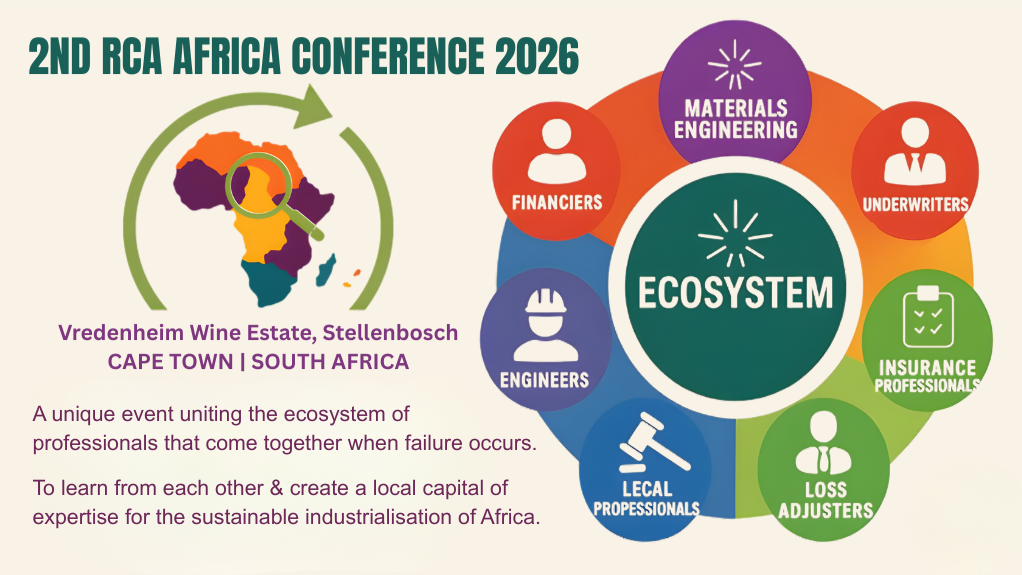
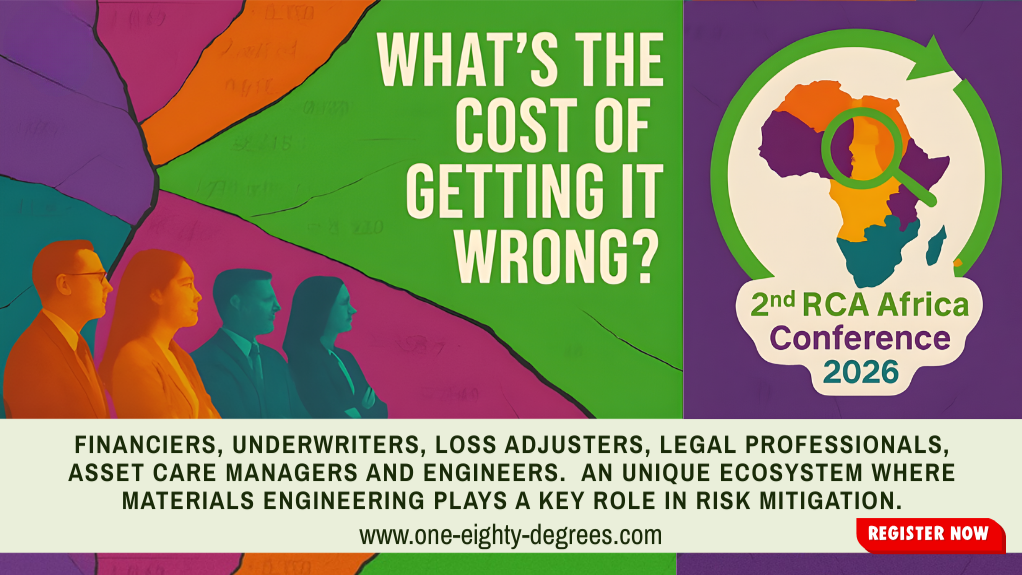
Against this backdrop, the second Root Cause Analysis (RCA) Africa conference will take place in Cape Town from the 9th to the 11th of March this year.
The event aims to shift the default from exporting problems and tests overseas to building local capital of expertise in Africa’s own materials engineering community.
“This Pan‑African conference will put these materials engineering failures under the spotlight, with the goal of changing how risk is perceived and managed before projects break ground,” says Antonio Massella, disaster and risk management consultant at One Eighty Materials Engineering Solutions and Conference Director. “On one level, it is a structured situation report on just how far behind South Africa and the continent are in materials engineering. More importantly, it is also a working forum for the ecosystem that ultimately bears the cost of these failures to brainstorm and find solutions.”
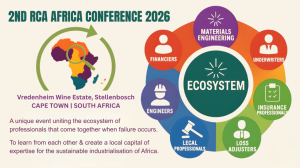
The conference at Vredenheim Wine Estate will bring together material engineers, risk engineers and operations and maintenance leaders, as well as underwriters, loss adjusters, lawyers, financiers, regulators and laboratory specialists from across the continent.
The agenda has been designed to cater for all parts of the ecosystem and Cape Town Mayoral Committee Member for Economic Growth, Alderman James Vos, has agreed to open the conference, proving the growing recognition of the link between materials performance, infrastructure reliability, and economic growth.
Other speakers such as Lucien Matthews will add to the discussion along with technical specialists from law firms, insurers, consulting firms and African institutions such as the CSIR. Roundtables and fireside chats will encourage frank discussion and address contentious subjects including the future of the force majeure.
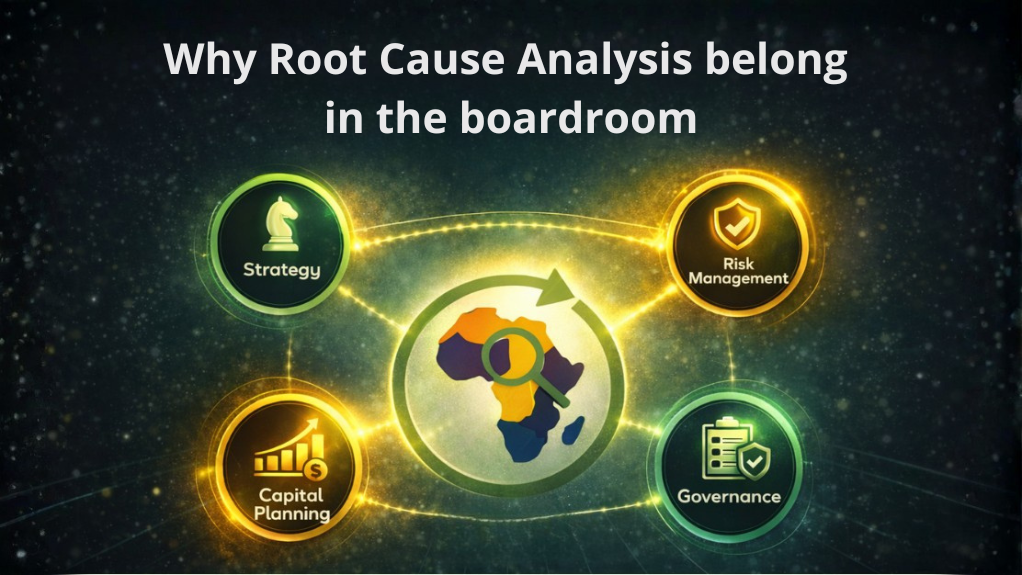
“This conference is a starting point for a change in the culture from reactive, post‑facto blame and liability to one of preparedness, and prevention, as well as risk elimination and risk mitigation. Where proactive root cause analysis, proper testing and credible local expertise are built into projects from the outset rather than bought in after they fail,” Massella says. “To me, it’s common sense, it’s cheaper, it’s about due diligence, and it’s the right thing to do, especially when human safety and lives are at stake.”
For more information about the 2nd RCA Conference please visit www.one-eighty-degrees.com/cost-registration
About One Eighty Degrees
One Eighty Degrees is a global materials engineering and metallurgy firm. Founded in South Africa in 2002, the company has grown into Africa’s most widely scoped ISO 17025:2017 accredited materials and metallurgical testing laboratory, serving over 1,400 clients worldwide. The company provides advanced metallurgical testing, materials engineering and consulting, and failure investigation services that help organisations solve complex product and process challenges efficiently and cost‑effectively. As a Bureau Veritas Marine and Offshore–approved laboratory, and the only materials testing lab in Africa that is a SASSDA member, One Eighty combines rigorous quality, deep technical expertise and innovative problem-solving to deliver reliable, decision-ready insights across multiple industries.
Article Enquiry
Email Article
Save Article
Feedback
To advertise email advertising@creamermedia.co.za or click here
Research Reports

Projects

Latest Multimedia

Latest News


Showroom

Columbus Stainless, based in Middelburg, Mpumalanga, is Africa’s only producer of stainless steel flat products. In addition, Columbus is the only...
VISIT SHOWROOM
SafeQuip is a leading distributor and manufacturer of fire safety solutions, offering a comprehensive range of products designed to meet all...
VISIT SHOWROOM


Announcements
What's On
Subscribe to improve your user experience...
Option 1 (equivalent of R125 a month):
Receive a weekly copy of Creamer Media's Engineering News & Mining Weekly magazine
(print copy for those in South Africa and e-magazine for those outside of South Africa)
Receive daily email newsletters
Access to full search results
Access archive of magazine back copies
Access to Projects in Progress
Access to ONE Research Report of your choice in PDF format
Option 2 (equivalent of R375 a month):
All benefits from Option 1
PLUS
Access to Creamer Media's Research Channel Africa for ALL Research Reports, in PDF format, on various industrial and mining sectors
including Electricity; Water; Energy Transition; Hydrogen; Roads, Rail and Ports; Coal; Gold; Platinum; Battery Metals; etc.
Already a subscriber?
Forgotten your password?
Receive weekly copy of Creamer Media's Engineering News & Mining Weekly magazine (print copy for those in South Africa and e-magazine for those outside of South Africa)
➕
Recieve daily email newsletters
➕
Access to full search results
➕
Access archive of magazine back copies
➕
Access to Projects in Progress
➕
Access to ONE Research Report of your choice in PDF format
RESEARCH CHANNEL AFRICA
R4500 (equivalent of R375 a month)
SUBSCRIBEAll benefits from Option 1
➕
Access to Creamer Media's Research Channel Africa for ALL Research Reports on various industrial and mining sectors, in PDF format, including on:
Electricity
➕
Water
➕
Energy Transition
➕
Hydrogen
➕
Roads, Rail and Ports
➕
Coal
➕
Gold
➕
Platinum
➕
Battery Metals
➕
etc.
Receive all benefits from Option 1 or Option 2 delivered to numerous people at your company
➕
Multiple User names and Passwords for simultaneous log-ins
➕
Intranet integration access to all in your organisation