Africa remains central to global PGMs supply

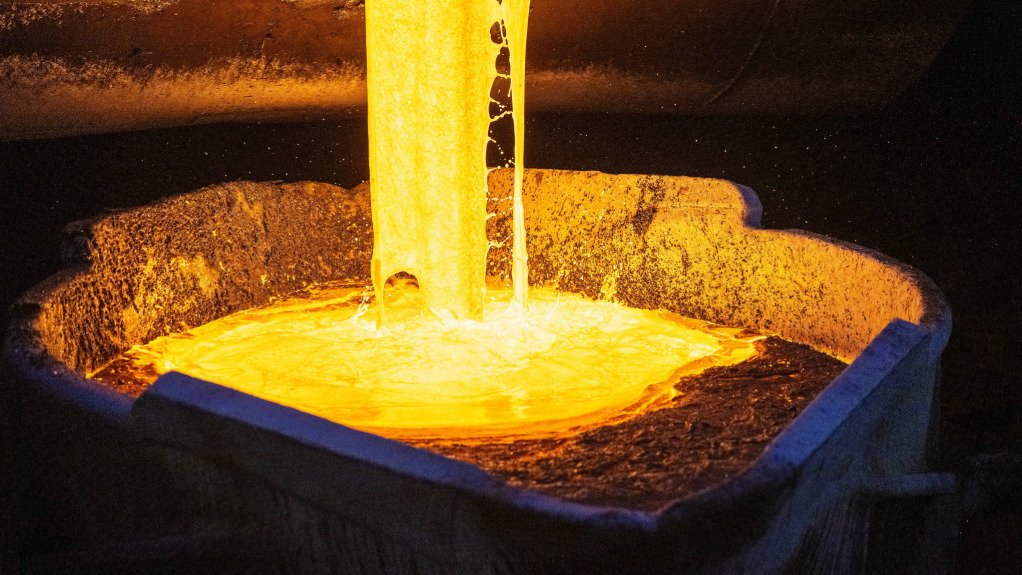
EXPANDING CAPACITY Zimplats' smelter expansion will increase in-country beneficiation capacity, enabling higher processing throughput and improved metal recoveries
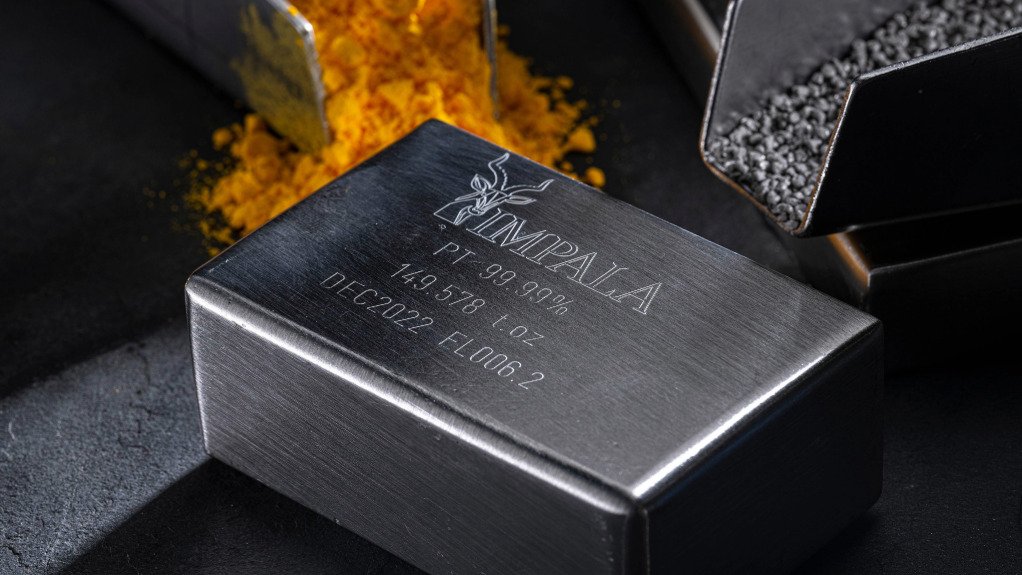
DIRECT CONTACT Rapid growth in platinum group metals-related technologies is prompting customers to establish direct relationships with primary producers



Amid complex platinum group metals (PGMs) supply and demand opportunities and challenges, Africa is expected to remain a leading source of primary PGMs supply, says PGMs mining company Impala Platinum (Implats) COO Patrick Morutlwa.
Current PGMs demand is driven by the automotive sector, industrial applications, jewellery markets and advanced medical and electronic technologies, he says, adding that key opportunities include hydrogen- related technologies emerging in the growing hydrogen economy and rising middle-class platinum products demand.
Future demand growth for PGMs is anticipated from diversified industrial offtake, heavy duty automotive applications and hydrogen fuel-cell electric vehicles, alongside renewable energy and energy storage technologies.
Morutlwa adds that Implats is seeing heightened PGMs offtake interest from Asia, where rapid growth in PGMs-related technologies is prompting customers to establish direct relationships with primary producers as supply chains shift in response to geopolitics and rising resource nationalism.
Amid these opportunities, the PGMs industry is also navigating various challenges, including PGM price volatility, regulatory uncertainty, infrastructure constraints and regional energy insecurity.
The global PGM landscape is also evolving, driven by industrialisation strategies and growing resource nationalism across the African continent.
Additional constraints on PGM producers also stem from declining palladium and rhodium demand, owing to the electrification of light-duty vehicle fleets, as well as rising secondary supply, inflation, escalating input costs, resource scarcity, currency volatility and socioeconomic complexities in PGMs extractive operating regions.
In response to these challenges, Morutlwa says Implats continues to emphasise capital discipline, focusing on low-cost, high-return projects. As such, the miner is advancing mechanisation and digital transformation, such as using integrated 3D spatial planning, to enhance mining flexibility.
Longer Term
To ensure long-term PGMs ore reserve replacement and operational resilience, Morutlwa says Implats is prioritising brownfields exploration, infill drilling and life-of-mine extensions at key Southern Africa operations. The company is also advancing brownfields and greenfields projects in Southern Africa and Canada.
“We will continue to implement scenario planning and agile production to respond to volatility,” he says.
In terms of offtake, the company supplies PGMs products through long-term yearly contracts to a core group of customers across automotive, industrial, jewellery and investment markets.
Implats’ diversified portfolio includes six primary mining operations and associated processing operations across South Africa, Zimbabwe and Canada, supported by integrated refining facilities.
The group contributes about 20% of global primary mined PGMs supply, with attributable mineral resources of 315-million ounces of ruthenium, rhodium, palladium, osmium, iridium and platinum (6E), and mineral reserves of 49.1-million 6E ounces as at June 30, 2025, says Morutlwa.
In South Africa, Implats’ flagship asset is Impala Rustenburg, on the western limb of the Bushveld Complex. The former Impala Bafokeng operations – Styldrift and Bafokeng Rasimone platinum mines – were fully integrated into Implats in July, 2025, and now operate under the Impala Rustenburg brand.
The integration of Impala Bafokeng, effective in 2026 financial year ending June 30, 2026, unlocks significant synergies by consolidating adjacent western limb operations under a unified structure.
Morutlwa adds that the integration delivers cost efficiencies through shared infrastructure, optimised ore blending and streamlined processing.
It also enhances operational flexibility, reduces the duplication of management and support services, in addition to improving labour stability through harmonised engagement frameworks.
The combined entity strengthens resource use, extends life-of-mine profiles across the multi-shaft complex and facilitates optimal capital allocation while leveraging economies of scale to improve unit cost positioning and resilience against PGMs market volatility, says Morutlwa.
Other South African assets include the Marula mine – in which Implats holds a 14.73% stake – on the eastern limb of the Bushveld Complex, and the currently deferred Afplats Leeuwkop project on the western limb, alongside the Waterberg project on the northern limb.
Implats also has a 46% stake in the Two Rivers platinum mine, in Limpopo – a joint venture with diversified miner African Rainbow Minerals (ARM), which owns 54% and operates the mine.
Morutlwa says optimisation of the Waterberg project continues, with the definitive feasibility study updated in October 2024.
The Marula Phase 2 and Two Rivers Merensky projects, previously deferred, owing to weak market conditions, are short-duration developments offering near-term upside to stated production profiles.
Marula Phase 2 is focused on providing replacement ounces and is expected to take between four to five years while the Two Rivers Merensky project is expected to take two to three years.
These developments are relatively quick to bring to production as opposed to deep-level shafts which can take up to 20 years to develop, according to Implats.
Implats is also progressing with chrome recovery projects, which include new processing facilities and partnerships at Marula, and the Impala Rustenburg North Shafts.
Zimbabwe
Implats’ operations comprise the Great Dyke and Ngezi operations, as well as Mimosa, the latter being a joint venture with Sibanye-Stillwater.
Zimplats is ramping-up its Mupani mine and the associated smelter expansion, extending long-term production capacity and replacing depleting reserves, says Morutlwa.
These developments also enhance operational efficiency by leveraging modern, mechanised mining methods and optimised ore handling, resulting in reduced unit costs and improved safety.
“The smelter expansion increases in- country beneficiation capacity, enabling higher processing throughput, improved metal recoveries and compliance with global best-practice environmental standards through advanced sulphur dioxide abatement technology,” he adds.
In Canada, where Impala Canada operates the Lac des Iles mine, all greenfields exploration activities remain on hold, largely owing to current market conditions.
Implats’ refineries and refining services ensure full mine-to-market integration, he highlights.
Morutlwa adds that these initiatives strengthen Implats’ position as a low-cost, sustainable producer and support the company’s broader environment, social and governance commitments while providing flexibility to meet evolving global PGM demand, particularly from industrial and green energy sectors.
Article Enquiry
Email Article
Save Article
Feedback
To advertise email advertising@creamermedia.co.za or click here


Projects
Latest Multimedia


Latest News
Showroom

From batteries for boats and jet skis, to batteries for cars and quad bikes, SABAT Batteries has positioned itself as the lifestyle battery of...
VISIT SHOWROOM
Smart energy storage solutions for efficient, safe, and profitable power.
VISIT SHOWROOM

Announcements
What's On
Subscribe to improve your user experience...
Option 1 (equivalent of R125 a month):
Receive a weekly copy of Creamer Media's Engineering News & Mining Weekly magazine
(print copy for those in South Africa and e-magazine for those outside of South Africa)
Receive daily email newsletters
Access to full search results
Access archive of magazine back copies
Access to Projects in Progress
Access to ONE Research Report of your choice in PDF format
Option 2 (equivalent of R375 a month):
All benefits from Option 1
PLUS
Access to Creamer Media's Research Channel Africa for ALL Research Reports, in PDF format, on various industrial and mining sectors
including Electricity; Water; Energy Transition; Hydrogen; Roads, Rail and Ports; Coal; Gold; Platinum; Battery Metals; etc.
Already a subscriber?
Forgotten your password?
Receive weekly copy of Creamer Media's Engineering News & Mining Weekly magazine (print copy for those in South Africa and e-magazine for those outside of South Africa)
➕
Recieve daily email newsletters
➕
Access to full search results
➕
Access archive of magazine back copies
➕
Access to Projects in Progress
➕
Access to ONE Research Report of your choice in PDF format
RESEARCH CHANNEL AFRICA
R4500 (equivalent of R375 a month)
SUBSCRIBEAll benefits from Option 1
➕
Access to Creamer Media's Research Channel Africa for ALL Research Reports on various industrial and mining sectors, in PDF format, including on:
Electricity
➕
Water
➕
Energy Transition
➕
Hydrogen
➕
Roads, Rail and Ports
➕
Coal
➕
Gold
➕
Platinum
➕
Battery Metals
➕
etc.
Receive all benefits from Option 1 or Option 2 delivered to numerous people at your company
➕
Multiple User names and Passwords for simultaneous log-ins
➕
Intranet integration access to all in your organisation