Cape Building Workers Enjoy Record Benefits Despite National Stagnation





This article has been supplied and will be available for a limited time only on this website.
More than 34,000 building industry employees in the Western Cape received over R236 million in bonuses and leave pay at the end of 2025, thanks largely to the work of the Building Industry Bargaining Council (BIBC).
Despite a stagnant national economy that only began showing tentative signs of recovery in 2025, following the devastating and prolonged impact of the 2020 COVID-19 pandemic, the BIBC has ensured that thousands of workers continue to benefit financially.
Danie Hattingh, Principal Officer of the BIBC, says the Western Cape sector has been “a shining example to the rest of the country.” Over the past eight quarters, the Western Cape has outperformed all other major construction employment contributors, recording average growth of around 8%. Leading industry sources anticipate this upward trajectory to continue through the next two years, with a recovery expected after the 2025 industry slump (Glenigan).
The BIBC’s effectiveness stems from its model of holding employee benefits in provision and paying workers directly. Under this model, employers are relieved of the year-end burden of sourcing funds for annual leave pay and holiday bonuses, as these amounts are accumulated through a proportion of the daily labour rate contributed throughout the year.
“The Council’s impact is further strengthened by its robust legislative standing,” says Hattingh, “with a team of 91 staff dedicated to assisting both employers and employees. The Council is also accredited by the Commission for Conciliation, Mediation and Arbitration (CCMA) and, under the 2023 regulation, the Financial Sector Conduct Authority (FSCA) grants the BIBC, in its role as Employee Benefit Administrator, additional authority not only to enforce but also to report in terms of the Pension Funds Act 24 of 1956.”
However, Hattingh notes that enforcement is only part of the organisation’s mandate. “We prioritise a proactive approach aimed at preventing disputes and supporting employers in maintaining their compliance status,” he explains.
This commitment is especially important for long-serving employees who may suddenly face retrenchment after 30 to 35 years of service. When Pension Fund contributions have been consistently paid over for reinvestment, “there is some money to fall back on,” Hattingh adds, offering employees much-needed security during unexpected income loss.
The BIBC has also taken a leading role in guiding industry stakeholders through recent regulatory changes that influence their financial contributions. “One of the most significant is the two-pot retirement system, introduced in September 2024, allowing employees to access a portion of their retirement savings,” continues Hattingh. While the new framework initially created confusion, the BIBC supported both employers and employees through multiple communication platforms, including its annual Retirement Fund Members’ Information Session held in February 2025.
Administering employee benefits in the building industry is particularly challenging due to the wide range of employer types, from large construction firms with more than 500 employees to micro-businesses employing one or two people. Levels of administrative sophistication vary widely, influenced by leadership orientation and available administrative resources.
“To address this, the BIBC has streamlined its Employee Benefits submission and payment processes, achieving an impressive 96% system acceptance and usage rate among active employers,” notes Hattingh.
Looking ahead to 2026, Hattingh says the BIBC will prioritise growing membership within employer organisations and trade unions, strengthening relationships across the sector. The Council will also continue reinforcing its role as the recognised collection agent for employee benefits and party levies, helping eliminate delays in the collection and distribution process.
“By registering with the BIBC, we can create a fair and sustainable building industry. We are stronger together,” Hattingh concludes.
Article Enquiry
Email Article
Save Article
Feedback
To advertise email advertising@creamermedia.co.za or click here
Research Reports


Projects


Latest Multimedia

Latest News


Showroom
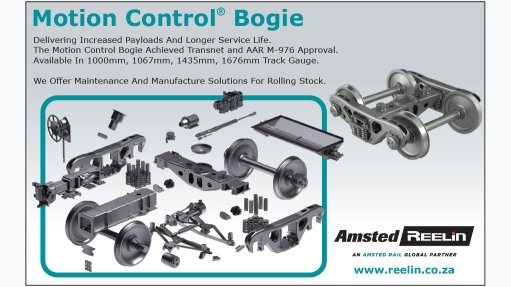
REELIN is Currently the largest supplier of Bearings to Transnet. We have contracts to supply bearings, draft gears slackadjusters and other...
VISIT SHOWROOM
Rentech provides renewable energy products and services to the local and selected African markets. Supplying inverters, lithium and lead-acid...
VISIT SHOWROOM



Announcements
What's On
Subscribe to improve your user experience...
Option 1 (equivalent of R125 a month):
Receive a weekly copy of Creamer Media's Engineering News & Mining Weekly magazine
(print copy for those in South Africa and e-magazine for those outside of South Africa)
Receive daily email newsletters
Access to full search results
Access archive of magazine back copies
Access to Projects in Progress
Access to ONE Research Report of your choice in PDF format
Option 2 (equivalent of R375 a month):
All benefits from Option 1
PLUS
Access to Creamer Media's Research Channel Africa for ALL Research Reports, in PDF format, on various industrial and mining sectors
including Electricity; Water; Energy Transition; Hydrogen; Roads, Rail and Ports; Coal; Gold; Platinum; Battery Metals; etc.
Already a subscriber?
Forgotten your password?
Receive weekly copy of Creamer Media's Engineering News & Mining Weekly magazine (print copy for those in South Africa and e-magazine for those outside of South Africa)
➕
Recieve daily email newsletters
➕
Access to full search results
➕
Access archive of magazine back copies
➕
Access to Projects in Progress
➕
Access to ONE Research Report of your choice in PDF format
RESEARCH CHANNEL AFRICA
R4500 (equivalent of R375 a month)
SUBSCRIBEAll benefits from Option 1
➕
Access to Creamer Media's Research Channel Africa for ALL Research Reports on various industrial and mining sectors, in PDF format, including on:
Electricity
➕
Water
➕
Energy Transition
➕
Hydrogen
➕
Roads, Rail and Ports
➕
Coal
➕
Gold
➕
Platinum
➕
Battery Metals
➕
etc.
Receive all benefits from Option 1 or Option 2 delivered to numerous people at your company
➕
Multiple User names and Passwords for simultaneous log-ins
➕
Intranet integration access to all in your organisation