Caution, economic strain shaping tech adoption


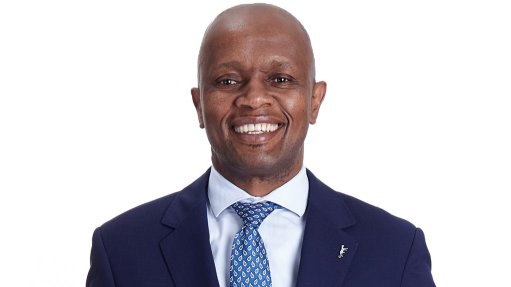
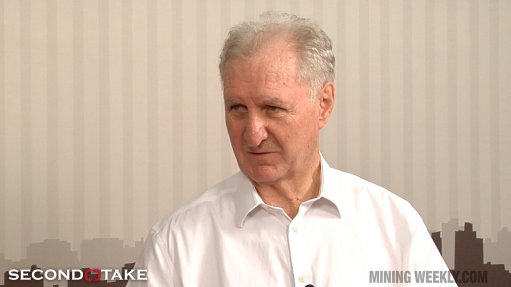
VICTOR NEMUKULA There has not been a large adoption of automation in the South African market so far as companies prefer that they're familiar with



Cautious investor sentiment and sustained cost pressures continue to shape technology adoption in South Africa’s materials-handling sector, with safety, affordability and asset life extension taking precedence over large-scale automation rollouts, equipment provider Shumani Industrial Equipment MD Victor Nemukula says.
While automation, Internet-of-Things (IoT) connectivity and AI are increasingly embedded in global materials-handling solutions, uptake in South Africa has been slower than anticipated. In this regard, Nemukula notes that many local operators remain reluctant to move away from established practices, particularly where safety and reliability are perceived to be well managed under conventional operating models.
“There has not been a large adoption of automation in the South African market so far as companies prefer the methods that they’re familiar with; ones that they believe still work. The major emphasis is still very much on safety,” he says.
Shumani has nonetheless made AI-driven fleet management systems available to customers, enabling improved monitoring of equipment use, maintenance requirements and operator behaviour.
These technologies can deliver measurable gains in productivity and lower cost-per-tonne handled, but Nemukula says broader adoption is likely to be linked to improved economic outlook.
Cost Implication, Circularity Imperative
Cost sensitivity has become a defining feature of the materials-handling market over the past 12 to 18 months, with capital budgets under sustained pressure. As a result, demand has shifted noticeably towards refurbished equipment, rentals and solutions that extend the operational life of existing fleets, particularly among smaller customers.
“Most small customers prefer to procure used or refurbished equipment to save on costs, as the market is still under a lot of pressure,” Nemukula says.
In response, Shumani has expanded its refurbishment and life-cycle support offerings, thereby allowing clients to defer large capital expenditure while maintaining operational continuity. This approach also aligns with the growing interest in circular economy practices within logistics and warehousing environments.
Circularity, Nemukula explains, is being driven less by regulation and more by the need to reduce the total cost of ownership. Shumani supports this through component reuse and selective upgrades, particularly in relation to batteries, where reused or newer-generation units are installed to extend equipment life and improve efficiency.
Electrification trends are also gaining traction, albeit unevenly and Nemukula says larger customers are leading the migration to electric forklifts, with lithium-ion batteries increasingly favoured for high-throughput warehouse applications.
Although lithium-ion systems carry higher upfront costs, their lower operating and maintenance costs, longer lifespan and environmental benefits strengthen their business case, especially for larger fleets.
Smaller operators, however, remain more cautious, often balancing environmental compliance aspirations against immediate affordability concerns. From a regional perspective, Shumani continues to prioritise the domestic market, which Nemukula describes as the most developed materials-handling environment in sub-Saharan Africa.
While shifting trade routes, port inefficiencies and rail constraints are influencing freight dynamics, many African markets remain too small to support a broad continental expansion strategy.
As a result, Shumani is focused on consolidating its competitive position in South Africa, while monitoring selective opportunities elsewhere on the continent as infrastructure investment and industrial activity evolve.
“For now, resilience, cost efficiency and incremental technology adoption remain central to navigating a challenging operating environment,” Nemukula concludes
Article Enquiry
Email Article
Save Article
Feedback
To advertise email advertising@creamermedia.co.za or click here
Research Reports

Projects
Latest Multimedia

Latest News

Showroom

For over 15 years, Lilak Aluminium, a trusted leader in architectural extrusion supply, has delivered excellence to businesses like yours.
VISIT SHOWROOM
Leading condition monitoring specialists, WearCheck, help boost machinery lifespan and reduce catastrophic component failure through the scientific...
VISIT SHOWROOM
Announcements
What's On
Subscribe to improve your user experience...
Option 1 (equivalent of R125 a month):
Receive a weekly copy of Creamer Media's Engineering News & Mining Weekly magazine
(print copy for those in South Africa and e-magazine for those outside of South Africa)
Receive daily email newsletters
Access to full search results
Access archive of magazine back copies
Access to Projects in Progress
Access to ONE Research Report of your choice in PDF format
Option 2 (equivalent of R375 a month):
All benefits from Option 1
PLUS
Access to Creamer Media's Research Channel Africa for ALL Research Reports, in PDF format, on various industrial and mining sectors
including Electricity; Water; Energy Transition; Hydrogen; Roads, Rail and Ports; Coal; Gold; Platinum; Battery Metals; etc.
Already a subscriber?
Forgotten your password?
Receive weekly copy of Creamer Media's Engineering News & Mining Weekly magazine (print copy for those in South Africa and e-magazine for those outside of South Africa)
➕
Recieve daily email newsletters
➕
Access to full search results
➕
Access archive of magazine back copies
➕
Access to Projects in Progress
➕
Access to ONE Research Report of your choice in PDF format
RESEARCH CHANNEL AFRICA
R4500 (equivalent of R375 a month)
SUBSCRIBEAll benefits from Option 1
➕
Access to Creamer Media's Research Channel Africa for ALL Research Reports on various industrial and mining sectors, in PDF format, including on:
Electricity
➕
Water
➕
Energy Transition
➕
Hydrogen
➕
Roads, Rail and Ports
➕
Coal
➕
Gold
➕
Platinum
➕
Battery Metals
➕
etc.
Receive all benefits from Option 1 or Option 2 delivered to numerous people at your company
➕
Multiple User names and Passwords for simultaneous log-ins
➕
Intranet integration access to all in your organisation