China plants another Africa marker in campaign to globalise yuan

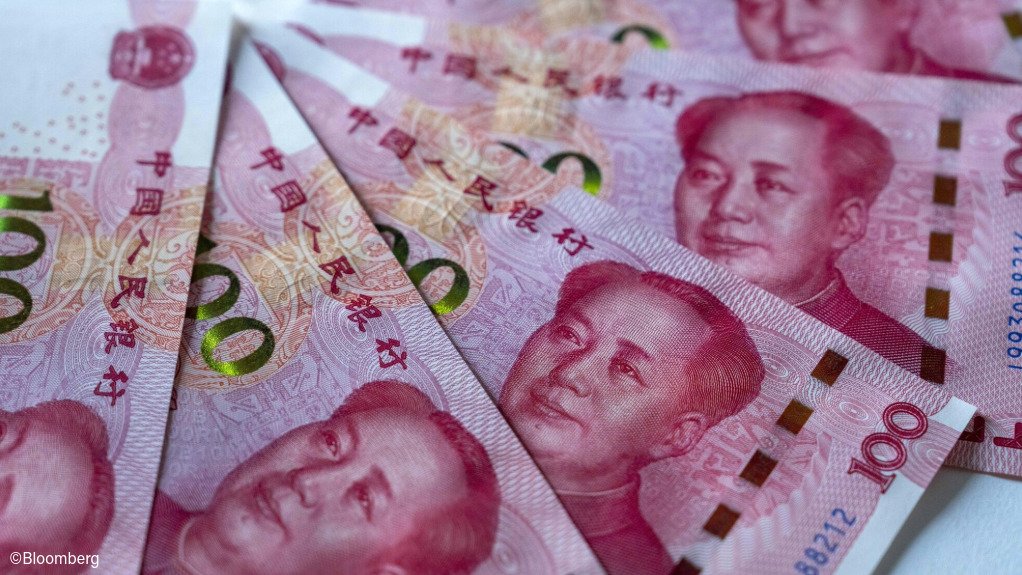



Zambia is the first African country to let Chinese mining companies pay taxes in yuan. It probably won’t be the last, as Beijing seeks to internationalise the currency and dilute its dollar dependence.
The move, disclosed last month, is Beijing’s latest success in a bid boost the currency’s use in Africa, where China is the biggest trade partner. Already, Kenya’s converted some of its dollar debt to China into yuan and Ethiopia’s in talks to follow suit. The African Export-Import Bank last year sold its first ever panda bond.
Zambia’s announcement on December 31 offers “a model that China could repeat elsewhere on the continent as it looks to further demonopolise the international financial architecture,” said Tewodros Sile, lead adviser at Africa Practice. “As African countries move toward monetary pluralism, these moves help further strengthen China’s strategic position on the continent and its relationship with many of its most important bilateral African partners.”
While the yuan accounts for less than 2% of global reserves, Africa is proving a key testing ground for China’s efforts to boost its global role, reducing reliance on the US financial system. Beijing is a major creditor to African nations including Zambia, and is also the biggest buyer of many of the continent’s commodities.
Boosting yuan use offers benefits to both, at a time when Washington’s willingness to weaponize the dollar against rivals through sanctions or other restrictions has hardened the argument for alternatives.
Governments were also reminded last week that the dollar’s dominance is not guaranteed, after President Donald Trump’s Justice Department served the Federal Reserve with subpoenas threatening a criminal prosecution. The move was widely viewed as a bid to pressure the central bank to lower interest rates – a threat to its independence that could sap confidence in US assets.
While there is no evidence of China explicitly lobbying African governments to increase their use of the yuan, Beijing’s push for a greater international role has gained momentum since President Xi Jinping in early 2024 called for a strong currency to build the nation into a “financial power.”
YUAN FUNDING
Surging trade with the world’s top exporter has helped promote the global use of the Chinese currency in trade financing, with its market share rising to about 7% from 2% over the past five years, according to data provided by the People’s Bank of China.
In an annual report published in October, the central bank vowed to further encourage overseas entities to raise funding in the yuan, confident the currency’s cheap borrowing costs – more than 200 basis points below the dollar – will draw global investors.
The People’s Bank of China didn’t immediately reply to a request for comment sent by fax on Jan. 16.
Despite the progress, China’s longstanding capital controls constrain broader global adoption.
The yuan’s share as a global reserve currency dropped to 1.93% in the July to September period in 2025, International Monetary Fund data shows. Payments in the unit via the Society for Worldwide Interbank Financial Telecommunication slipped to 2.94% in November, down from a peak of 4.74% in 2024.
“African countries’ increased holdings of renminbi and willingness to convert debt to renminbi certainly reflect an expanded reach of the renminbi,” said Kean Fan Lim at Newcastle University’s School of Geography, Politics & Sociology. “But this reach has a limitation: insofar as the renminbi is not fully convertible, then its value to those holding it would be one of a trading currency.”
If more African countries are happy to hold and trade in it, this means “they will be more embedded within the Chinese economic sphere of influence,” he said by email.
Jito Kayumba, an adviser to Zambia President Hakainde Hichilema, highlighted how using the yuan can help insulate the nation from US policy shocks.
“We obviously value the dollar – it is the reserve currency,” he told Bloomberg. “But the more demand there is for it, it poses significant currency risk on our side.”
Article Enquiry
Email Article
Save Article
Feedback
To advertise email advertising@creamermedia.co.za or click here
Research Reports


Projects


Latest Multimedia



Showroom

North Ridge Pumps is an independent manufacturer of pumps. We have a proven track record for product support and customer service throughout the...
VISIT SHOWROOM




Announcements
What's On
Subscribe to improve your user experience...
Option 1 (equivalent of R125 a month):
Receive a weekly copy of Creamer Media's Engineering News & Mining Weekly magazine
(print copy for those in South Africa and e-magazine for those outside of South Africa)
Receive daily email newsletters
Access to full search results
Access archive of magazine back copies
Access to Projects in Progress
Access to ONE Research Report of your choice in PDF format
Option 2 (equivalent of R375 a month):
All benefits from Option 1
PLUS
Access to Creamer Media's Research Channel Africa for ALL Research Reports, in PDF format, on various industrial and mining sectors
including Electricity; Water; Energy Transition; Hydrogen; Roads, Rail and Ports; Coal; Gold; Platinum; Battery Metals; etc.
Already a subscriber?
Forgotten your password?
Receive weekly copy of Creamer Media's Engineering News & Mining Weekly magazine (print copy for those in South Africa and e-magazine for those outside of South Africa)
➕
Recieve daily email newsletters
➕
Access to full search results
➕
Access archive of magazine back copies
➕
Access to Projects in Progress
➕
Access to ONE Research Report of your choice in PDF format
RESEARCH CHANNEL AFRICA
R4500 (equivalent of R375 a month)
SUBSCRIBEAll benefits from Option 1
➕
Access to Creamer Media's Research Channel Africa for ALL Research Reports on various industrial and mining sectors, in PDF format, including on:
Electricity
➕
Water
➕
Energy Transition
➕
Hydrogen
➕
Roads, Rail and Ports
➕
Coal
➕
Gold
➕
Platinum
➕
Battery Metals
➕
etc.
Receive all benefits from Option 1 or Option 2 delivered to numerous people at your company
➕
Multiple User names and Passwords for simultaneous log-ins
➕
Intranet integration access to all in your organisation