China’s platinum futures exchange debut seen as major boost for South Africa’s PGMs

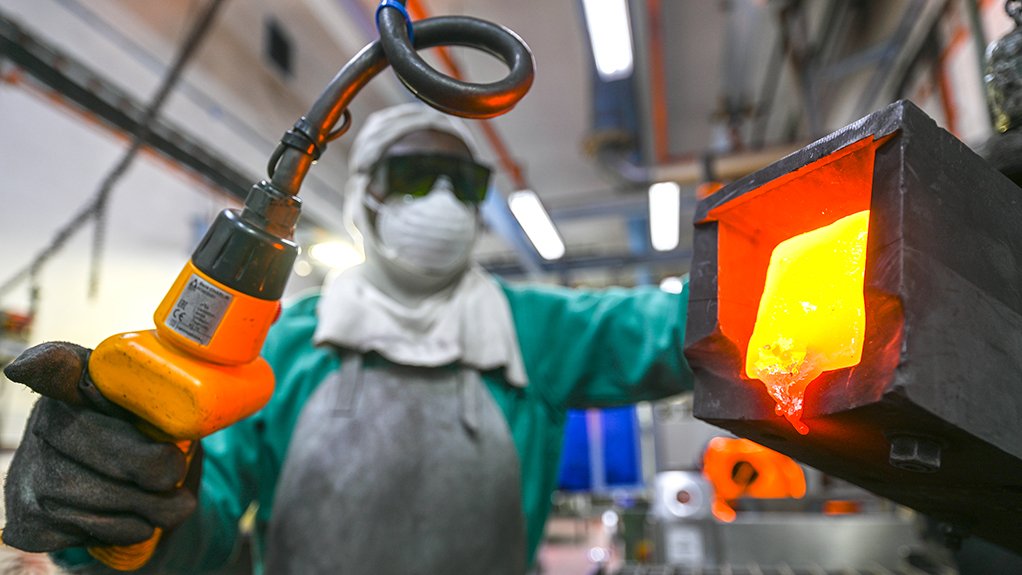
World Platinum's Edward Sterck interviewed by Mining Weekly's Martin Creamer. Video: Darlene Creamer.
Platinum sponge traded by China’s Guangzhou Futures Exchange.



Physically settled platinum and palladium futures contracts and futures options commenced trading on November 27 on China’s Guangzhou Futures Exchange, which is cracking a world first by taking delivery of sponge, an advance that is highly attractive to industrial and automotive end-users.
Up to now, exchanges have only been prepared to take delivery of platinum ingot and bar.
Despite being the world’s largest consumer of platinum group metals (PGMs), China has typically been a PGMs price taker, with only its varying levels of imports impacting on international price discovery.
Now, the listing of platinum and palladium futures is seen as increasing the influence of China’s future demand expectations on global price discovery.
Moreover, the provision of an alternative mechanism to gain exposure to platinum and palladium supports broader liquidity and the overall effect is viewed as being a major boost for South Africa’s world-leading PGMs endowment in that fabricators can register their future production under a 120% bank guarantee and price risk hedging across the supply chain will likely lower buyback discounts.
Guangzhou will publish stock holdings daily amid rising hope of a link-up with the Johannesburg Stock Exchange to bring a ready-made green finance derivatives system to South Africa.
“The launch of the Guangzhou Futures Exchange and the fact that it’s open to international participation means that China’s future demand expectations can begin to be reflected in the price discovery process, and that’s going to be quite beneficial to the market,” World Platinum Investment Council research director Edward Sterck pointed out to Engineering News & Mining Weekly in a Zoom interview.
As with other futures exchanges, exposure will need to be collateralised with physical platinum in exchange-approved warehouses as margin against short positions.
This may result in a demand draw as volumes increase. Since the platinum-trading Shanghai Gold Exchange (SGE) offers only one-way trading with purchase for delivery, Guangzhou is positioned to attract two-way domestic volumes.
Platinum volumes have averaged around 0.8 t a week on the SGE, well below average spot trading on the London Bullion Market Association (LBMA) and on the New York Mercantile Exchange (NYMEX). The latest available data for Osaka Exchange Platinum Standard Futures trading volume as of November 21 was 7 157 contracts.
In the view of Sterck, Guangzhou is going to be of significant benefit on many different levels.
To begin with, it will increase liquidity in China and eventually increase liquidity globally. “If you look at the platinum trading volumes on the Shanghai Gold Exchange, as an example, they average only about 4 t a week, whereas if you look at, say, NYMEX trading volumes, it’s more like 200 t a week. So, clearly, the ability to bring into play another derivatives market within China has the potential to massively scale up liquidity there.”
The exchange makes platinum more accessible as an investment. It also uplifts platinum as an industrial metal to the end- users within China and eventually to international participants, which creates another avenue by which arbitrage can take place on the regional pricing differentials between London, New York, Japan and China.
Again, that helps to increase liquidity and the availability of platinum to market participants. The other thing to bear in mind is that within China, there has historically not been an easily accessible way to manage price risk for end-users.
“For example, jewellery manufacturers or the fabricators of investment products or automakers don’t have the ability, necessarily, to easily manage their price risk. As a result, particularly when it comes to jewellery and investment products, you tend to see quite a big premium on the selling price and quite a big discount on the buyback. Now, the ability to manage price risk should allow for the premium discount spread to close, and that’s only likely to help consumers gain confidence in platinum and bring more consumers into the investment and jewellery space.”
Engineering News & Mining Weekly: Why are some analysts expressing the belief that the availability of platinum and palladium in the form of both ingot and sponge will be transformative?
Sterck: Ingot is the traditional form. If you look at, for example, the NYMEX, the good delivery bars are ingot, they’re 50 oz bars. The innovative thing that the Guangzhou Futures Exchange is bringing in is the ability to take delivery in sponge. That’s particularly useful for certain end- users, particularly automakers and industrial end-users, who want metal in sponge form in order to make catalysts, for example. This, I guess, is a bit of a shortcut route for them. They don’t need to buy bars and then convert them into sponge. They can get sponge directly through the exchange. That makes their life easier, and maybe reduces their operating costs to a degree, and potentially accelerates the usage of platinum overall.
Guangzhou’s platinum debut takes place against the backdrop of structural adjustment in China’s platinum market owing to the absence of value added tax (VAT) exemption on platinum imports since November 1. Is this also a plus for platinum?
Overall, I think it is. There’s been quite widespread VAT reform within China. It’s not just platinum that’s been impacted. It’s also impacted gold. Just to explain the change, what’s happened is that, previously, if you bought platinum through the Shanghai Gold Exchange, you paid a 3% service fee, but you got a 13% VAT exemption. That was important for certain end-users who care about VAT, which would be jewellers, investment product manufacturers and so on. That exemption has now been revoked. If you bought platinum by importing it directly into China or through the secondary market, then that exemption wasn’t in place, so effectively, this VAT change levels the playing field within China between the Shanghai Gold Exchange market and the direct import market. Now, initially, if you increase the price of something, which is effectively what this does, that’s potentially slightly negative for demand. There’s a certain degree of price sensitivity, but overall we expect this to result in an improved secondary market in China, which will make metal more broadly accessible. The VAT changes to gold are a bit more complex, but effectively the majority of gold’s VAT exemption has also been revoked, and so this creates a more level playing field between platinum and between gold as well. Now considering that gold is still trading at a significant premium to platinum, and that’s proven to be quite damaging for things like gold investment demand in China and jewellery demand, we still see platinum as being fundamentally better placed than gold from a price perspective, and therefore more competitive and more attractive to consumers within China.
Article Enquiry
Email Article
Save Article
Feedback
To advertise email advertising@creamermedia.co.za or click here


Projects

Latest Multimedia

Latest News

Showroom

We supply customers with practical affordable solutions for their testing needs. Our products include benchtop, portable, in-line process control...
VISIT SHOWROOM
ECG provides specialised electrical engineering services to the Mining, Utilities, Materials Handling and Industrial industries, with extensive and...
VISIT SHOWROOM



Press Office
Announcements
What's On
Subscribe to improve your user experience...
Option 1 (equivalent of R125 a month):
Receive a weekly copy of Creamer Media's Engineering News & Mining Weekly magazine
(print copy for those in South Africa and e-magazine for those outside of South Africa)
Receive daily email newsletters
Access to full search results
Access archive of magazine back copies
Access to Projects in Progress
Access to ONE Research Report of your choice in PDF format
Option 2 (equivalent of R375 a month):
All benefits from Option 1
PLUS
Access to Creamer Media's Research Channel Africa for ALL Research Reports, in PDF format, on various industrial and mining sectors
including Electricity; Water; Energy Transition; Hydrogen; Roads, Rail and Ports; Coal; Gold; Platinum; Battery Metals; etc.
Already a subscriber?
Forgotten your password?
Receive weekly copy of Creamer Media's Engineering News & Mining Weekly magazine (print copy for those in South Africa and e-magazine for those outside of South Africa)
➕
Recieve daily email newsletters
➕
Access to full search results
➕
Access archive of magazine back copies
➕
Access to Projects in Progress
➕
Access to ONE Research Report of your choice in PDF format
RESEARCH CHANNEL AFRICA
R4500 (equivalent of R375 a month)
SUBSCRIBEAll benefits from Option 1
➕
Access to Creamer Media's Research Channel Africa for ALL Research Reports on various industrial and mining sectors, in PDF format, including on:
Electricity
➕
Water
➕
Energy Transition
➕
Hydrogen
➕
Roads, Rail and Ports
➕
Coal
➕
Gold
➕
Platinum
➕
Battery Metals
➕
etc.
Receive all benefits from Option 1 or Option 2 delivered to numerous people at your company
➕
Multiple User names and Passwords for simultaneous log-ins
➕
Intranet integration access to all in your organisation