Executive AI literacy, AI governance crucial for the future of automation in SA


AI and automation in South Africa are characterised by fragmentation and a lack of cohesive governance. To drive progress towards a future of advanced, integrated AI-enabled automated systems across organisations, South Africa needs formalised and comprehensive AI legislation and governance frameworks, with improved AI literacy at executive level.
This is according to Antony Makins, Chair of the Institute of Information Technology Professionals South Africa (IITPSA) Special Interest Group on AI and Robotics (SIGAIR) and Group Chief Operations Officer for TForge, who was speaking ahead of the Africa Automation Indaba in Cape Town - an event endorsed by the IITPSA.
Pockets of excellence, room for improvement
Makins says that while pockets of automation excellence exist in some sectors, many other sectors lag in terms of automation and AI adoption. While AI-enabled automation promises to revolutionise operations for businesses of all sizes, he warns: "Don't scale automation first, scale governance first.”
He notes: “The South African automation industry is a very broad, all-encompassing industry and we see varied maturity levels across sectors. Some industries are very advanced in terms of automation - such as the automotive industry, which uses advanced robotics as part of the manufacturing process. Tier one large enterprises in sectors such as finance and telecoms, which have highly transactional environments, also use advanced automation and are integrating AI into these processes. In mid-size and smaller businesses that could gain significant benefits from automation and AI, adoption has been slow. Where automation and AI is maturing, we nonetheless find that it is often segmented within departments and across technology stacks.”
Makins predicts that the advent of AI will drive a complete rearchitecting of how businesses operate: “Organisations are being turned on their heads because all the systems we created had the human in mind. Now, we are no longer designing processes around human efficiency, but rather around operational and process efficiency. So, the automation strategy should be a pillar within the business. It must provide a coherent strategy that ties things together in end to end processes,” he says.
Guidance and governance frameworks lacking
Makins believes legislation and governance are critical foundations for AI-enabled automation in South Africa. “A key issue is that South Africa has a very limited AI governance framework. Elsewhere in the world, we see the EU AI Act is out and most of the Gulf countries already have their governance in place. But South Africa is lagging in that regard,” he says. “Within enterprises, there is very limited knowledge about how AI should be governed, and used ethically. Few have comprehensive AI policies in place and there is limited enterprise-wide AI governance maturity.”
He notes that industry stakeholders have long put forward recommendations to help guide the formulation of AI policy frameworks. “The government needs to move faster on such recommendations. Everything starts with legislation, which then filters down and then the enterprises incorporate that into their governance structures,” he says. “It is also crucial for executive leadership to understand the AI ecosystem and associated risks, and take governance elements such as legislation, the South African Bureau of Standards’ new ISO 4201 and NIST AI frameworks and bring them all together into something that can be operationalised in a practical way.”
He adds that one of the aims of the IITPSA is to guide and help formulate governance and compliance with legislation and comment on legislation that comes from the government.
AI skills development crucial for progress
Makins stresses the importance of AI skills development to enable organisations to harness AI-enabled automation safely and effectively.
“Boards and executives must become AI literate,” he says. “They must understand why AI implementations fail, why clean data is crucial, and the business risks associated with AI. They need to ensure all AI deployments start with a data policy, proper governance and security guardrails,” he says.
Beyond executive leadership, AI skills development must take place across every organisation, Makins says. “Workforce transformation - or a workforce automation strategy - is critical. This means that organisations shouldn’t replace skills with technology, but they should rather reskill people. They should develop automation champions internally, who can help ensure that automation investments actually make processes more efficient,” he says.
He emphasizes that because AI progress is accelerating so rapidly, organisations should invest in continuous learning for their staff, and individuals should take the initiative to upskill themselves on skills such as prompt and context engineering. “People need to be educating themselves as quickly as possible. They need to understand the AI and automation ecosystem, see where they plug into that ecosystem, and learn more about how the tools within the ecosystem can help them become more efficient. In future, if you don’t have a basic knowledge of these kinds of technologies, you're going to be left behind. If you can educate yourself in a way that supplements your work and gives better, faster outputs, it goes without saying that in the enterprise, you're the person that's going to get the promotion and the person that doesn't use AI is not going to.”
“For organisations, automation should integrate people and technology to augment capability. Organisations that succeed will be those that successfully combine technology, governance and professional standards. And that's our mandate in IITPSA SIGAIR,” he concludes.
The IITPSA has partnered with the inaugural Africa Automation Indaba, which will be held at the Radisson Collection Hotel at the Waterfront in Cape Town on 13-14 May 2026, and the Africa Automation and Technology Fair, which will take place in Johannesburg in May 2027.
Article Enquiry
Email Article
Save Article
Feedback
To advertise email advertising@creamermedia.co.za or click here


Projects


Latest Multimedia


Latest News

Showroom
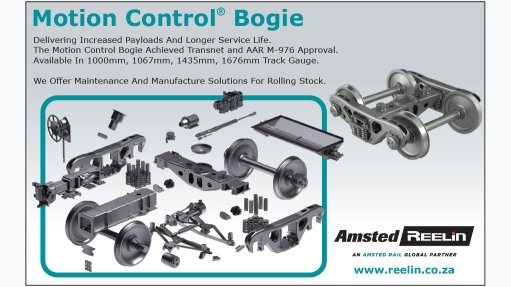
REELIN is Currently the largest supplier of Bearings to Transnet. We have contracts to supply bearings, draft gears slackadjusters and other...
VISIT SHOWROOM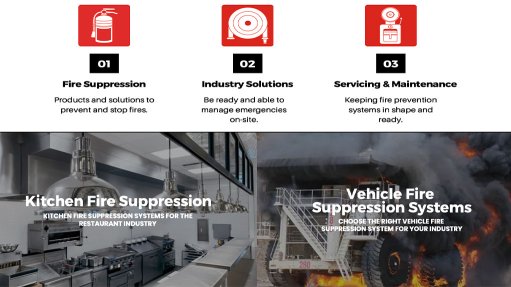
Established on 1 March, 2000, by Barries Barnard, Advanced Fire Suppression Technologies (AFST) and the Advanced Group stands as Sub-Saharan...
VISIT SHOWROOM


Press Office
Announcements
What's On
Subscribe to improve your user experience...
Option 1 (equivalent of R125 a month):
Receive a weekly copy of Creamer Media's Engineering News & Mining Weekly magazine
(print copy for those in South Africa and e-magazine for those outside of South Africa)
Receive daily email newsletters
Access to full search results
Access archive of magazine back copies
Access to Projects in Progress
Access to ONE Research Report of your choice in PDF format
Option 2 (equivalent of R375 a month):
All benefits from Option 1
PLUS
Access to Creamer Media's Research Channel Africa for ALL Research Reports, in PDF format, on various industrial and mining sectors
including Electricity; Water; Energy Transition; Hydrogen; Roads, Rail and Ports; Coal; Gold; Platinum; Battery Metals; etc.
Already a subscriber?
Forgotten your password?
Receive weekly copy of Creamer Media's Engineering News & Mining Weekly magazine (print copy for those in South Africa and e-magazine for those outside of South Africa)
➕
Recieve daily email newsletters
➕
Access to full search results
➕
Access archive of magazine back copies
➕
Access to Projects in Progress
➕
Access to ONE Research Report of your choice in PDF format
RESEARCH CHANNEL AFRICA
R4500 (equivalent of R375 a month)
SUBSCRIBEAll benefits from Option 1
➕
Access to Creamer Media's Research Channel Africa for ALL Research Reports on various industrial and mining sectors, in PDF format, including on:
Electricity
➕
Water
➕
Energy Transition
➕
Hydrogen
➕
Roads, Rail and Ports
➕
Coal
➕
Gold
➕
Platinum
➕
Battery Metals
➕
etc.
Receive all benefits from Option 1 or Option 2 delivered to numerous people at your company
➕
Multiple User names and Passwords for simultaneous log-ins
➕
Intranet integration access to all in your organisation