Credit cover facilitates exports

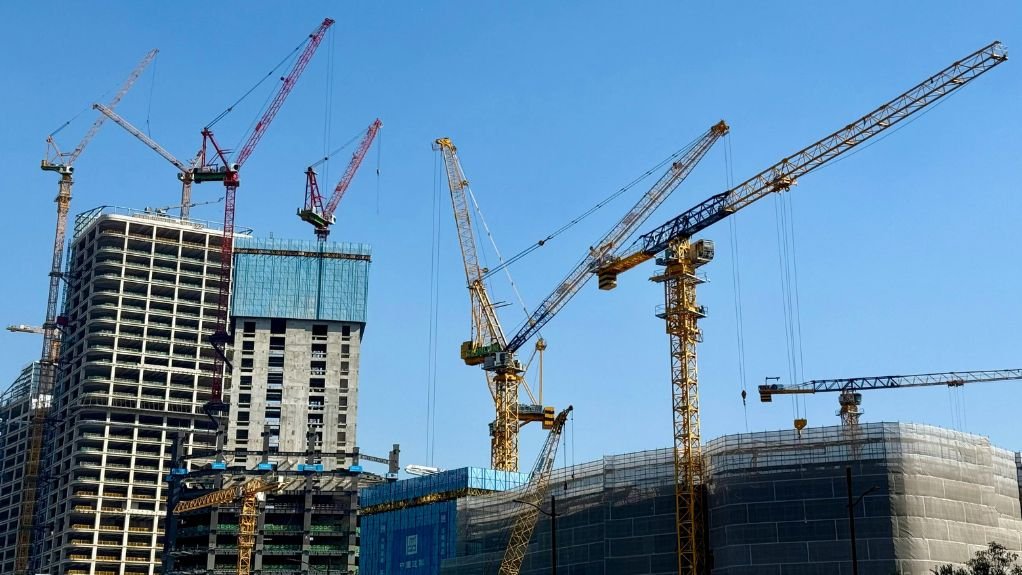
SECURED SOVEREIGNTY By absorbing political and nonpayment risks, the agency enables South African banks and development finance institutions to treat high-risk cross-border exposures as sovereign-backed assets under Basel III


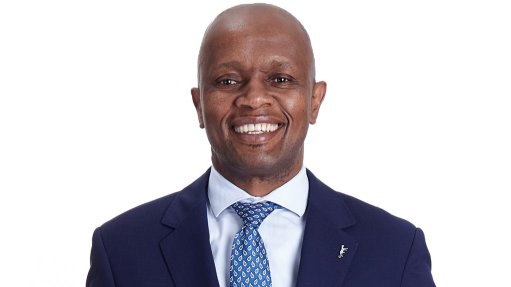
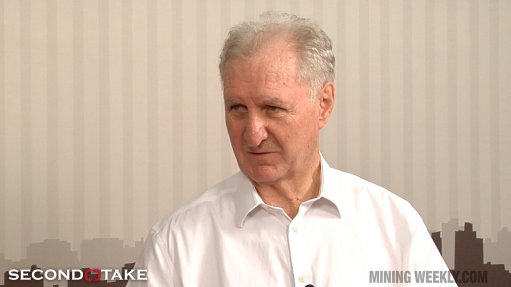
South Africa’s construction capital equipment sector is increasingly relying on export credit insurance to support participation in international projects that are under economic pressure, says State-owned export credit agency Export Credit Insurance Corporation of South Africa (ECIC) senior deal originator Seth Keshwar.
With international buyers delaying spending, and seeking flexible procurement while trying to respond to the global energy transition, the agency plays a key role in supporting local construction equipment suppliers in the resulting constrained economic environment, he says.
ECIC covers political and commercial risks that are often excluded by private insurers, consequently enabling exporters to offer longer and more flexible payment terms.
Keshwar adds that this support helps exporters to remain competitive when supplying construction equipment to African markets where cash-flow constraints are common.
Moreover, the ECIC supports local manufacturers by insuring working-capital facilities provided by banks. This enables construction equipment suppliers to borrow against confirmed orders instead of tying up significant collateral.
Keshwar says the agency also provides capital relief to banks under Basel III requirements, which lowers funding costs: “[It] makes a considerable difference when you’re competing on price globally.”
He confirms that demand for export credit insurance has increased as construction clients defer or restructure capital expenditure. With buyers extending payment terms and requesting phased payment structures, exporters are more exposed to risk.
Consequently, the ECIC has developed products that support leasing, rental and pay-per-use models, which are becoming more prevalent in construction projects.
Keshwar cites the agency’s Lease and Return of Plant/Equipment product, which protects South African lessors against political risks such as war, expropriation and nationalisation. The product also covers lessee insolvency.
“It specifically addresses the challenges of repatriating equipment from risky countries,” he notes, adding that this helps exporters to adopt more flexible, use-based business models.
He clarifies the ECIC’s role, from a financial perspective, noting that the agency “doesn’t make projects bankable, it makes them more palatable”.
By absorbing political and nonpayment risks, the agency enables South African banks and development finance institutions (DFIs) to treat high-risk cross-border exposures as sovereign-backed assets under Basel III. This reduces lender risk, as previously stated, and improves access to funding.
Keshwar says green energy and low- emission equipment are now priority sectors for ECIC, as rapid technological change is creating concern among buyers that equipment could become outdated within a few years.
“Risks like these require innovative solutions,” he says, emphasising leasing and return structures that support more asset-light approaches.
The ECIC supports exporters of fuel efficient, hybrid and electric construction equipment by offering extended cover periods. As an observer of Organisation for Economic Cooperation and Development (OECD) protocols, ECIC can align cover with the longer payback periods required to realise fuel savings. This is particularly important for construction companies investing in higher-cost, lower-emission machinery.
He adds that growing supply chain risks affect cross-border construction equipment transactions, noting that political, economic and payment risks are increasingly interconnected.
“A foreign country experiencing currency shortage is more likely to implement capital controls. This can result in payment delays, which, in turn, causes suppliers to delay shipments, ultimately disrupting construction projects.”
The ECIC works closely with DFIs, commercial banks and equipment suppliers to unlock funding for large construction projects.
The agency’s cover enables DFIs to operate in higher-risk markets by providing downside protection. Once DFIs participate, commercial banks tend to follow: “We usually see every rand from a DFI generating another R2 or R3 from the private sector,” he notes.
Meanwhile, environmental and regulatory requirements are also shaping how construction equipment export deals are structured. Keshwar says compliance with International Finance Corporation and World Bank environmental, social and governance standards, as well as the Equator Principles, are now required for ECIC support.
Export credit insurance has become an essential tool for supporting equipment supply into African markets, he concludes.
Article Enquiry
Email Article
Save Article
Feedback
To advertise email advertising@creamermedia.co.za or click here
Research Reports

Projects
Latest Multimedia

Latest News
Showroom
For over 15 years, Lilak Aluminium, a trusted leader in architectural extrusion supply, has delivered excellence to businesses like yours.
VISIT SHOWROOM
Leading condition monitoring specialists, WearCheck, help boost machinery lifespan and reduce catastrophic component failure through the scientific...
VISIT SHOWROOM
Announcements
What's On
Subscribe to improve your user experience...
Option 1 (equivalent of R125 a month):
Receive a weekly copy of Creamer Media's Engineering News & Mining Weekly magazine
(print copy for those in South Africa and e-magazine for those outside of South Africa)
Receive daily email newsletters
Access to full search results
Access archive of magazine back copies
Access to Projects in Progress
Access to ONE Research Report of your choice in PDF format
Option 2 (equivalent of R375 a month):
All benefits from Option 1
PLUS
Access to Creamer Media's Research Channel Africa for ALL Research Reports, in PDF format, on various industrial and mining sectors
including Electricity; Water; Energy Transition; Hydrogen; Roads, Rail and Ports; Coal; Gold; Platinum; Battery Metals; etc.
Already a subscriber?
Forgotten your password?
Receive weekly copy of Creamer Media's Engineering News & Mining Weekly magazine (print copy for those in South Africa and e-magazine for those outside of South Africa)
➕
Recieve daily email newsletters
➕
Access to full search results
➕
Access archive of magazine back copies
➕
Access to Projects in Progress
➕
Access to ONE Research Report of your choice in PDF format
RESEARCH CHANNEL AFRICA
R4500 (equivalent of R375 a month)
SUBSCRIBEAll benefits from Option 1
➕
Access to Creamer Media's Research Channel Africa for ALL Research Reports on various industrial and mining sectors, in PDF format, including on:
Electricity
➕
Water
➕
Energy Transition
➕
Hydrogen
➕
Roads, Rail and Ports
➕
Coal
➕
Gold
➕
Platinum
➕
Battery Metals
➕
etc.
Receive all benefits from Option 1 or Option 2 delivered to numerous people at your company
➕
Multiple User names and Passwords for simultaneous log-ins
➕
Intranet integration access to all in your organisation