Electricity wheeling options simplify renewables uptake

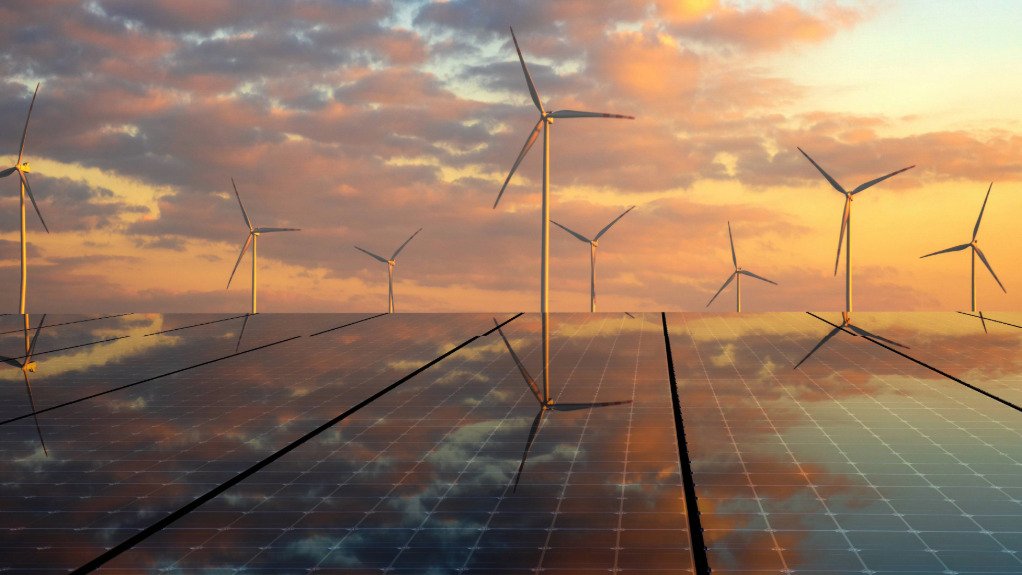
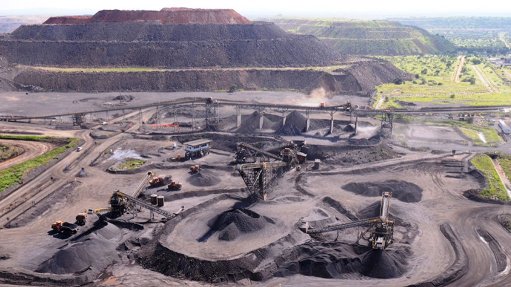
NEW HORIZONS Renewable-energy wheeling is increasingly replacing traditional coal-based power generation with power from independent power producers’ renewable-energy plants


Alongside its environmental benefits, renewable energy is fundamentally a financial sustainability solution, with new electricity wheeling options offering a cheaper alternative to grid power for mining clients, says renewable-energy trader Discovery Green executive director Dan Ginsberg.
Renewable-energy wheeling replaces traditional coal-based power generation with power from independent power producers’ (IPPs’) renewable-energy plants, typically wind or solar, being connected to the national grid.
“Instead of nominally being supplied through one of the coal plants, you now would be receiving those electrons through a private renewable-energy plant,” he says.
Traditional wheeling is currently available to mining customers who receive electricity directly from State-owned power utility Eskom, rather than through a municipality, and who are medium- or high-voltage users.
Mining operations meet these criteria, particularly once they reach commercial production.
Electricity wheeling, explains Ginsberg, typically offers a lower starting price compared to Eskom tariffs while any tariff increases are limited to inflation.
Wheeling Options
There are two primary methods of electricity wheeling, explains Ginsberg. The first is by contracting directly with an IPP, whereby the IPP builds a renewable energy plant, connects it to the grid and sells power to a mine under a bilateral agreement.
He elaborates that when a mine contracts directly with an IPP, it is often under a take-or-pay agreement whereby the mine agrees to buy all the electricity the plant produces and not only what the client uses.
Conversely, if generation exceeds expectations, the mine may be required to pay for electricity it cannot use.
Therefore, he explains that there is no certainty regarding minimums, maximums or actual delivery profiles of renewable energy.
The second approach, which has recently emerged, involves a renewable-energy trader.
While trader structure can vary, Ginsberg says traders typically manage a portfolio of renewable-energy projects, contracting with multiple IPPs and subsequently supplying power to customers from this portfolio.
In this structure, a mining client could contract with the trader rather than directly with an IPP, thereby enabling the forming of custom contracts which, he says, in many cases, serve to reduce risk for mining companies, depending on the trader structure and contract.
When working with a trader, such as Discovery Green, Ginsberg says traders absorb much of the risk associated with buying power from IPPs by guaranteeing minimum and maximum supply levels and managing volatility through its diversified renewable energy projects portfolio.
While contracting directly with an IPP often results in an offtaker taking the full output of a plant, a trader allocates an appropriate portion of power required by each of its clients through its portfolio instead, says Ginsberg, adding that this plays into improved economies of scale, with any savings achieved being passed on to customers.
High Coverage
Ginsberg notes that mining operations are more variable in their electricity consumption than is commonly assumed, owing to planned and unplanned shutdowns.
Trader-based models can manage this more effectively by offering flexibility that protects against consumption volatility and generation variability, he says.
Mines also need to determine the target level of renewable-energy coverage from the outset as incremental approaches, such as starting with 20% or 30% coverage, have repurcussions.
“Renewable procurement is not a ladder but rather a strategic path where choosing the wrong initial structure can make it costly or impractical to scale to higher coverage levels later,” he asserts.
Further, maximising coverage, ideally between 70% to 90% or more, is crucial in delivering the greatest long-term savings and insulation from time-of-day pricing volatility alongside cost predictability and long-term financial performance, says Ginsberg.
Discovery Green simplifies this process by replacing 90% of a customer’s electricity consumption with renewable energy as its standard offer. This level of coverage, he says, maximises cost savings and environmental, social and governance impact, adding that this is already being implemented for major mining clients, including platinum group metals producer Impala Platinum.
Apart from a handful of significant energy users, he assures that it is realistic for Discovery Green to replace 90% of the user’s electricity consumption with renewable energy immediately or in the near future.
“We are supplying 90% renewable energy coverage to the entire refinery division of Impala Platinum. We have also concluded very large agreements with divisions of major mining groups such as Glencore, where the majority of operational electricity demand is being covered,” highlights Ginsberg.
Article Enquiry
Email Article
Save Article
Feedback
To advertise email advertising@creamermedia.co.za or click here
Research Reports
Projects
Latest News

Showroom

Immersive Technologies is the world's largest, proven and tested supplier of simulator training solutions to the global resources industry.
VISIT SHOWROOM
FLANDERS Southern Africa provides integrated solutions for mining and industrial operations, covering field services, automation, electrification,...
VISIT SHOWROOM


Announcements
What's On
Subscribe to improve your user experience...
Option 1 (equivalent of R125 a month):
Receive a weekly copy of Creamer Media's Engineering News & Mining Weekly magazine
(print copy for those in South Africa and e-magazine for those outside of South Africa)
Receive daily email newsletters
Access to full search results
Access archive of magazine back copies
Access to Projects in Progress
Access to ONE Research Report of your choice in PDF format
Option 2 (equivalent of R375 a month):
All benefits from Option 1
PLUS
Access to Creamer Media's Research Channel Africa for ALL Research Reports, in PDF format, on various industrial and mining sectors
including Electricity; Water; Energy Transition; Hydrogen; Roads, Rail and Ports; Coal; Gold; Platinum; Battery Metals; etc.
Already a subscriber?
Forgotten your password?
Receive weekly copy of Creamer Media's Engineering News & Mining Weekly magazine (print copy for those in South Africa and e-magazine for those outside of South Africa)
➕
Recieve daily email newsletters
➕
Access to full search results
➕
Access archive of magazine back copies
➕
Access to Projects in Progress
➕
Access to ONE Research Report of your choice in PDF format
RESEARCH CHANNEL AFRICA
R4500 (equivalent of R375 a month)
SUBSCRIBEAll benefits from Option 1
➕
Access to Creamer Media's Research Channel Africa for ALL Research Reports on various industrial and mining sectors, in PDF format, including on:
Electricity
➕
Water
➕
Energy Transition
➕
Hydrogen
➕
Roads, Rail and Ports
➕
Coal
➕
Gold
➕
Platinum
➕
Battery Metals
➕
etc.
Receive all benefits from Option 1 or Option 2 delivered to numerous people at your company
➕
Multiple User names and Passwords for simultaneous log-ins
➕
Intranet integration access to all in your organisation