Eskom says it may take trading rules on legal review, as it calls for material changes

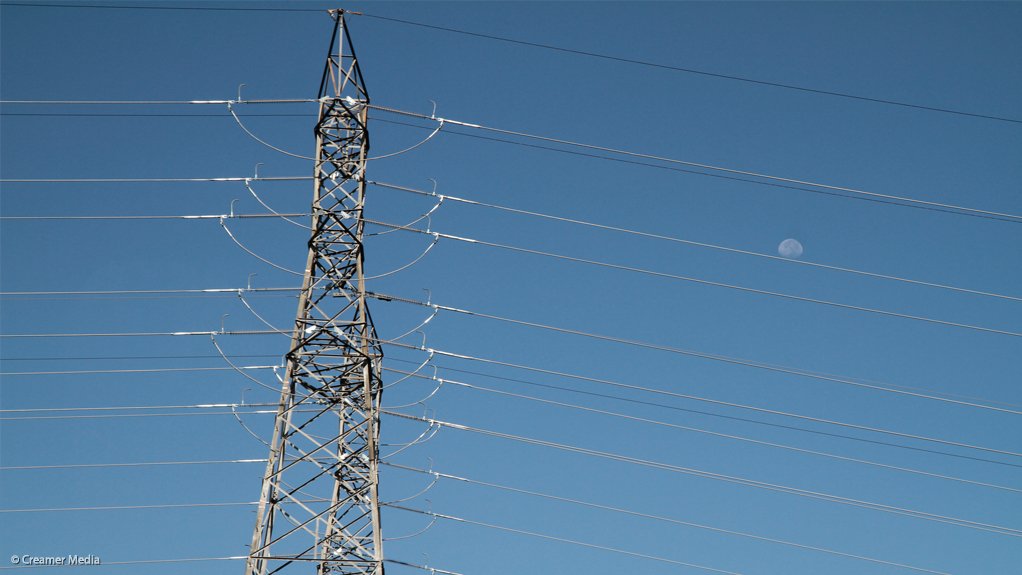


Eskom has raised a slew of legal and technical issues with the draft trading rules being considered for approval by the National Energy Regulator of South Africa (Nersa) and has indicated that it is ready to take legal action should the rules not be amended.
This new threat of a legal challenge was made during Nersa hearings into the trading rules on February 12.
It follows Eskom having initiated a High Court review application in 2025 challenging the regulator’s decision to grant electricity trading licences to five companies, despite several other licences having already been granted over several years.
Following pressure from Electricity and Energy Minister Dr Kgosientsho Ramokgopa, Eskom announced last year that it would “stay” the review application to allow for the Nersa-led process to finalise the trading rules.
It emerged earlier this year that Eskom is proceeding with its review application to “protect its legal position”. However, it stressed that it was continuing to participate in regulatory processes in the interests of developing “trading rules that enable a fair, transparent and sustainable competitive marketplace”.
During the virtual hearings that involved 12 oral presentations, including from various licensed traders and the National Transmission Company South Africa, Eskom, represented by Onicah Rantwane and Camintha Moodley, expressed strong opposition to the draft rules under consideration.
The State-owned company said that, if implemented, the rules would “compromise the orderly, phased, and sustainable implementation of retail competition and weaken confidence in electricity market reform”.
While insisting that Eskom supported bilateral trading and recognised the urgency for rules to protect traders, utilities and customers, Moodley outlined ten legal problems that Eskom had identified with the draft rules.
These included reference in the draft rules to provisions in a market code that had not yet been approved, as well as insertions that Eskom said contradicted other pieces of legislation, including legislation confirming that Eskom and municipalities were licensed to distribute and supply electricity.
Therefore, she said Eskom reserved its right to institute a legal review in terms of the National Energy Regulation Act, while also urging Nersa to urgently workshop the trading rules to allow for a redrafting of the document.
Rantwane, meanwhile, argued that the draft rules could allow certain market participants to unfairly avoid certain system and policy costs, including fixed generation and grid infrastructure costs, social subsidies for vulnerable consumers, legacy costs and top-up energy charges.
She argued that the rules should require that all grid-connected customers be subject to “non-bypassable charges”, which should be unbundled from energy charges.
Eskom also outlined two alternatives for what it termed a “phased market opening”, both of which were conditional on broader tariff reforms, including:
- a ‘tariff reform-driven opening’, whereby market access was granted only after increasing charges in a way that ensured all customers covered fixed grid and generation costs; or
- a ‘volume-restricted opening’, where market access would be phased in more slowly using volume limits, allowing incumbents to maintain customer load while tariffs were gradually adjusted. Here, Rantwane made reference to a move by Namibia to cap at 30% the initial amount of electricity that could be supplied to large customers by private sellers.
Eskom found support during the hearings from the South African Local Government Association, which presented jointly with the Association of Municipal Electricity Utilities. Both also called for a “structured engagement” with Nersa on the regulatory framework.
Most of the other presenters – including the South African Electricity Traders Association, traders such as Discovery Green, Africa GreenCo, and Sasol, as well as G7 Renewable Energies– were broadly supportive of the framework that Nersa had drafted following workshops with stakeholders.
Nevertheless, all the presenters raised various problems with the draft rules and proposed several adjustments in an effort to ensure that they were supportive of investment, competition and customer choice.
There was a broad-based appeal that the rules be adjusted to include trading with medium- and low-voltage customers, rather than remaining restricted to high-voltage transmission. There was also a call for processes allowing customers to switch suppliers to be simplified.
Likewise, there was an appeal for the rules to be streamlined to focus on the bilateral electricity trading only and for issues such as tariff reform, wheeling rules, grid allocation and participation in the upcoming South African Wholesale Electricity Market to be excluded from the scope of the rules.
Article Enquiry
Email Article
Save Article
Feedback
To advertise email advertising@creamermedia.co.za or click here


Projects
Latest Multimedia
Latest News


Showroom

SmartMine IoT has been developed with the mining industry in mind, to provides our customers with powerful business intelligence and data modelling...
VISIT SHOWROOM
Occupational health services, mobile clinics, wellness campaigns, aviation.
VISIT SHOWROOM
Announcements
What's On
Subscribe to improve your user experience...
Option 1 (equivalent of R125 a month):
Receive a weekly copy of Creamer Media's Engineering News & Mining Weekly magazine
(print copy for those in South Africa and e-magazine for those outside of South Africa)
Receive daily email newsletters
Access to full search results
Access archive of magazine back copies
Access to Projects in Progress
Access to ONE Research Report of your choice in PDF format
Option 2 (equivalent of R375 a month):
All benefits from Option 1
PLUS
Access to Creamer Media's Research Channel Africa for ALL Research Reports, in PDF format, on various industrial and mining sectors
including Electricity; Water; Energy Transition; Hydrogen; Roads, Rail and Ports; Coal; Gold; Platinum; Battery Metals; etc.
Already a subscriber?
Forgotten your password?
Receive weekly copy of Creamer Media's Engineering News & Mining Weekly magazine (print copy for those in South Africa and e-magazine for those outside of South Africa)
➕
Recieve daily email newsletters
➕
Access to full search results
➕
Access archive of magazine back copies
➕
Access to Projects in Progress
➕
Access to ONE Research Report of your choice in PDF format
RESEARCH CHANNEL AFRICA
R4500 (equivalent of R375 a month)
SUBSCRIBEAll benefits from Option 1
➕
Access to Creamer Media's Research Channel Africa for ALL Research Reports on various industrial and mining sectors, in PDF format, including on:
Electricity
➕
Water
➕
Energy Transition
➕
Hydrogen
➕
Roads, Rail and Ports
➕
Coal
➕
Gold
➕
Platinum
➕
Battery Metals
➕
etc.
Receive all benefits from Option 1 or Option 2 delivered to numerous people at your company
➕
Multiple User names and Passwords for simultaneous log-ins
➕
Intranet integration access to all in your organisation