Minerals Council suggests tariff methodology, costs as next focus for Eskom





While the Minerals Council South Africa lauds Eskom for having maintained an average energy availability factor of 68.5% through February, which is above the 68% target set out in the Integrated Resources Plan 2025, the industry body is concerned about the utility’s tariff methodology and other cost factors that affect the sustainability of the Eskom system.
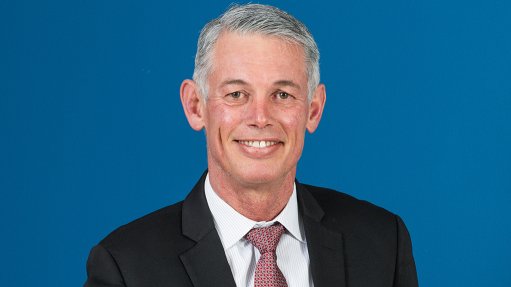
South Africa’s global competitiveness is directly impacted by electricity pricing dynamics, says Minerals Council economist André Lourens.
The council’s first concern is that Eskom continues to incur costs linked to contractual obligations concluded during periods of acute supply shortages. These include payments for diesel-based capacity that is no longer required under current system conditions.
Second, Lourens says, Eskom’s recent wage negotiations highlight ongoing cost pressures at the utility. Eskom’s counter-offer of a 5.5% wage increase to its employees, while below labour’s initial demand, still exceeds inflation, which averaged 3.2% in 2025.
Over time, rising input costs, combined with Eskom’s existing cost structure, may limit the extent to which electricity tariffs can be aligned with inflation alone.
Third, Lourens says the current multi-year price determination methodology remains largely supplier-centric and has historically tended to support tariff increases above inflation.
Finally, through the Eskom Retail Tariff Structural Adjustment, the utility is placing greater emphasis on recovering fixed costs, reflecting the growing shift toward embedded generation.
As an example, the generation capacity charge is scheduled to increase by 20% in 2025/26, followed by a further 30% in 2026/27. In light of the above, addressing electricity affordability remains the next major challenge for the industry.
“Importantly, while current supply conditions are encouraging, maintaining system reliability over the medium to long term will require continued focus on infrastructure investment.
“In particular, constraints on the transmission grid must be urgently addressed within the next several years to enable the connection of additional generation capacity, including renewable energy and other sources such as nuclear,” Lourens notes.
He adds that as the coal-fired power fleet continues to age and units are progressively decommissioned, failure to expand and strengthen the transmission network could reintroduce system risks over the medium term.
Lourens admits there has been clear and sustained improvement in electricity supply by Eskom, which has contributed meaningfully to the stabilisation of the national grid. However, part of the increased availability of electricity is attributable to demand levels that are below those observed five to six years ago.
Further, Lourens says that in addition to Eskom’s efforts to return generation capacity to service and reduce unplanned breakdowns, prolonged and severe loadshedding in recent years led to many households and businesses installing alternative energy sources which has structurally reduced grid-based electricity consumption.
This lower demand, coupled with Eskom’s continued diesel expenditure, may further influence pricing dynamics for customers and companies.
Despite Eskom not having used open cycle gas turbines (OCGT) since November 2025, Eskom has been using diesel from the dispatch of independent power producer OCGT units under existing take-or-pay contractual obligations.
These contracts were concluded during a period of severe supply constraints to secure guaranteed minimum use levels over six-month periods. Under these agreements, Eskom is required to pay for committed capacity regardless of actual utilisation.
Consequently, diesel use in the coming weeks may largely reflect the fulfilment of these contractual commitments.
As system performance continues to improve and the energy availability strengthens, Lourens urges Eskom to continue prioritising the most cost-effective primary energy sources, while responsibly managing legacy contracts and maintaining grid stability.
Article Enquiry
Email Article
Save Article
Feedback
To advertise email advertising@creamermedia.co.za or click here
Research Reports

Projects
Latest News
Showroom
Established in 1933, EKATO is the world leader in agitation technology, supplying agitators for processes and applications such as chemicals and...
VISIT SHOWROOM
Axiom Hydraulics is a trusted leader in South Africa’s hydraulic industry, delivering world-class components, systems, and engineering expertise...
VISIT SHOWROOM
Press Office
Announcements
What's On
Subscribe to improve your user experience...
Option 1 (equivalent of R125 a month):
Receive a weekly copy of Creamer Media's Engineering News & Mining Weekly magazine
(print copy for those in South Africa and e-magazine for those outside of South Africa)
Receive daily email newsletters
Access to full search results
Access archive of magazine back copies
Access to Projects in Progress
Access to ONE Research Report of your choice in PDF format
Option 2 (equivalent of R375 a month):
All benefits from Option 1
PLUS
Access to Creamer Media's Research Channel Africa for ALL Research Reports, in PDF format, on various industrial and mining sectors
including Electricity; Water; Energy Transition; Hydrogen; Roads, Rail and Ports; Coal; Gold; Platinum; Battery Metals; etc.
Already a subscriber?
Forgotten your password?
Receive weekly copy of Creamer Media's Engineering News & Mining Weekly magazine (print copy for those in South Africa and e-magazine for those outside of South Africa)
➕
Recieve daily email newsletters
➕
Access to full search results
➕
Access archive of magazine back copies
➕
Access to Projects in Progress
➕
Access to ONE Research Report of your choice in PDF format
RESEARCH CHANNEL AFRICA
R4500 (equivalent of R375 a month)
SUBSCRIBEAll benefits from Option 1
➕
Access to Creamer Media's Research Channel Africa for ALL Research Reports on various industrial and mining sectors, in PDF format, including on:
Electricity
➕
Water
➕
Energy Transition
➕
Hydrogen
➕
Roads, Rail and Ports
➕
Coal
➕
Gold
➕
Platinum
➕
Battery Metals
➕
etc.
Receive all benefits from Option 1 or Option 2 delivered to numerous people at your company
➕
Multiple User names and Passwords for simultaneous log-ins
➕
Intranet integration access to all in your organisation