TIPS learning event highlights diversification potential for coal-dependent communities





As the world embraces a just transition towards decarbonisation, the need to diversify local economies, especially in areas dominated by coal mining and coal-fired power generation, becomes crucial.
With this in mind, independent, nonprofit economic research institution Trade and Industrial Policy Strategies (TIPS) is conducting research under multiple projects that focuses on sector- and place-based strategies for promoting greener, more diversified economies, while ensuring that those affected by the transition are supported and can thrive with new opportunities or in new job markets.
During a Just Transition Learning Event hosted by TIPS on March 5, speakers discussed economic diversification and the identification of diversification opportunities in the Mpumalanga coalfields, showcasing the work being done by TIPS.
Discussing the Sector Jobs Resilience Plan (SJRP) for the agricultural sector, TIPS economist Dr Michael Hector noted that climate change had intensified vulnerabilities in the agricultural sector.
He emphasised the importance of improving climate data and gathering data on weaknesses in climate change adaptation, particularly among households in historic labour-sending regions and small-scale farmers.
“This is very much important in terms of climate data because the capacity, or ability, of farmers, whether they be commercial or small-scale, relies on their ability to adapt to climate change, and so they rely on accurate climate data.”
Hector highlighted that there were constraints around the dissemination of data and access to data, especially by small-scale farmers.
“Essentially, what is argued in the SJRP is that adequate data is fundamental to municipalities, to provinces, to small-scale farmers in responding to adaptation measures, to respond to insurance.”
In this vein, TIPS economist Gillian Chigumira discussed technology diffusion for small-scale farmers, highlighting the role of technology and innovation in driving economic diversification efforts and the just transition.
Chigumira noted that Mpumalanga accounted for about 10% of total agricultural small-scale farmers and households, with 84% producing mainly for their own consumption.
“So you can imagine the impact of climate change on that group of people; and then just think of the impact of climate change as well for those who produce mainly for sales, and so you're looking at vulnerabilities of food insecurity and you're also looking at loss of income and inability to reinvest and slowly recover.”
Chigumira argued that diversification in the agricultural sector in Mpumalanga thus required taking the role of technology into account.
She noted, for example, that technology, innovation and practices that help mitigate climate change include climate smart practices, biotechnology and gene editing, water management and weather initiatives.
She explained, however, that while innovation for such technologies existed in South Africa, it was highly skewed towards large-scale farmers.
“There is a lot of public and private research, but this is largely fragmented, and so to really show accumulative effort is a little bit difficult.”
Chigumira highlighted constraints in diffusing innovation and technology to farmers, such as institutional and policy constraints; infrastructure constraints; financial and affordability barriers; knowledge and skills gaps; technological and farm-level constraints; and climate and biosecurity issues.
She also discussed methods of diffusion, which included public-private partnerships, standardising climate change training for extension officers, and also leveraging for the mandatory agricultural statutory levies.
“As we integrate technology and innovation to sustain inclusive diversification, it's just very important to really consider it in the just transition.”
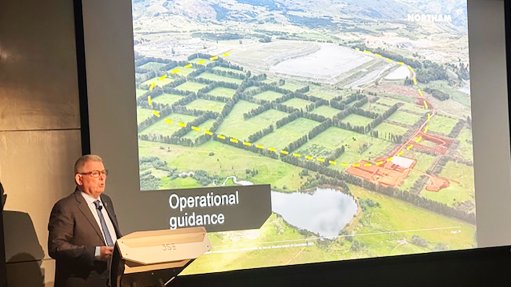
Also speaking at the event, independent consultant Kate Rivett-Carnac discussed tourism and potential diversification opportunities for the Mpumalanga Coalfields.
She argued that coalfield tourism could emerge through the redevelopment of a mine/power plant into an anchor attraction and/or through support to small, medium-sized and microenterprises (SMMEs) cluster.
Rivett-Carnac discussed the importance of rehabilitating polluted sites; reducing pollution levels; protecting and enhancing landscapes and biodiversity; addressing illegal mining; improving safety and security; and improving infrastructure services.
She also highlighted the importance of improving tourism innovation, coordination and collaboration; reducing barriers for SMMEs; working with craft and design industries to expand markets; and building government tourism capabilities and agency.
“While tourism cannot replace coal mining, it could be part of an economic reorientation of the region, supporting SMMEs and new clusters of development,” she said.
Article Enquiry
Email Article
Save Article
Feedback
To advertise email advertising@creamermedia.co.za or click here
Research Reports


Projects

Latest Multimedia

Latest News

Showroom
Multotec, recognised industry leaders in metallurgy and process engineering help mining houses across the world process minerals more efficiently,...
VISIT SHOWROOM
ZF Aftermarket is the after-sales division of the world-renowned German ZF group, a global leader in mobility technology.
VISIT SHOWROOM


Press Office
Announcements
What's On
Subscribe to improve your user experience...
Option 1 (equivalent of R125 a month):
Receive a weekly copy of Creamer Media's Engineering News & Mining Weekly magazine
(print copy for those in South Africa and e-magazine for those outside of South Africa)
Receive daily email newsletters
Access to full search results
Access archive of magazine back copies
Access to Projects in Progress
Access to ONE Research Report of your choice in PDF format
Option 2 (equivalent of R375 a month):
All benefits from Option 1
PLUS
Access to Creamer Media's Research Channel Africa for ALL Research Reports, in PDF format, on various industrial and mining sectors
including Electricity; Water; Energy Transition; Hydrogen; Roads, Rail and Ports; Coal; Gold; Platinum; Battery Metals; etc.
Already a subscriber?
Forgotten your password?
Receive weekly copy of Creamer Media's Engineering News & Mining Weekly magazine (print copy for those in South Africa and e-magazine for those outside of South Africa)
➕
Recieve daily email newsletters
➕
Access to full search results
➕
Access archive of magazine back copies
➕
Access to Projects in Progress
➕
Access to ONE Research Report of your choice in PDF format
RESEARCH CHANNEL AFRICA
R4500 (equivalent of R375 a month)
SUBSCRIBEAll benefits from Option 1
➕
Access to Creamer Media's Research Channel Africa for ALL Research Reports on various industrial and mining sectors, in PDF format, including on:
Electricity
➕
Water
➕
Energy Transition
➕
Hydrogen
➕
Roads, Rail and Ports
➕
Coal
➕
Gold
➕
Platinum
➕
Battery Metals
➕
etc.
Receive all benefits from Option 1 or Option 2 delivered to numerous people at your company
➕
Multiple User names and Passwords for simultaneous log-ins
➕
Intranet integration access to all in your organisation