Floating LNG becoming a credible solution

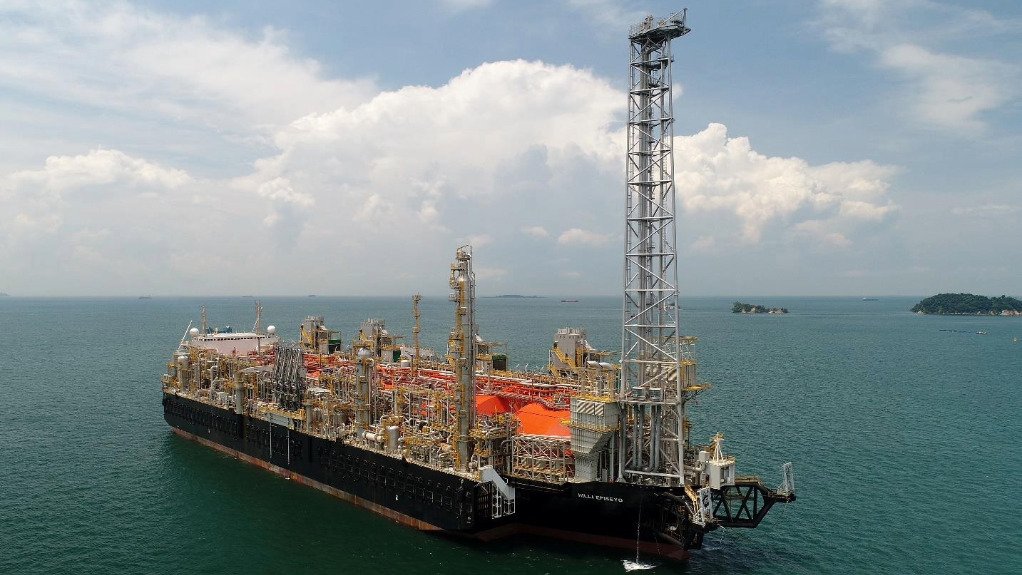
FLNG SOLUTION The Hilli Episeyo floating liquefied natural gas project in Cameroon stands as “Africa’s first operational FLNG facility and a global reference point”.


Floating liquefied natural gas (FLNG) is rapidly emerging as a cornerstone of Africa’s gas development strategy, as the continent prepares for a sharp rise in demand and seeks faster, more resilient pathways to market, says energy advocacy group African Energy Chamber (AEC).
According to the AEC’s ‘State of African Energy 2026 Outlook’, Africa’s natural gas demand is projected to increase by 60% by 2050, underscoring the urgency of bringing new supply online, efficiently and at scale.
At the same time, Africa already hosts the highest concentration of FLNG infrastructure globally, positioning the continent as a natural testbed for floating solutions that monetise offshore resources while mitigating above-ground risks.
Early FLNG successes are already reshaping development models, AEC executive chairperson NJ Ayuk comments.
Cameroon’s Hilli Episeyo FLNG project stands as “Africa’s first operational FLNG facility”.
Brought online in “record time”, the project demonstrated how FLNG can rapidly unlock gas exports from relatively modest reserves.
Since then, Africa’s FLNG market has expanded, with several projects now under development or in operation, Ayuk points out.
Meanwhile, on the maritime border of Senegal and Mauritania, the Gimi FLNG vessel – situated at the global energy provider bp-led Greater Tortue Ahmeyim LNG development and run by FLNG pipeline operator Golar LNG – reached commercial operation in 2025.
As the first FLNG unit deployed in the Mauritania, Senegal, the Gambia, Bissau and Guinea region, the vessel will monetise up to 15-trillion cubic feet of gas through a 20-year lease-and-operate agreement.
In Gabon, independent hydrocarbon producer Perenco is developing the Cap Lopez FLNG project with a capacity of 700 000 t a year, starting in 2026, with the unit being built by shipbuilders Dixstone.
Marine logistic and support services provider UTM Offshore is developing an FLNG facility at the deepwater Yoho field, off the coast of Nigeria, with the $5-billion project progressing toward financial investment decision.
“As Africa positions itself for the next phase of gas-led growth, FLNG stands out as a practical, future-focused solution – one that aligns technical innovation with the continent’s urgent development needs and long-term energy ambitions,” Ayuk avers.
He stresses that, when it is deployed strategically, FLNG can help Africa turn gas discoveries into energy security, industrial growth and real economic transformation.
Implications for the Sector
The AEC’s outlook highlights that one of FLNG’s most compelling advantages is scalability.
Unlike onshore LNG, which requires extensive land acquisition, supporting infrastructure and long construction timelines, FLNG facilities can be deployed in phases and scaled in line with reservoir performance and market demand.
This approach reduces upfront capital requirements and allows producers to accelerate first gas while preserving optionality for expansion, Ayuk adds.
The Congo LNG project illustrates this approach: following Phase 1 operations in 2023, the operator, integrated energy technology company Eni, moved quickly toward Phase 2, bringing production online in 2025 – just 35 months after construction began and six months ahead of schedule.
With first exports set for 2026, the project demonstrates how FLNG can be developed at speed and scale.
Ayuk notes that FLNG also helps to mitigate above-ground risks – an issue shaping gas development strategies across Africa.
“Mozambique offers a clear example. Despite hosting some of the world’s largest gas discoveries, security challenges in Cabo Delgado caused delays and force majeure declarations on major onshore LNG projects.
“Offshore FLNG developments, however, have proven more resilient. Eni brought the Coral Sul FLNG project online in 2022, with the Coral Norte FLNG project reaching a $7.2-billion financial investment decision in 2025.”
He adds that while projects such as Mozambique LNG and Rovuma LNG faced delays, the Coral project used FLNG to reduce exposure to onshore security threats and logistical bottlenecks, enabling continued operations, despite a complex environment.
Making Energy Poverty History
Beyond speed and resilience, FLNG could become a catalyst for Africa’s broader economic development, Ayuk states.
“By reducing capital intensity and shortening development timelines, FLNG improves project bankability and attracts a wider pool of investors. It also supports gas-to-power strategies, petrochemicals development and regional energy security by enabling monetisation of gas that might otherwise remain stranded for years.”
However, FLNG is not a one-size-fits-all solution.
Successful deployment requires robust regulatory frameworks, clear fiscal terms and strong collaboration between governments, operators and financiers.
“When aligned with national gas master plans and long-term industrial strategies, FLNG can serve as a powerful bridge between exploration success and sustainable economic impact.”
He notes that these discussions will be central at African Energy Week (AEW) 2026, being held in October, in Cape Town, with governments and industry leaders exploring how floating solutions can unlock Africa’s vast gas potential.
He argues that AEW continues to provide a critical platform for sharing lessons learned, advancing project dialogue and mobilising capital into innovative LNG developments.
“FLNG is changing the game for African gas producers. It allows countries to monetise resources faster, reduce exposure to security and infrastructure risks, and generate revenues that can be reinvested into broader development. When deployed strategically, FLNG can help Africa turn gas discoveries into energy security and industrial growth,” concludes Ayuk.
Article Enquiry
Email Article
Save Article
Feedback
To advertise email advertising@creamermedia.co.za or click here


Projects
Latest Multimedia

Latest News
Showroom
Occupational health services, mobile clinics, wellness campaigns, aviation.
VISIT SHOWROOM
Rentech provides renewable energy products and services to the local and selected African markets. Supplying inverters, lithium and lead-acid...
VISIT SHOWROOM
Press Office
Announcements
What's On
Subscribe to improve your user experience...
Option 1 (equivalent of R125 a month):
Receive a weekly copy of Creamer Media's Engineering News & Mining Weekly magazine
(print copy for those in South Africa and e-magazine for those outside of South Africa)
Receive daily email newsletters
Access to full search results
Access archive of magazine back copies
Access to Projects in Progress
Access to ONE Research Report of your choice in PDF format
Option 2 (equivalent of R375 a month):
All benefits from Option 1
PLUS
Access to Creamer Media's Research Channel Africa for ALL Research Reports, in PDF format, on various industrial and mining sectors
including Electricity; Water; Energy Transition; Hydrogen; Roads, Rail and Ports; Coal; Gold; Platinum; Battery Metals; etc.
Already a subscriber?
Forgotten your password?
Receive weekly copy of Creamer Media's Engineering News & Mining Weekly magazine (print copy for those in South Africa and e-magazine for those outside of South Africa)
➕
Recieve daily email newsletters
➕
Access to full search results
➕
Access archive of magazine back copies
➕
Access to Projects in Progress
➕
Access to ONE Research Report of your choice in PDF format
RESEARCH CHANNEL AFRICA
R4500 (equivalent of R375 a month)
SUBSCRIBEAll benefits from Option 1
➕
Access to Creamer Media's Research Channel Africa for ALL Research Reports on various industrial and mining sectors, in PDF format, including on:
Electricity
➕
Water
➕
Energy Transition
➕
Hydrogen
➕
Roads, Rail and Ports
➕
Coal
➕
Gold
➕
Platinum
➕
Battery Metals
➕
etc.
Receive all benefits from Option 1 or Option 2 delivered to numerous people at your company
➕
Multiple User names and Passwords for simultaneous log-ins
➕
Intranet integration access to all in your organisation