From protest to prosperity: Empowerment done right

From protest to prosperity: Empowerment done right
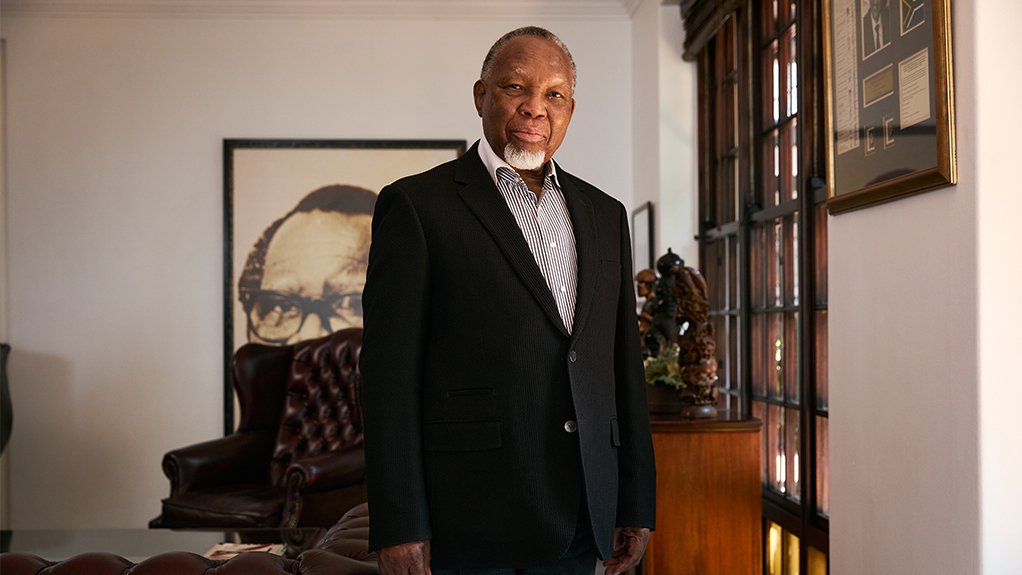
Kgalema Motlanthe, former General Secretary of NUM and former President of South Africa



By Kgalema Motlanthe, former General Secretary of NUM and former President of South Africa
I still remember the late 1980s in vivid detail, hearing the convictions whispered by workers, political freedom would be meaningless without economic freedom. We knew then that dismantling apartheid’s laws was only the first step; we also had to dismantle apartheid’s economic legacy that kept black people landless, capital-less, and marginalised. This conviction is what drove us in the National Union of Mineworkers (NUM) to take an unprecedented step in the early 1990s, to create our own instruments of economic empowerment.
During my tenure as General Secretary of NUM in the 1990s, I was part of the effort to establish the Mineworkers Investment Company (MIC), an investment arm wholly owned by the union’s membership through a trust. We intentionally structured MIC to avoid any conflicts of interest (it would not invest in mining houses where our members worked) and to focus on long-term, ethical investments that could generate dividends for the broader good. Alongside this, we formed the Mineworkers Development Agency to help retrenched miners find new livelihoods, and launched scholarship programmes (like the JB Marks Education Trust Fund) to educate mineworkers, former mineworkers and their children. In essence, we tried to build a microcosm of what truly broad-based empowerment should look like, ownership, skills and social upliftment, all rooted in a mission of development.
Looking back now, decades later, I am proud of what those initiatives achieved. The Mineworkers Investment Trust (MIT) and its company have been transformational for thousands of families. Dividends from MIC helped fund over R1.5-billion in education and community development projects. Young people from mining communities became doctors, engineers, teachers - their studies paid for by bursaries that our empowerment vehicle made possible. Retrenched mineworkers received support to start small businesses. And critically, the assets of MIC have remained 100% black-owned and union-controlled, growing to nearly R8-billion in value and proving the commercial acumen of black managers and leaders. We achieved all this by marrying visionary leadership with sound governance and never losing sight of why we were doing it, to create lasting value for the many; not quick gains for the few.
When I cast my eyes to the broader implementation of Broad-Based Black Economic Empowerment (B-BBEE) across South Africa, I cannot avoid a sense of ambivalence and concern. The NUM’s experience showed what is possible with the right approach, yet B-BBEE as a national policy has not lived up to its noble intent. After more than 20 years, the reality is stark, ownership and control of the economy remain largely in the same hands as before, with marginal shifts. By the B-BBEE Commission’s latest data, black South Africans hold only about 29% of overall equity ownership on average, effectively unchanged around that level, and recently even declining slightly.
Black management control in the corporate sector sits at roughly 51% (just half of top management), which shows progress in representation, yet hardly the “captains of industry” profile we envisioned. Most tellingly, on the Johannesburg Stock Exchange not a single listed company is fully black-owned (what about Exarro or Seriti?), an indicator of how entrenched existing ownership structures are. Yes, there have been high-profile BEE deals and a few black industrialists emerging, but these are exceptions that prove the rule. The broad base of workers and communities have seen scant change in their daily economic power. Inequality remains as high as ever, with South Africa consistently ranking among the world’s most unequal nations. Unemployment especially among the youth is at crisis levels (nearly 64% for young people), and poverty is deeply racialised, echoing the patterns of the past.
It is not that BEE has achieved nothing. Indeed, we have to acknowledge mixed outcomes. There is now a sizeable black middle class that was largely created through employment equity and BEE opportunities in business. Black ownership stakes in many companies, as well as the presence of black executives and professionals, have certainly increased since the 1990s. Many corporations are far more diverse today than they were at apartheid’s end. Some of these successes can be attributed to BEE policy nudges, procurement rules that favoured black suppliers, licensing conditions that required black partnerships, etc., which in turn opened doors previously shut. However, these gains have been undermined by significant shortcomings. A recent in-depth analysis by veteran business journalist Carol Paton summed it up well, BEE has had a mixed impact, it “increased black ownership, management, and middle-class mobility but also contributed to corruption, deterred foreign investment, and failed to drive economic growth.” In other words, the costs and distortions of how BEE was implemented may have partially negated its benefits.
One cannot talk about BEE’s shortcomings without addressing the elephant in the room, the perception (and reality) that BEE has primarily benefited a small elite. This perception is now widespread. In public surveys, a majority of South Africans including a majority of black South Africans express the view that the fruits of BEE have been captured by those with political connections or those already advantaged. They are not entirely wrong. We have seen how BEE deals often operate; a large corporation sells a stake (typically ~25%) to a consortium of black investors to meet the target. Often, that consortium is led by a handful of well-known black business figures or former politicians. They secure financing (frequently with the very dividends of the target company as collateral) and become shareholders. There is nothing intrinsically wrong with including experienced black investors, but the model has recycled the same names and concentrated wealth into a new narrow class sometimes derisively called the “BEE billionaires’ club.” This was not what we fought for when we spoke of economic freedom. The “broad-based” aspect of B-BBEE too often became an afterthought if included at all, it was via minor share allocations to community trusts or employees that, while symbolically important, were usually small and did not have a meaningful voice.
Even on its own terms, this model has proven fragile. Many early BEE deals were highly leveraged, relying on borrowed money against future share values. When markets dipped (as in 2008) or companies underperformed, those deals collapsed, leaving the intended beneficiaries with nothing but debt. A sustainable empowerment strategy cannot be built on quicksand. It has to be rooted in real value creation and long-term stewardship of assets. The approach we took with MIC was the opposite of quick-flip deals. It was slow, patient capital, reinvesting profits for growth and social good. The fact that MIC is thriving 30 years later, whereas numerous flash-in-the-pan BEE consortiums came and went, is telling.
So, what is the way forward? I believe we must radically re-imagine our empowerment strategy by returning to first principles. Principles proven effective by experiences like those of NUM’s empowerment projects and other success stories.
Firstly, “broad-based” must truly mean broad. Future empowerment initiatives should be collective in nature and developmental in purpose. One promising idea is to promote employee ownership trusts and community shareholding on a far larger scale. Imagine if every major BEE transaction going forward reserved a significant portion of shares (say 10% to 15%) for employees of the company and another portion for a community development trust. This would immediately broaden the base of beneficiaries to include thousands of people who are directly invested in the success of the enterprise.
Secondly, ensure proper governance and transparency of empowerment vehicles. This was key to the NUM’s success and is essential to regain public trust. Whenever there is an empowerment trust or fund, it must be managed by persons of high integrity and skill, with clear rules against conflicts of interest, and with full transparency in how benefits are allocated.
Third, link empowerment with actual enterprise development and skills transfer. We should marry BEE with the country’s industrial strategy and skills programmes so that it becomes a catalyst for new industries and job creation. For example, as government invests in infrastructure or green energy or technology, ensure that BEE mechanisms channel investment into black-owned startups and innovators in those fields, not just equity in established firms.
Lastly, enforce and renew the social compact around empowerment. The government must play a stronger hand in enforcement (through penalties for non-compliance and clamping down on fronting), as the BEE Commission wisely urges. But enforcement alone will not sustain empowerment; we need a renewed social compact where business, government and labour agree on the end goal: a growing economy that benefits all.
In reflecting on empowerment, I often recall a simple truth from my days in the struggle, dignity for the poor and working class comes not from handouts but from having agency, having a stake and a say in one’s economic future. At its core, empowerment should be about agency. Did our interventions give people more control over their lives? With the NUM’s empowerment projects, I can confidently say yes. A miner’s daughter who becomes an engineer owing to our bursary fund has far greater agency; a group of mineworkers who co-own a worker housing development have agency in shaping their community. That is empowerment. We need to scale that feeling of agency to millions. Let the supermarket employee own shares in the retail chain, let the small cane farmer supply the big sugar mill on fair terms, let the young tech graduate access capital to start an IT firm that services government contracts. Those are the stories we want to tell of BEE in 10 years’ time.
Right now, B-BBEE finds itself at a crossroads. There is fatigue and frustration, but also, I believe, an opportunity to recalibrate and get it right. We have a chance to correct the mistakes, the overly narrow deals, the inadequate follow-through, the misaligned incentives and to build a new consensus on empowerment. It starts with remembering why we embarked on this journey, to fulfil the constitutional promise of equality and to heal the wounds of our past by lifting up those who were kept down. That mission is as urgent today as it was when we celebrated our political liberation in 1994. If we fail to make economic emancipation real, our political gains risk being eroded by social unrest and despair. Conversely, if we succeed in forging a truly inclusive economy, we will unleash tremendous energies and talents currently wasted, driving growth that benefits everyone.
My plea as someone who has walked this road from the days of the union struggle to government, is that we approach the next phase of economic empowerment with both humility and boldness. Humility to admit what has not worked, and boldness to envision what can work, drawing on the best of our own home-grown examples of success. The NUM, the Mineworkers Investment Trust, and many community-owned enterprises have proven that when empowerment is rooted in developmental discipline, guided by capable institutions, and oriented toward the long term, it yields profound and lasting transformation. Let us take those lessons and remake B-BBEE into a tool that truly broadens the base of our economy. In doing so, we will honour not just the letter of our policies, but the very spirit of freedom and equality that so many sacrificed and fought for.
Article Enquiry
Email Article
Save Article
Feedback
To advertise email advertising@creamermedia.co.za or click here


Projects


Latest Multimedia


Latest News


Showroom

Goodwin Submersible Pumps Africa is sole distributors for Goodwin electrically driven, submersible, abrasion resistance slurry pumps.
VISIT SHOWROOM
Iritron delivers advanced automation, control, and optimisation solutions to the Mining, Minerals & Metals, Consumer Package Goods and...
VISIT SHOWROOM

Announcements
What's On
Subscribe to improve your user experience...
Option 1 (equivalent of R125 a month):
Receive a weekly copy of Creamer Media's Engineering News & Mining Weekly magazine
(print copy for those in South Africa and e-magazine for those outside of South Africa)
Receive daily email newsletters
Access to full search results
Access archive of magazine back copies
Access to Projects in Progress
Access to ONE Research Report of your choice in PDF format
Option 2 (equivalent of R375 a month):
All benefits from Option 1
PLUS
Access to Creamer Media's Research Channel Africa for ALL Research Reports, in PDF format, on various industrial and mining sectors
including Electricity; Water; Energy Transition; Hydrogen; Roads, Rail and Ports; Coal; Gold; Platinum; Battery Metals; etc.
Already a subscriber?
Forgotten your password?
Receive weekly copy of Creamer Media's Engineering News & Mining Weekly magazine (print copy for those in South Africa and e-magazine for those outside of South Africa)
➕
Recieve daily email newsletters
➕
Access to full search results
➕
Access archive of magazine back copies
➕
Access to Projects in Progress
➕
Access to ONE Research Report of your choice in PDF format
RESEARCH CHANNEL AFRICA
R4500 (equivalent of R375 a month)
SUBSCRIBEAll benefits from Option 1
➕
Access to Creamer Media's Research Channel Africa for ALL Research Reports on various industrial and mining sectors, in PDF format, including on:
Electricity
➕
Water
➕
Energy Transition
➕
Hydrogen
➕
Roads, Rail and Ports
➕
Coal
➕
Gold
➕
Platinum
➕
Battery Metals
➕
etc.
Receive all benefits from Option 1 or Option 2 delivered to numerous people at your company
➕
Multiple User names and Passwords for simultaneous log-ins
➕
Intranet integration access to all in your organisation