Mining sector faces strategic shift as AI, critical minerals drive change, report shows

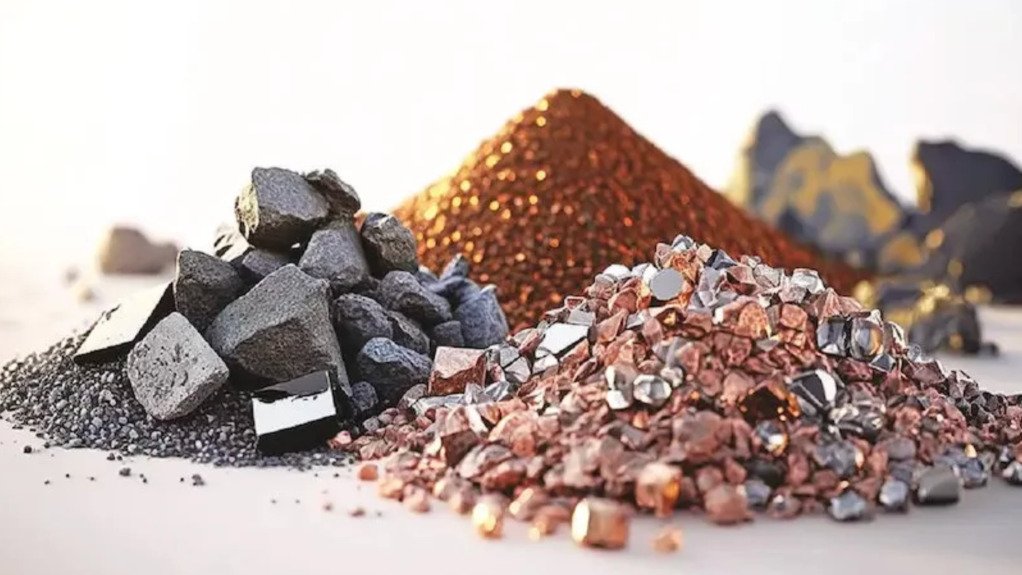


The mining and metals sector is entering a period of profound transformation, with companies needing to balance national security-driven prioritisation of critical minerals and the rapid adoption of AI to remain competitive and resilient, Deloitte Global’s ‘Tracking the Trends 2026’ report, published on January 28, shows.
The report highlights that minerals that were once primarily associated with the global energy transition have become central to national security discussions, while AI and other emerging technologies are reshaping operating models and creating new opportunities and risks across the sector.
“The question for the mining and metals industry is no longer whether we can supply the materials that power global progress, but how we do so in a way that uplifts people, economies and ecosystems alike.
“True transformation will likely depend on working together to create the trust, agility and shared vision needed to turn complexity into collective progress,” Deloitte Global mining and metals leader Ian Sanders said.
Deloitte Australia mining and metals leader Nicki Ivory added that the trends impacting on the mining and metals sector felt almost unprecedented, with Australia in the eye of the storm.
“Our abundant critical mineral supply, once seen primarily as an energy transition enabler, is now at the centre of global national security discussions.
“Companies are expected to balance powering clean energy with reinforcing defence strategies, all while meeting growing consumer demand. Meanwhile, the exponential growth of AI is presenting transformative opportunities to elevate operational resilience and competitiveness by boosting productivity and revolutionising mineral discovery.
“Off-site, the arrival of agentic AI is forcing a rethink of how workforces should be structured in a world where humans and agents work side by side. Together with other technologies, AI is accelerating the impetus for organisations to optimise their own performance through smart operations – fully connected ecosystems where assets, systems and people work together in real-time to make mining safer, faster and more reliable,” Ivory said.
The report identifies ten trends that are expected to shape the mining and metals sector over the next 12 to 18 months.
The first trend highlighted by Deloitte is the increasing strategic importance of critical minerals. Once seen primarily as enablers of the energy transition, these minerals are now central to national security discussions.
Success is expected to come to companies that balance short-term agility with long-term investment and align business models with both security imperatives and sustainability commitments.
The second trend is the need for companies to future-proof their portfolios. Mining and metals firms are urged to adopt strategic, agile and sustainable portfolio management practices. Those that continue with static or narrow approaches risk falling behind, while those embracing complexity and adaptability may be better positioned to lead.
The third trend noted in the report is the growing emphasis on corporate purpose. A clear and authentic sense of purpose is increasingly seen as a defining factor of competitiveness, helping companies build resilience, gain stakeholder trust and fuel business growth.
The fourth trend is the evolution of operating models. Deloitte highlights that companies should integrate governance, people, processes, technology and culture to deliver value while enabling resilience, agility and long-term profitability.
The fifth trend is the extraction of advantages from operational data. Mining companies are encouraged to manage and leverage the vast amounts of operational data they collect to optimise highly complex operations and value chains, creating what Deloitte terms “smart operations”.
The sixth trend is the use of AI for operational excellence. AI is expected to help companies increase productivity, prioritise safety, address workforce gaps and safeguard operations against cyberthreats.
Deloitte notes that firms deploying AI strategically rather than tactically are likely to be better positioned to anticipate risks, protect personnel and seize emerging opportunities.
The seventh trend is the next evolution of human resources (HR). Generative AI is already reshaping HR processes, while the next phase, agentic AI, will require companies to rethink role structures and how humans collaborate with digital agents.
Chief HR officers are tasked with balancing their responsibilities as business leaders and workforce stewards to harness AI’s potential while keeping humans central.
The eighth trend is the redefinition of mineral exploration. Mining companies are moving from traditional ground acquisition and physical prospecting to data-driven approaches. Those that digitise and integrate diverse sources of information may be better positioned to leverage AI for faster and more precise discoveries.
The ninth trend is the unlocking of resource wealth. Global demand for critical minerals and metals is expected to accelerate over the next decade, driven by population growth, urbanisation, the energy transition and national security imperatives. Mining companies are positioned as key collaborators in aligning national strategies with market realities.
The tenth trend is scaling sustainability adaptation. Mining and metals operations face increasing risks from extreme weather, water scarcity and ecosystem degradation, making resilience vital for business continuity.
Deloitte highlights the importance of collaborative approaches involving suppliers, clients, government and other stakeholders to safeguard communities, protect long-term competitiveness and support the clean energy transition.
Article Enquiry
Email Article
Save Article
Feedback
To advertise email advertising@creamermedia.co.za or click here
Research Reports

Projects
Latest Multimedia

Latest News
Showroom
John Thompson, the leader in energy and environmental solutions through value engineering and innovation, provides the following: design, engineer,...
VISIT SHOWROOM
Smart energy storage solutions for efficient, safe, and profitable power.
VISIT SHOWROOM
Press Office
Announcements
What's On
Subscribe to improve your user experience...
Option 1 (equivalent of R125 a month):
Receive a weekly copy of Creamer Media's Engineering News & Mining Weekly magazine
(print copy for those in South Africa and e-magazine for those outside of South Africa)
Receive daily email newsletters
Access to full search results
Access archive of magazine back copies
Access to Projects in Progress
Access to ONE Research Report of your choice in PDF format
Option 2 (equivalent of R375 a month):
All benefits from Option 1
PLUS
Access to Creamer Media's Research Channel Africa for ALL Research Reports, in PDF format, on various industrial and mining sectors
including Electricity; Water; Energy Transition; Hydrogen; Roads, Rail and Ports; Coal; Gold; Platinum; Battery Metals; etc.
Already a subscriber?
Forgotten your password?
Receive weekly copy of Creamer Media's Engineering News & Mining Weekly magazine (print copy for those in South Africa and e-magazine for those outside of South Africa)
➕
Recieve daily email newsletters
➕
Access to full search results
➕
Access archive of magazine back copies
➕
Access to Projects in Progress
➕
Access to ONE Research Report of your choice in PDF format
RESEARCH CHANNEL AFRICA
R4500 (equivalent of R375 a month)
SUBSCRIBEAll benefits from Option 1
➕
Access to Creamer Media's Research Channel Africa for ALL Research Reports on various industrial and mining sectors, in PDF format, including on:
Electricity
➕
Water
➕
Energy Transition
➕
Hydrogen
➕
Roads, Rail and Ports
➕
Coal
➕
Gold
➕
Platinum
➕
Battery Metals
➕
etc.
Receive all benefits from Option 1 or Option 2 delivered to numerous people at your company
➕
Multiple User names and Passwords for simultaneous log-ins
➕
Intranet integration access to all in your organisation