Outdated finance frameworks, legislative asymmetry stalling rail reform

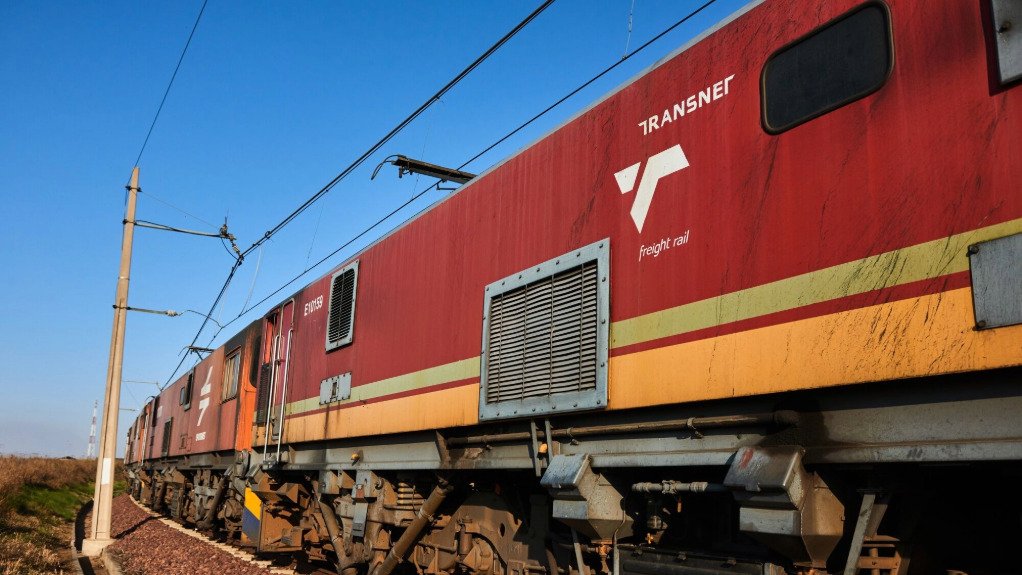
FULL STEAM AHEAD The railway sector's policy reforms have facilitated increased private-sector participation


Despite progress in South Africa’s rail reform policy and regulation, outdated financial frameworks and unresolved structural legislative imbalances hamper rail infrastructure development in South Africa, according to African Rail Industry Association CEO Mesela Nhlapo.
She emphasises that rail functions as an interconnected ecosystem. For decades, South Africa's industry has supplied the national rail network. Rail reform represents a comprehensive industrial project and social contract anchored in the National Rail Policy (NRP) and Constitutional values. The goal ensures no one is left behind as the industry evolves.
Nhlapo notes that a strong industry depends on Transnet, requiring collaboration to achieve its 250-million-tonne target. This will lower logistics costs and enhance South Africa's competitiveness, enabling localisation, industrial growth, and job creation.
She asserts that infrastructure transformation and reliable policy depend on capital flowing at the required scale and pace, highlighting that the R3.4-billion investment by private freight operator Traxtion demonstrates strong confidence in rail reform.
"Traxtion is pioneering a trend, demonstrating that the rail economic regulator's environment remains stable enough to support long-term commitments. If no business case existed, Traxtion would not have invested," Nhlapo states.
The railway sector's policy reforms have facilitated increased private-sector participation. Nhlapo asserts that the financial sector must align with this momentum, emphasising the need for improved financing and greater velocity.
She notes that development finance institutions (DFIs), including the Development Bank of Southern Africa (DBSA), Industrial Development Corporation (IDC), and Public Investment Corporation (PIC), are positioned to lead by derisking projects and catalysing private investment.
Nhlapo notes that there is a critical systemic imbalance. Transnet, operating as a Schedule 2 entity under the Public Finance Management Act (PFMA), faces rigid procurement regulations, whereas private competitors operate with commercial agility under company law. This creates an uneven playing field where Transnet's procurement risk often outweighs service delivery risk.
"We cannot build a strong Transnet if the benchmark for success remains PFMA compliance rather than the delivery of its National Rail Plan mandate. When compliance risk outweighs service failure risk, the institution retreats into risk aversion, stalling the partnerships and localisation initiatives the NRP requires,” she asserts.
Further, Nhlapo explains that financial institutions face three interlocking constraints. Risk remains high because rolling stock is mobile; until South Africa domesticates the Luxembourg Rail Protocol, lenders cannot easily treat locomotives as collateral. The Luxembourg Protocol provides lenders with confidence that they can recover assets if borrowers default.
Meanwhile, governance failures and declining freight volumes have contributed to a conservative credit appetite.
Additionally, traditional risk frameworks reflect a vertically integrated State monopoly model, where banks have not updated credit scorecards to reflect a liberalised network with multiple operators. The financial sector lacks rail-specific metrics to assess reform fundability and identify risks, slowing project approvals and funding, Nhlapo says.
"These challenges have become bottlenecks in securing funding for identified projects. Rail reform has been protracted, but as we approach implementation, the financial sector remains unprepared."
Reforming Rail Finance
Nhlapo argues that DFIs should transition from passive participants to active system architects.
She proposes that the DBSA should lead blended finance initiatives for corridor infrastructure, embedding local-content conditions as financial covenants across all DFIs.
“Using taxpayer-backed funds to procure rail assets offshore contradicts the "leave no one behind" principle and overlooks an industrialisation window.”
Meanwhile, the PIC is uniquely positioned to acquire equity stakes in rolling stock leasing platforms and logistics hubs.
“Together, they should co-design a national investment platform linking corridor upgrades to local supply chains,” Nhlapo says.
She proposes a three-layer financing model, suggesting that sovereign and quasi-sovereign infrastructure finance using dedicated funding, such as infrastructure bonds with DFI guarantees, can lower borrowing costs and enhance confidence.
Further, operators should be enabled to own rolling stock, building equity beyond reliance on leasing models. Full implementation of the Luxembourg Rail Protocol would enhance legal certainty for lenders, and incentives from export credit insurers, including risk discounts for locally manufactured rolling stock provided by export credit insurer Export Credit Insurance Corporation, can improve financing viability.
Additionally, she states that the financing model should integrate supply chain liquidity. Working capital solutions, such as supply-chain finance and invoice discounting, are essential to support manufacturers with extended payment cycles, thereby enabling small and medium-sized enterprises to participate in localisation and industrial growth.
Nhlapo recommends establishing dedicated rail-financing units within banks to standardise due diligence.
She asserts that rail reform is a social compact between the State, private sector, and labour, and its success must be measured with "velocity with integrity".
“If policy certainty, capital velocity, and localisation align, rail can transform from a failing legacy system into the backbone of a competitive and inclusive South African economy,” she concludes.
Article Enquiry
Email Article
Save Article
Feedback
To advertise email advertising@creamermedia.co.za or click here

Projects
Latest Multimedia
Latest News

Showroom

Your global lifecycle technology & service partner for materials & minerals processing equipment for coal, iron ore, copper, manganese & other...
VISIT SHOWROOM
Occupational health services, mobile clinics, wellness campaigns, aviation.
VISIT SHOWROOM


Announcements
What's On
Subscribe to improve your user experience...
Option 1 (equivalent of R125 a month):
Receive a weekly copy of Creamer Media's Engineering News & Mining Weekly magazine
(print copy for those in South Africa and e-magazine for those outside of South Africa)
Receive daily email newsletters
Access to full search results
Access archive of magazine back copies
Access to Projects in Progress
Access to ONE Research Report of your choice in PDF format
Option 2 (equivalent of R375 a month):
All benefits from Option 1
PLUS
Access to Creamer Media's Research Channel Africa for ALL Research Reports, in PDF format, on various industrial and mining sectors
including Electricity; Water; Energy Transition; Hydrogen; Roads, Rail and Ports; Coal; Gold; Platinum; Battery Metals; etc.
Already a subscriber?
Forgotten your password?
Receive weekly copy of Creamer Media's Engineering News & Mining Weekly magazine (print copy for those in South Africa and e-magazine for those outside of South Africa)
➕
Recieve daily email newsletters
➕
Access to full search results
➕
Access archive of magazine back copies
➕
Access to Projects in Progress
➕
Access to ONE Research Report of your choice in PDF format
RESEARCH CHANNEL AFRICA
R4500 (equivalent of R375 a month)
SUBSCRIBEAll benefits from Option 1
➕
Access to Creamer Media's Research Channel Africa for ALL Research Reports on various industrial and mining sectors, in PDF format, including on:
Electricity
➕
Water
➕
Energy Transition
➕
Hydrogen
➕
Roads, Rail and Ports
➕
Coal
➕
Gold
➕
Platinum
➕
Battery Metals
➕
etc.
Receive all benefits from Option 1 or Option 2 delivered to numerous people at your company
➕
Multiple User names and Passwords for simultaneous log-ins
➕
Intranet integration access to all in your organisation