Sector enters phase of industrial renewal

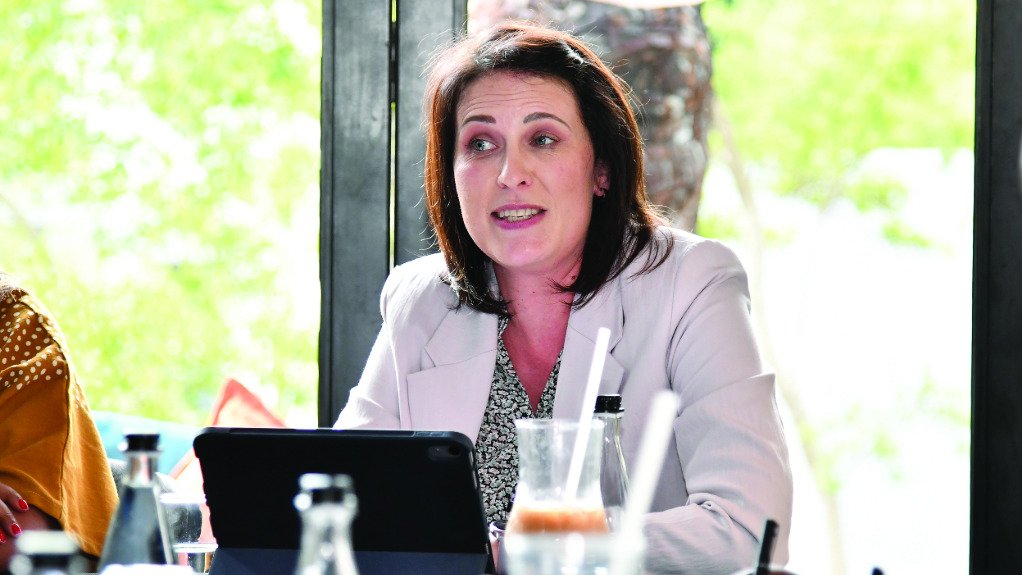
LAURA NICHOLSON We are seeing tangible collaborations between global innovators and African companies focused on automation, mineral processing and supply chain digitalisation



The convergence of the automotive and mining value chains is strengthening Africa’s capacity to shift from resource extraction to advanced manufacturing, positioning the continent as an increasingly credible participant in global industrial supply networks, states industry organisation African Association of Automotive Manufacturers CEO Victoria Backhaus-Jerling.
Africa’s automotive component manufacturing sector is entering a decisive period of transformation, characterised by localisation, regional integration and a shift towards sustainable, technology-led production.
She adds that governments, manufacturers and investors across the continent are aligning around a shared vision of industrial depth and regional collaboration, with the African Continental Free Trade Area (AfCFTA) having accelerated this process by creating the framework for continent-wide trade in vehicles and components.
The AfCFTA framework enables countries to leverage their respective strengths from raw material endowments to assembly and logistical capabilities.
The momentum is particularly evident in the localisation drive, as Africa-based companies implement the commitments of the South African Automotive Masterplan 2035 and its regional equivalents.
Backhaus-Jerling says the aim should be to move beyond basic assembly, towards more sophisticated component and subsystem manufacturing supported by technology transfer, skills development and inclusive enterprise participation.
“Manufacturers are no longer thinking in national silos, they are looking at how supply chains can operate across multiple countries, leveraging raw materials in one region and assembly capacity in another.”
Further, Backhaus-Jerling notes that localisation and industrial policy must act as enablers rather than constraints, by encouraging innovation and rewarding value addition. The recent conclusion of the Automotive Rules of Origin under AfCFTA, she states, is a critical enabler for harmonised trade, enabling manufacturers to source and distribute components seamlessly across the continent.
Moreover, technology adoption and sustainability are reinforcing this progress with African suppliers now integrating digital manufacturing, automation and low-carbon materials into their processes to meet the global standards of traceability and quality demanded by international original-equipment manufacturers (OEMs).
Sustainability, once viewed as a compliance requirement, has become central to competitiveness, with OEMs and suppliers prioritising energy efficiency, ethical sourcing and circular production models.
Regional Opportunity
Backhaus-Jerling highlights that, as the global automotive component industry pivots towards new-energy mobility, Africa’s mineral wealth provides a strong foundation for the next phase of growth.
Countries – such as Zambia, Namibia and the Democratic Republic of Congo – rich in copper and other strategic minerals, hold the key to building regional electric vehicle (EV) component supply chains. The local beneficiation of these resources can underpin new manufacturing opportunities, from wiring systems to battery assembly, deepening Africa’s participation in the global transition to cleaner transport, she suggests.
“We see the future of African automotive manufacturing being shaped by electrification, circular materials and regional value chain integration. Each of these pillars reinforces the others, as technology adoption drives localisation, and localisation strengthens Africa’s competitiveness.”
The rise of micromobility solutions is also changing the landscape, creating demand for lightweight materials, efficient energy systems and small-scale assembly lines suited to African markets, while advances in recycling and green logistics are transforming production models, creating sustainable industrial clusters and supporting Africa’s broader decarbonisation commitments.
Cross-Sector Partnerships
Cross-sector collaboration has become one of the defining features of Africa’s industrial resurgence. Events organiser Hyve Group’s Investing in African Mining Indaba, traditionally centred on the resource sector has, therefore, evolved into a strategic platform, linking upstream producers with downstream manufacturers, financiers and technology innovators.
Hyve Group Mining Indaba product director Laura Nicholson says the event now functions as a global meeting point for innovation and investment, where industrial development, advanced manufacturing and digital transformation intersect.
“Hyve is seeing tangible collaborations between global innovators and African companies focused on automation, mineral processing and supply chain digitalisation. These engagements [allow for] practical knowledge transfer and ensure that innovation remains locally relevant and inclusive.”
The Mining Indaba’s growing emphasis on beneficiation and supply chain alignment mirrors the automotive industry’s drive to localise and industrialise. By connecting resource producers with component and vehicle manufacturers, the event has become an important platform for building the partnerships necessary to realise Africa’s long-term goal of value-added, sustainable growth, she adds.
Nicholson and Backhaus-Jerling agree that the coming decade will be pivotal in consolidating Africa’s industrial progress and, as investor confidence returns and cross-border participation expands, the automotive component industry is at the threshold of a new era – one defined by integration, technology and sustainability.
If these trends continue, Africa could emerge not merely as a supplier of raw materials or assembly operations, but as a fully-fledged participant in global value chains, producing the vehicles, components and technologies that could underpin a sustainable, industrial future for the continent.
Article Enquiry
Email Article
Save Article
Feedback
To advertise email advertising@creamermedia.co.za or click here


Projects

Latest News

Showroom

The SAIMM started as a learned society in 1894 after the invention of the cyanide process that saved the South African gold mining industry of the...
VISIT SHOWROOM
ALBIS FLANGES — founded in 1965 — is a petro-chemical approved manufacturer of flanges and fittings in most grades of steel, listed with Sasol,...
VISIT SHOWROOM


Press Office
Announcements
What's On
Subscribe to improve your user experience...
Option 1 (equivalent of R125 a month):
Receive a weekly copy of Creamer Media's Engineering News & Mining Weekly magazine
(print copy for those in South Africa and e-magazine for those outside of South Africa)
Receive daily email newsletters
Access to full search results
Access archive of magazine back copies
Access to Projects in Progress
Access to ONE Research Report of your choice in PDF format
Option 2 (equivalent of R375 a month):
All benefits from Option 1
PLUS
Access to Creamer Media's Research Channel Africa for ALL Research Reports, in PDF format, on various industrial and mining sectors
including Electricity; Water; Energy Transition; Hydrogen; Roads, Rail and Ports; Coal; Gold; Platinum; Battery Metals; etc.
Already a subscriber?
Forgotten your password?
Receive weekly copy of Creamer Media's Engineering News & Mining Weekly magazine (print copy for those in South Africa and e-magazine for those outside of South Africa)
➕
Recieve daily email newsletters
➕
Access to full search results
➕
Access archive of magazine back copies
➕
Access to Projects in Progress
➕
Access to ONE Research Report of your choice in PDF format
RESEARCH CHANNEL AFRICA
R4500 (equivalent of R375 a month)
SUBSCRIBEAll benefits from Option 1
➕
Access to Creamer Media's Research Channel Africa for ALL Research Reports on various industrial and mining sectors, in PDF format, including on:
Electricity
➕
Water
➕
Energy Transition
➕
Hydrogen
➕
Roads, Rail and Ports
➕
Coal
➕
Gold
➕
Platinum
➕
Battery Metals
➕
etc.
Receive all benefits from Option 1 or Option 2 delivered to numerous people at your company
➕
Multiple User names and Passwords for simultaneous log-ins
➕
Intranet integration access to all in your organisation