Security is the new business continuity as cybercrime, infrastructure strain and global instability raise the cost of disruption
This article has been supplied and will be available for a limited time only on this website.
As South African businesses face rising cyberattacks, organised crime, infrastructure failures and supply-chain pressure, security has emerged as one of the most critical business risks of 2026.
In the past year alone, 47% of South African organisations reported between one and five cybersecurity incidents, and 88% suffered at least one breach, showing just how pervasive digital threats have become. Cybercrime cost the telecoms sector R5.3 billion in 2025, and South Africa was identified as the most targeted country in Africa for sophisticated attacks.
From retail centres and logistics hubs to corporate campuses and hospitality venues, recent months have shown how quickly disruption can translate into lost revenue, reputational damage and regulatory exposure. What was once considered a “security issue” is now a core business continuity concern.
Against this backdrop, renewed geopolitical tensions, including between the United States and Venezuela, are adding pressure to global energy markets, logistics networks and digital systems, reinforcing a new reality: instability is no longer an exception, it is the operating environment.
According to Phangela Group, this convergence of global and local risk is forcing boards and executives to rethink how they protect operations.
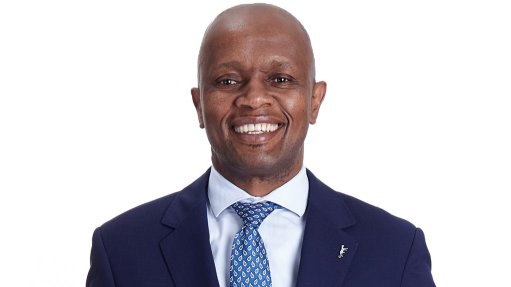
“Geopolitical instability doesn’t stay on the news ticker, it lands in boardrooms, operations centres and balance sheets,” says Peter Krüger, Head of Business Development and Growth at Phangela Group. “When volatility in one region can trigger cost shocks, cyber incidents or supply-chain disruption thousands of kilometres away, security becomes central to whether a business can continue operating at all.”
“These pressures no longer happen in isolation,” Krüger explains. “A cyber incident can trigger reputational damage, physical security threats and operational shutdowns simultaneously. Business continuity plans that don’t account for this layered risk are no longer fit for purpose.”
Sectors with physical infrastructure, public-facing environments or complex supply chains are already seeing the consequences most clearly, including:
- Retail and shopping centres, where organised crime and cyber breaches intersect
- Hospitality and leisure, where guest safety and brand trust are inseparable
- Corporate campuses, facing rising compliance and governance expectations
- Mining, energy and logistics, where disruption can halt operations entirely.
In these sectors alone, recent disruptions have resulted in significant financial losses, prolonged operational downtime and increased security and compliance costs over the past year, placing sustained pressure on margins and performance.
In South Africa, these global pressures are intensified by high crime levels, ageing infrastructure and rising cybercrime.
Phangela says the role of private security has evolved rapidly in response, “Clients are no longer asking only for guards and patrols,” Krüger says. “They are looking for risk intelligence, integrated monitoring, cyber resilience and rapid response capability, all aligned to business strategy.”
Over the past 18 months, Phangela has seen an increase in demand and service expansion for integrated security and continuity solutions.
Security is increasingly being embedded into executive decision-making, risk committees and continuity planning.
“Security is now about foresight,” Krüger adds. “It’s about understanding where global instability intersects with local operations and putting systems in place that reduce downtime, protect people and preserve trust.”
Organisations that invest in proactive, integrated security and risk management are already seeing measurable benefits.
Phangela’s research and client data shows that companies with mature security and continuity systems recover significantly faster following major disruptions, often restoring critical operations within hours rather than days or weeks, while experiencing substantially lower financial losses and reputational damages compared to organisations with less developed capabilities
“There are two kinds of organisations today,” says Krüger. “Those that assume disruption won’t affect them, and those that plan for it. The second group recovers faster, loses less revenue and maintains stakeholder confidence.”
With geopolitical uncertainty, cybercrime and infrastructure pressure expected to remain elevated throughout 2026, Phangela believes security will increasingly be viewed as a core pillar of business resilience, not an overhead.
“Business continuity is no longer about having a plan in a drawer,” Krüger concludes. “It’s about building systems that work under pressure. In today’s environment, security is central to that.”
Article Enquiry
Email Article
Save Article
Feedback
To advertise email advertising@creamermedia.co.za or click here
Press Office
Announcements
What's On
Subscribe to improve your user experience...
Option 1 (equivalent of R125 a month):
Receive a weekly copy of Creamer Media's Engineering News & Mining Weekly magazine
(print copy for those in South Africa and e-magazine for those outside of South Africa)
Receive daily email newsletters
Access to full search results
Access archive of magazine back copies
Access to Projects in Progress
Access to ONE Research Report of your choice in PDF format
Option 2 (equivalent of R375 a month):
All benefits from Option 1
PLUS
Access to Creamer Media's Research Channel Africa for ALL Research Reports, in PDF format, on various industrial and mining sectors
including Electricity; Water; Energy Transition; Hydrogen; Roads, Rail and Ports; Coal; Gold; Platinum; Battery Metals; etc.
Already a subscriber?
Forgotten your password?
Receive weekly copy of Creamer Media's Engineering News & Mining Weekly magazine (print copy for those in South Africa and e-magazine for those outside of South Africa)
➕
Recieve daily email newsletters
➕
Access to full search results
➕
Access archive of magazine back copies
➕
Access to Projects in Progress
➕
Access to ONE Research Report of your choice in PDF format
RESEARCH CHANNEL AFRICA
R4500 (equivalent of R375 a month)
SUBSCRIBEAll benefits from Option 1
➕
Access to Creamer Media's Research Channel Africa for ALL Research Reports on various industrial and mining sectors, in PDF format, including on:
Electricity
➕
Water
➕
Energy Transition
➕
Hydrogen
➕
Roads, Rail and Ports
➕
Coal
➕
Gold
➕
Platinum
➕
Battery Metals
➕
etc.
Receive all benefits from Option 1 or Option 2 delivered to numerous people at your company
➕
Multiple User names and Passwords for simultaneous log-ins
➕
Intranet integration access to all in your organisation