Structural reform can unlock investment

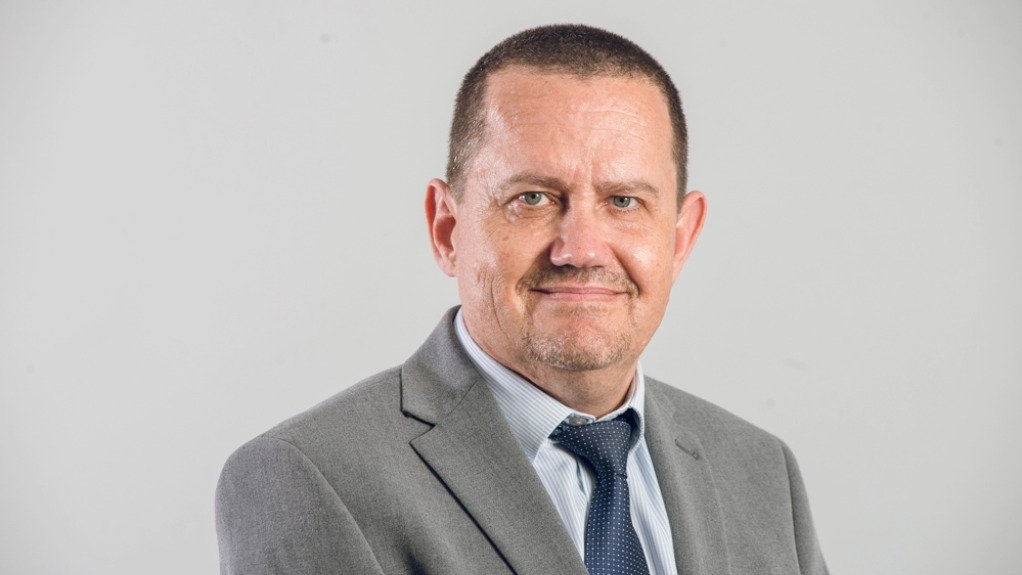
JASON LIGHTFOOT Blended finance tools need to address genuine bankability gaps rather than substitute for proper project structuring


South Africa’s worsening water infrastructure crisis is not so much a problem of capital scarcity as it is of project bankability, says specialist investment company Futuregrowth Asset Management senior portfolio manager Jason Lightfoot.
He notes that despite significant funding appetite, weak institutional structures, inconsistent regulation and fragmented governance continue to delay water treatment and reuse projects that could secure long-term supply.
South Africa’s municipalities and utilities are struggling to convert financing intent into viable, investment-ready projects, Lightfoot argues. He identifies structural and regulatory reforms as the most immediate interventions required to address this inability to create bankable projects.
“The constraint is structuring projects that meet fiduciary requirements. There is no shortage of capital, the problem is ensuring that projects are designed, governed and financed in ways that satisfy long-term investors’ risk standards.”
He outlines three reforms that could materially improve bankability: ring-fenced revenue mechanisms with enforceable payment certainty, regulatory clarity on tariff methodologies indexed to inflation and operating costs, and standardised legal frameworks that lower transaction costs and promote consistency across projects.
The Lesotho Highlands Water Project is an example of how payment certainty can underpin investor confidence “because bulk water payments flowed through the national fiscus rather than municipal balance sheets”.
“It created repayment certainty for lenders – something still largely absent in the local water sector,” he adds.
While project preparation facilities exist through institutions, such as development finance institution (DFI) the Development Bank of Southern Africa (DBSA), Lightfoot says these remain underused, and ensuring that municipalities access this support effectively and at scale is critical.
Many projects fail before reaching financial close because the local authorities lack the technical and financial capacity to properly structure projects, he stresses.
Blended Finance, Coordination Deficits
As smaller, decentralised water treatment systems emerge, especially in rural and underserved areas, blended finance models are increasingly proposed to accelerate delivery.
However, Lightfoot cautions against using concessional or guaranteed finance to disguise poor project fundamentals.
“Blended finance tools need to address genuine bankability gaps rather than substitute for proper project structuring. Guarantees or concessional funding cannot fix projects that fail basic bankability requirements. Regulatory certainty, robust legal agreements, appropriate risk sharing and predictable cashflows remain essential, regardless of financing structure.”
Where such fundamentals are sound, Lightfoot says blended tools can provide targeted risk mitigation, highlighting that technical assistance grants for project preparation make sense, given the aforementioned lack of technical capacity in municipalities.
First-loss capital from DFIs can absorb early-stage execution risk in technically-sound projects, proving performance and allowing for commercial capital to fund the next phase, but the underlying economics must still work.
Lightfoot adds that a stronger coordination between the National Water Resource Infrastructure Agency (NWRIA), municipalities and the National Treasury is essential to build investor confidence.
The water sector has fragmented municipal counterparties with vastly different credit profiles, and the NWRIA could help by centralising counterparty risk through long-term supply contracts. This would, however, require clear mandates and payment-certainty mechanisms, he elaborates.
Partnering for Scalable Solutions
Futuregrowth, along with other institutional investors, sees significant potential in collaborating with engineering and technology partners to unlock investment opportunities in water reuse, low-energy desalination and smart infrastructure systems.
Replicating the Renewable Energy Independent Power Producer Procurement Programme could help the water industry achieve similar traction, Lightfoot says, adding that aggregating multiple treatment and reuse projects under standardised contracts would enable them to reach institutional scale while streamlining risk assessment and financing.
Such an approach, Futuregrowth maintains, would shift the sector from fragmented pilot projects to an integrated national pipeline, one capable of attracting the sustained private investment required to restore South Africa’s water infrastructure and safeguard long-term supply.
Article Enquiry
Email Article
Save Article
Feedback
To advertise email advertising@creamermedia.co.za or click here


Projects

Latest Multimedia

Latest News

Showroom

Occupational health services, mobile clinics, wellness campaigns, aviation.
VISIT SHOWROOM
Rentech provides renewable energy products and services to the local and selected African markets. Supplying inverters, lithium and lead-acid...
VISIT SHOWROOM


Press Office
Announcements
What's On
Subscribe to improve your user experience...
Option 1 (equivalent of R125 a month):
Receive a weekly copy of Creamer Media's Engineering News & Mining Weekly magazine
(print copy for those in South Africa and e-magazine for those outside of South Africa)
Receive daily email newsletters
Access to full search results
Access archive of magazine back copies
Access to Projects in Progress
Access to ONE Research Report of your choice in PDF format
Option 2 (equivalent of R375 a month):
All benefits from Option 1
PLUS
Access to Creamer Media's Research Channel Africa for ALL Research Reports, in PDF format, on various industrial and mining sectors
including Electricity; Water; Energy Transition; Hydrogen; Roads, Rail and Ports; Coal; Gold; Platinum; Battery Metals; etc.
Already a subscriber?
Forgotten your password?
Receive weekly copy of Creamer Media's Engineering News & Mining Weekly magazine (print copy for those in South Africa and e-magazine for those outside of South Africa)
➕
Recieve daily email newsletters
➕
Access to full search results
➕
Access archive of magazine back copies
➕
Access to Projects in Progress
➕
Access to ONE Research Report of your choice in PDF format
RESEARCH CHANNEL AFRICA
R4500 (equivalent of R375 a month)
SUBSCRIBEAll benefits from Option 1
➕
Access to Creamer Media's Research Channel Africa for ALL Research Reports on various industrial and mining sectors, in PDF format, including on:
Electricity
➕
Water
➕
Energy Transition
➕
Hydrogen
➕
Roads, Rail and Ports
➕
Coal
➕
Gold
➕
Platinum
➕
Battery Metals
➕
etc.
Receive all benefits from Option 1 or Option 2 delivered to numerous people at your company
➕
Multiple User names and Passwords for simultaneous log-ins
➕
Intranet integration access to all in your organisation