The law is not always black and white, sometimes it's grey





As humans we evolve and change over time. Perhaps not our character (as a leopard never changes it spots) but the things we like and the things we find interesting change as we get older. For example, we may begin our careers in banking and later find ourselves running a flower shop in Simon’s Town. Or we may once have disliked dogs, only to discover, years later, that we cannot imagine life without them. Another big one: we fall in love, we fall out of love, and sometimes we do both more than once.
Why do we think the law is any different? What does the law do? It regulates society, and because society involves human behaviour – it also evolves and changes over time. Moreover, new acts are promulgated on a regular basis, and old acts are amended.
A question which has been asked is which jurisdiction has a well-designed legislative framework that South Africa can adopt. The honest answer is that it is not that simple.
South Africa is unique in many respects. It is a developing country with a history vastly different from jurisdictions such as Canada or Australia. Again – the obvious answer lies in the word “developing”.
What is not unique, however, is the existence of communities and the influence of political dynamics. These realities are present everywhere; only the context differs. However, to assume that South Africa can simply step into a Canadian or Australian framework is both irrational and unrealistic as their legislative frameworks are designed for a vastly different socio-political environment than that of South Africa’s.
Further, it is a reality that legislation may be promulgated at a specific point, yet 20 years later the environment in which it must be applied can look entirely different. By highlighting this, it is not suggested that laws should not be clear, coherent and predictable. It must, but they must also allow for adaptation within defined parameters.
For example, in Doctors for Life International v Speaker of the National Assembly the Constitutional Court described the nature and content of the right to public participation as an “‘open-textured programmatic right’ which is flexible and open to experimental reformulation and which changes in the light of ongoing national experiences.” The Supreme Court of Appeal in the South Durban matter interpreted this to mean that flexibility in a public participation process is essential to achieving meaningful consultation.
The Minister published a Guideline on Public Participation in terms of section 24J of National Environmental Management Act (NEMA) 24 which makes provision for instances where the minimum requirements set out in the environmental impact assessment (EIA) regulations for public participation may not be adequate for all applications, given the different projects to which authorisation applications relate.
This reality also seems to be recognised by our courts in recent court judgments that relate to environmental authorisations. It appears that the courts are reinforcing the notion that mining companies are expected not only to comply with legislation, but also to exercise judgment and initiative - particularly in relation to EIAs and socio-economic assessments.
For example, in Green Connection v Minister of Forestry, Fisheries and the Environment, the Western Cape High Court relied on Earthlife Johannesburg to hold that absence of a climate change impact assessment made the environmental authorisation irrational, confirming that NEMA’s requirements cannot be limited by an overly narrow reading of the statutory checklist. Accordingly, this confirms that courts have treated relevant factors, such as climate impacts and feasible alternatives, as part of the required assessment under NEMA, even though these are not rigidly enumerated, and that ignoring them can make decisions unlawful.
In other words, what seems to be suggested by recent judgments is that “relevant factors must be considered”, even if they are not explicitly mentioned in the relevant statute, when they bear materially on the environmental authorisation decision.
This can feel unsettling, as it places us in a space where the law establishes a baseline, but not necessarily a ceiling. However, the Constitution opened this can of worms by allowing for the development of the law in section 39 of the Constitution. (Section 39 stipulates that “When interpreting any legislation, and when developing the common law or customary law, every court, tribunal or forum must promote the spirit, purport and objects of the Bill of Rights.”)
In sum: politics change, values and norms change and society evolves. We get fat and then we get skinnier again. This is also why the Constitutional Court recognises “living customary law”, and made it clear in Bhe that customary law by its very nature “evolves as the people who live by its norms change their patterns of life”. Also, in ten years from now, we will likely not be debating today’s political figures like US President Donald Trump - we will be discussing whoever followed them.
Progress is not achieved through rigid imitation, but through thoughtful, rational and incremental adaptation over time. Longevity and sustainability are not built by redesigning the whole system – but by making small incremental changes in the right direction.
Yes, we can draw lessons from other countries, but the reality is that our history and our people are unique, and the law should be developed through a South African lens.
And yes, the law changes, and with change comes uncertainty. However, what remains certain and stable are the minerals in the ground. It is therefore that investors should still have a sense of security when it comes to investing in South African projects.
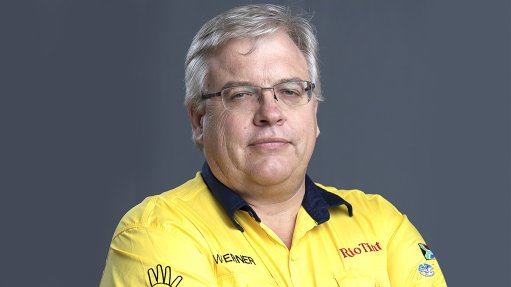
Written by Nina Greyling, director at Nortons Inc.
Article Enquiry
Email Article
Save Article
Feedback
To advertise email advertising@creamermedia.co.za or click here

Projects


Latest Multimedia

Latest News
Showroom

We are responsible manufacturers of essential components. Manufacturing 80 million parts a week, we have over 1 billion parts in stock.
VISIT SHOWROOM
Design, Construction and Maintenance of Site Erected, Welded Bulk Storage Tanks for the Petrochemical, LNG, Ammonia and Sustainable fuel Sectors.
VISIT SHOWROOM



Press Office
Announcements
What's On
Subscribe to improve your user experience...
Option 1 (equivalent of R125 a month):
Receive a weekly copy of Creamer Media's Engineering News & Mining Weekly magazine
(print copy for those in South Africa and e-magazine for those outside of South Africa)
Receive daily email newsletters
Access to full search results
Access archive of magazine back copies
Access to Projects in Progress
Access to ONE Research Report of your choice in PDF format
Option 2 (equivalent of R375 a month):
All benefits from Option 1
PLUS
Access to Creamer Media's Research Channel Africa for ALL Research Reports, in PDF format, on various industrial and mining sectors
including Electricity; Water; Energy Transition; Hydrogen; Roads, Rail and Ports; Coal; Gold; Platinum; Battery Metals; etc.
Already a subscriber?
Forgotten your password?
Receive weekly copy of Creamer Media's Engineering News & Mining Weekly magazine (print copy for those in South Africa and e-magazine for those outside of South Africa)
➕
Recieve daily email newsletters
➕
Access to full search results
➕
Access archive of magazine back copies
➕
Access to Projects in Progress
➕
Access to ONE Research Report of your choice in PDF format
RESEARCH CHANNEL AFRICA
R4500 (equivalent of R375 a month)
SUBSCRIBEAll benefits from Option 1
➕
Access to Creamer Media's Research Channel Africa for ALL Research Reports on various industrial and mining sectors, in PDF format, including on:
Electricity
➕
Water
➕
Energy Transition
➕
Hydrogen
➕
Roads, Rail and Ports
➕
Coal
➕
Gold
➕
Platinum
➕
Battery Metals
➕
etc.
Receive all benefits from Option 1 or Option 2 delivered to numerous people at your company
➕
Multiple User names and Passwords for simultaneous log-ins
➕
Intranet integration access to all in your organisation