The lube kitchen series part 12: anti-wear additives – the metal guardians in your oil








This article has been supplied.
By: Steven Lumley, technical manager, WearCheck
(Virtual Showroom) Specialist condition monitoring company, WearCheck, keeps adding to the discussion about oil additives – the latest topic is anti-wear additives.
During a recent visit to my local library, I asked the librarian where the books on anti-wear additives were kept. She said they were in the non-friction section. Her response really rubbed me up the wrong way, but I let it slide…if you are laughing, you are a tribologist at heart!
But seriously, folks, in this instalment of the WearCheck Lube Kitchen series, we will explore the adsorbing world of anti-wear additives – the metal guardians in your oil.
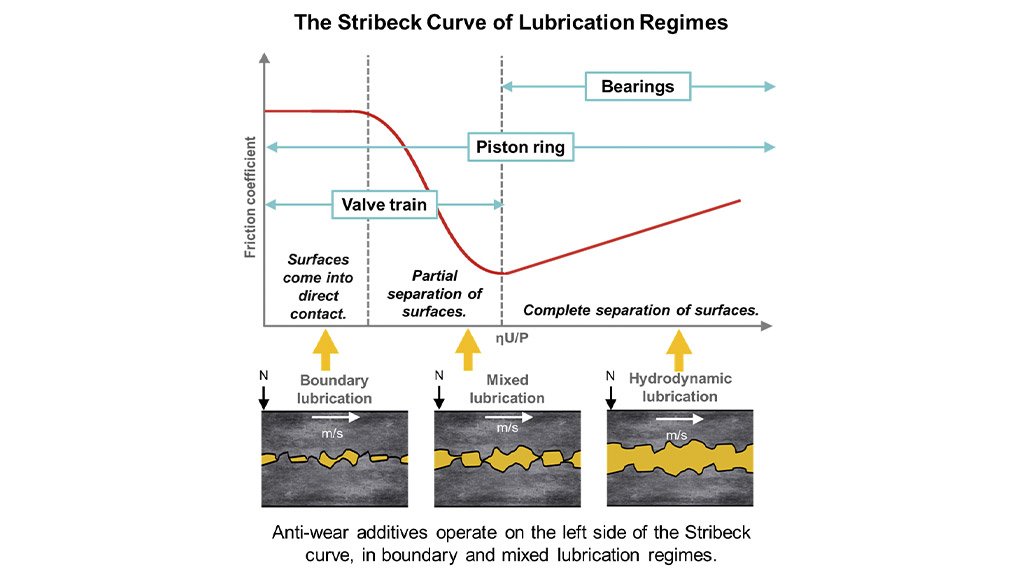
Anti-wear additives are used to protect against wear and the loss of metal surfaces during mixed-film and boundary-film lubrication. As such, this group of additives is often referred to as boundary lubrication additives. These polar additives are usually triggered by temperature or elevated loads at the contact surfaces, and work to form a protective film to minimise wear.
Anti-wear additives are among the most commonly utilised additive packages, and generally come in the form of either anti-wear (AW) or extreme-pressure (EP) additives.
Although the terms anti-wear and extreme-pressure additives are often used interchangeably in the language of lubrication, there are notable differences between their chemistries and the way they function.
In general, AW additives are designed to deposit surface films under normal operating conditions and reduce the rate of continuous wear. EP additive films are formed by reacting rapidly with a surface under severe stress to prevent more extreme modes of failures. In general, AW additives are used for low-load and high-speed conditions, while EP additives are used for applications that have high loads and low speeds. With this in mind, lets step into the magical world of anti-wear additives and uncover how these tiny guardians keep machines running smoothly.
Anti-wear additives react chemically with the metal surfaces when metal-to-metal contact occurs in conditions of mixed and boundary lubrication, and they are activated by the heat of contact to form a film that minimises wear.
Anti-wear additives are enlisted to combat wear in engine oils, hydraulic oils, automatic transmission oils, gear oils, greases and many other applications.
They are often phosphorus-based polar compounds with oil-soluble tails and polar heads that have an affinity for metal surfaces. These polar heads physically bond, or adsorb, to the metal frictional surfaces (like iron to a magnet) to form a protective film.
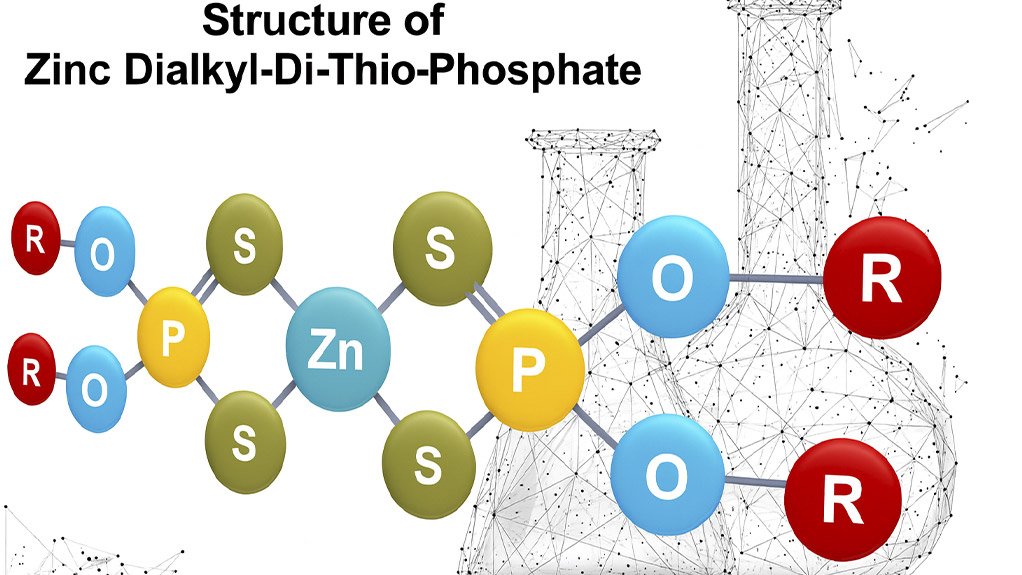
Zinc dithiophosphate (ZDP) compounds are the most commonly used anti-wear additives. Among these, Zinc dialkyl-dithiophosphate (ZDDP) — a specific subset of ZDPs characterised by having dialkyl groups — is the most prevalent form used in lubricants. With an estimated global market size of $2.62 billion in 2023, it’s fair to say that ZDDP is a lubricant formulator’s best friend.
This marvellous additive also functions as a secondary antioxidant (peroxide decomposer). In fact, that is how they came to be. The history of ZDDP is a story of accidental success. Intended as an antioxidant, their unique strength as anti-wear agents was discovered serendipitously in the early 1940s.
ZDDP made its world debut as a lubricant additive in 1941, when three different companies —Lubrizol, American Cyanimid, and Union Oil Co.— filed patents with claims of corrosion- and oxidation-inhibitors in engine oils. The Lubrizol patent was granted in 1941 and the others in 1944.
However, the anti-wear properties of ZDDP remained mostly un-noticed until the advent of V8 engines with overhead valves and increased compression ratios like the legendary Oldsmobile “Rocket” and Cadillac OHV in 1949. Hoorah! Like many early high-performance V8 engines of this era, these roaring beauties suffered from serious cam and follower wear due to the increased stresses placed on the valve train, but when oils containing ZDDP were used in these engines, less wear was observed than those oils without it, and eureka! the connection was made. As a result, the automobile industry quickly adopted the use of ZDDP as an anti-wear additive in engine oils.
While the lubricant industry at the time recognised ZDDP’s effectiveness as an anti-wear additive, the detailed mechanisms of how it worked were not fully understood.
As the decades rolled on and analytical techniques became more sophisticated, researchers were able to study the chemical interactions between ZDDP and metal surfaces, but it was really only in the 1990s that researchers gained deeper molecular insight into the specific chemical reactions involved.
What they discovered was nothing short of molecular magic - ZDDP decomposes to form a glassy, phosphate-based tribofilm on the metal surfaces. This film is primarily composed of zinc polyphosphates, but can also incorporate iron from the metal surfaces it protects. These polyphosphates create a "glassy" or amorphous film that becomes about 50-150 nanometres (nm) thick and somehow self-regulates to stay at that thickness. Just for context, there are a million nanometres in one millimetre.
But wait, there’s more! The tribofilm also exhibits " intelligent" behaviour by becoming stronger and more resilient as the load increases, which is particularly beneficial during engine startup when mechanical stress is highest, and adequate lubrication may not yet be fully established.
This adaptive response ensures that the film provides enhanced protection precisely when it is most needed, and for this reason, ZDDP has been a mainstay of lubricant formulation and performance for more than 80 years and with good reason - no single additive provides the same benefit as cost effectively.
Unfortunately, ZDDPs play havoc on modern emission-control devices like catalytic converters and diesel particulate filters (DPFs).
The operation of catalytic converters like diesel oxidation catalysts (DOC) is altered by the phosphorous present in engine oils that contain ZDDP. The phosphorus can partially volatilise during engine operation and, once in the exhaust stream, it can reduce the efficiency and deactivate these catalysts by coating and building up on the active catalyst sites, causing irreversible damage that accumulates over time. As a result, increased levels of harmful emissions like nitrogen oxides, carbon monoxide and hydrocarbons pass through these catalysts unchanged and into the atmosphere. Catalyst poisoning by phosphorous can also significantly decrease filtration efficiency of DPFs, which also results in reduced soot-regeneration activity.
The sulphur component of ZDDP can also inhibit the effectiveness of Selective Catalytic Reduction (SCR) systems by poisoning these catalysts, which can increase the conversion of sulphur oxides to sulphates, which in turn increases particulate emissions and accumulation of particulate material. And it gets worse, because the zinc component of ZDDP contributes to the formation of ash when the oil is burned, and this ash accumulates in the DPF, increasing backpressure and reducing the efficiency of the filter.
To mitigate these effects, the industry is moving towards low-SAPS (Sulphated Ash, Phosphorus and Sulphur) oils and alternative additive chemistry to provide the necessary anti-wear protection without compromising the efficiency of emission-control systems.
Article Enquiry
Email Article
Save Article
Feedback
To advertise email advertising@creamermedia.co.za or click here
Research Reports


Projects

Latest Multimedia


Latest News

Showroom

For over 60 years, VEGA has provided industry-leading products for the measurement of level, density, weight and pressure. As the inventor of the...
VISIT SHOWROOM
Industrial Nozzles & Systems (Pty) Ltd (Est. 2000) exclusive representative in Southern Africa for LECHLER GmbH (Est. 1879) - Europe's leading...
VISIT SHOWROOM



Press Office
Announcements
What's On
Subscribe to improve your user experience...
Option 1 (equivalent of R125 a month):
Receive a weekly copy of Creamer Media's Engineering News & Mining Weekly magazine
(print copy for those in South Africa and e-magazine for those outside of South Africa)
Receive daily email newsletters
Access to full search results
Access archive of magazine back copies
Access to Projects in Progress
Access to ONE Research Report of your choice in PDF format
Option 2 (equivalent of R375 a month):
All benefits from Option 1
PLUS
Access to Creamer Media's Research Channel Africa for ALL Research Reports, in PDF format, on various industrial and mining sectors
including Electricity; Water; Energy Transition; Hydrogen; Roads, Rail and Ports; Coal; Gold; Platinum; Battery Metals; etc.
Already a subscriber?
Forgotten your password?
Receive weekly copy of Creamer Media's Engineering News & Mining Weekly magazine (print copy for those in South Africa and e-magazine for those outside of South Africa)
➕
Recieve daily email newsletters
➕
Access to full search results
➕
Access archive of magazine back copies
➕
Access to Projects in Progress
➕
Access to ONE Research Report of your choice in PDF format
RESEARCH CHANNEL AFRICA
R4500 (equivalent of R375 a month)
SUBSCRIBEAll benefits from Option 1
➕
Access to Creamer Media's Research Channel Africa for ALL Research Reports on various industrial and mining sectors, in PDF format, including on:
Electricity
➕
Water
➕
Energy Transition
➕
Hydrogen
➕
Roads, Rail and Ports
➕
Coal
➕
Gold
➕
Platinum
➕
Battery Metals
➕
etc.
Receive all benefits from Option 1 or Option 2 delivered to numerous people at your company
➕
Multiple User names and Passwords for simultaneous log-ins
➕
Intranet integration access to all in your organisation