Valterra Platinum returns from Seoul Summit with important hydrogen economy insight

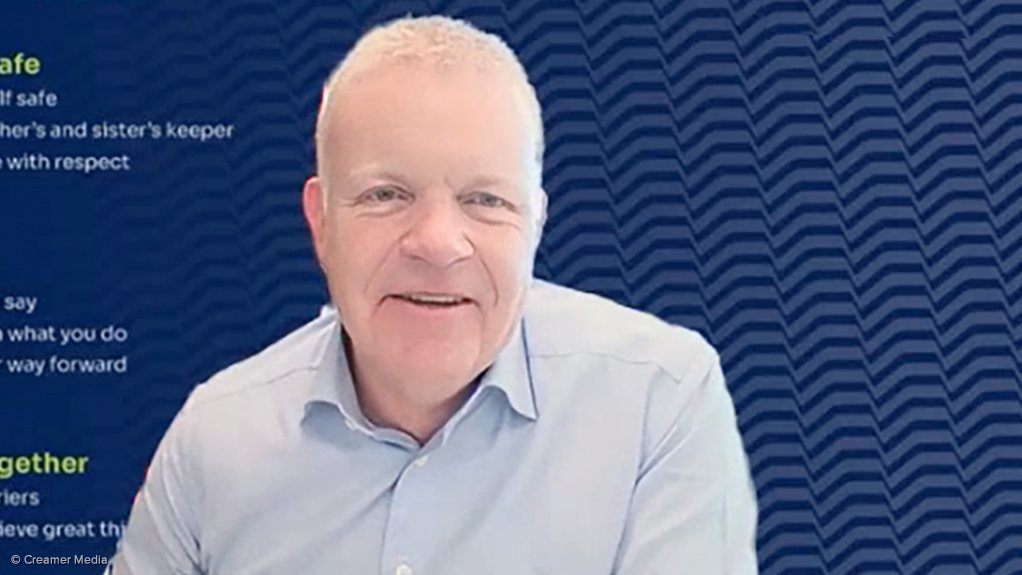
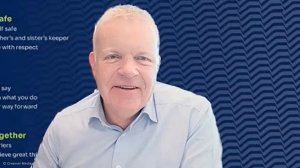
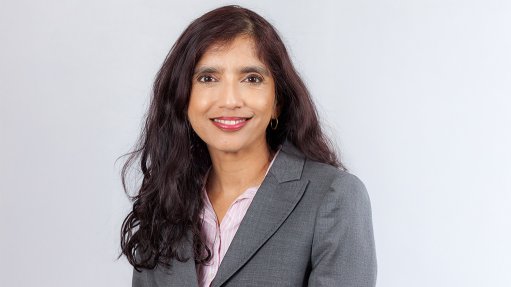
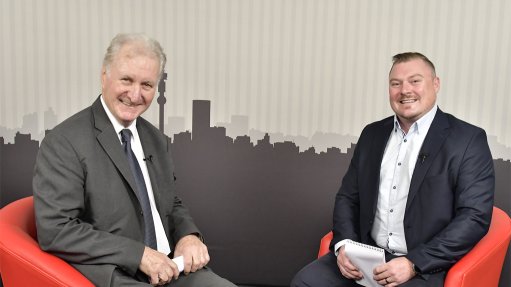
Valterra Platinum CEO Craig Miller interviewed by Mining Weekly's Martin Creamer. Video: Darlene Creamer.
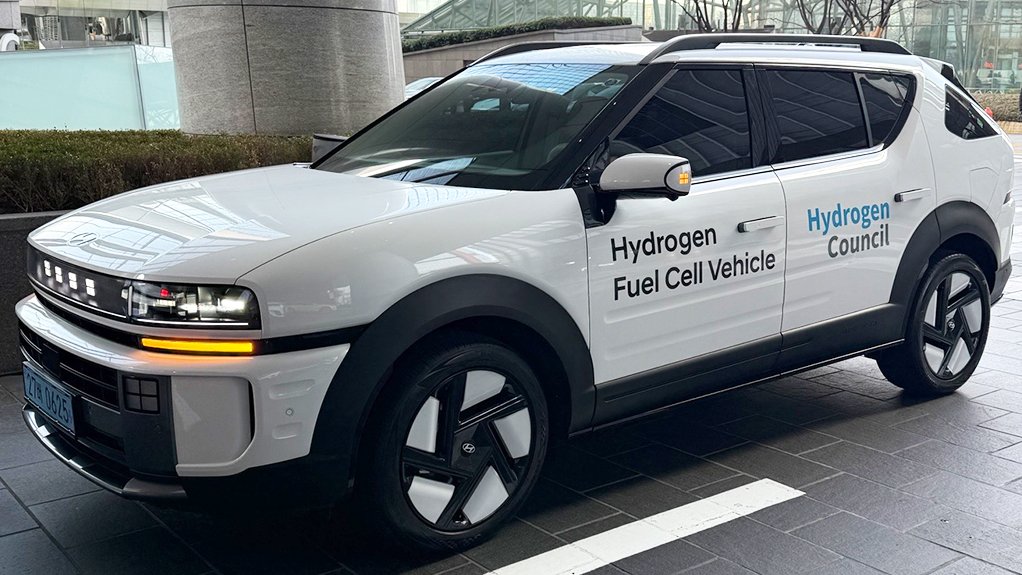
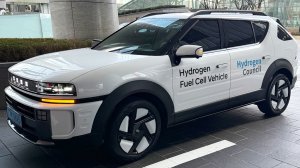
Hyundai Nexo fuel cell electric vehicle.
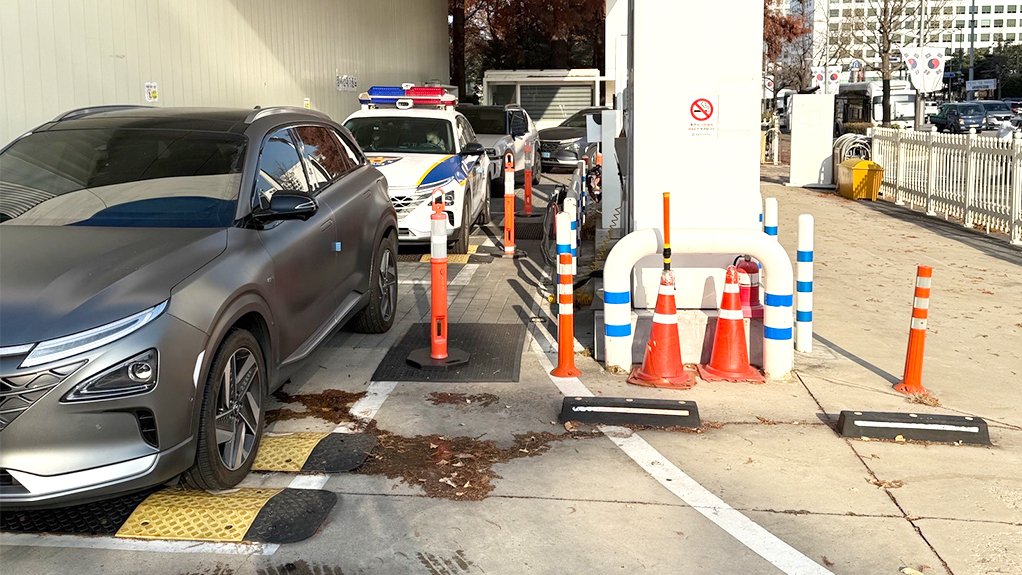
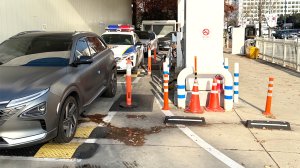
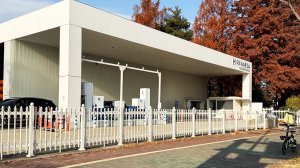
The refuelling.
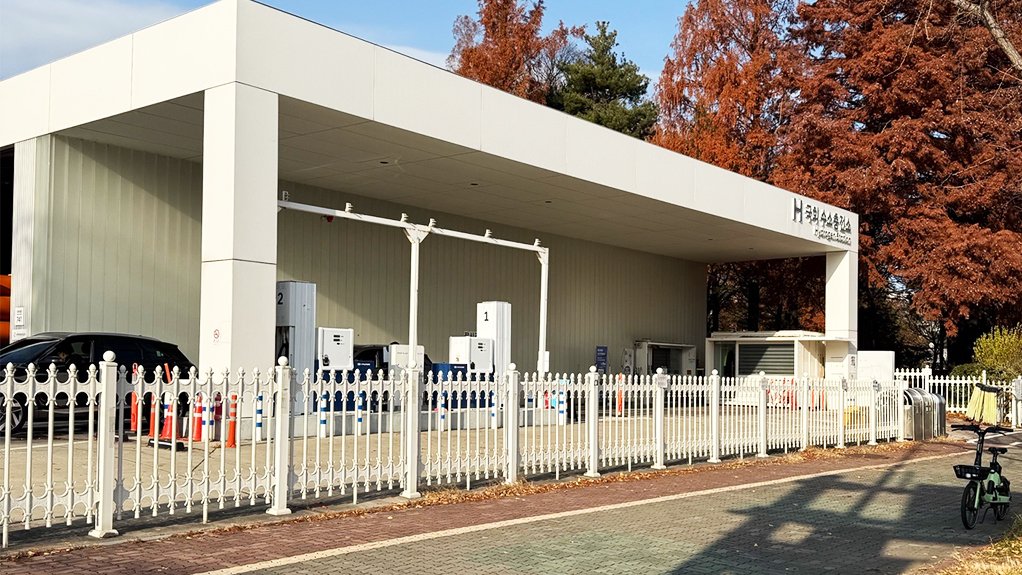
The refeulling station.
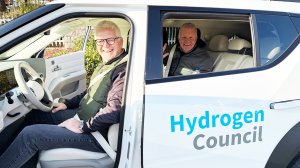
Craig Miller.


JOHANNESBURG (miningweekly.com) – Creamer Media’s Mining Weekly today interviewed Valterra Platinum CEO Craig Miller, who has just returned from the Hydrogen Council’s Global CEO Summit 2025 in South Korea with important insight into the status of the hydrogen economy.
The Seoul Summit, attended by more than 200 CEOs and senior executives from the world's leading hydrogen-linked businesses, focused on how hydrogen is produced and sold, and how regulations can support the platinum group metal- (PGM-) linked role of the hydrogen economy to decarbonise the world and to combat climate change.
“I certainly think that hydrogen – and the industry specifically around that – is moving forward,” Miller pointed out in the Teams interview with Mining Weekly. (Also watch attached Creamer Media video.)
It is a large snowball with $110-billion invested in hydrogen projects over the last five years and $35-billion in the last 12 months alone.
PGMs are poised to continue to play a key role and very encouraging are the 200-plus refuelling stations in South Korea that service the platinum-based hydrogen fuel cell electric vehicles (FCEV) and hydrogen FCEV buses in Greater Seoul.
Where PGM-catalysed proton exchange membrane (PEM) electrolysers are used is also creating encouragement for the road ahead.
Pathways towards translation into meaningful demand are being assisted by smart private-public partnerships.
Mining Weekly: It’s great to be able to chat to you on your return from the Seoul Summit. How good is a meeting like this for the demand outlook for PGMs?
Miller: It was a really encouraging and great week to be in Seoul, together with some of the other CEOs, who are particularly focused on creating that hydrogen production, and also then the demand segments. On the outlook for PGMs, where we see the opportunity is really in PEM electrolysers, so in the production of green hydrogen, and then also in mobility, in FCEVs. I think it's fair to say that there is certainly a lot of supply and investment going into hydrogen, and that's very key, but then also, importantly, looking for those demand use cases. Certainly, the opportunities are there and we just need to see those translate into real outcomes. But I'm really encouraged. Having spent the week in Seoul and having the opportunity to travel around the city in a FCEV, the Hyundai Nexo, that was really impressive. It's a really nifty little car and it was great to see the opportunity, just in terms of how that's translating into tangible people mobility, and the opportunity for me also to see some refuelling of the hydrogen into these FCEVs. In Seoul, there's a refuelling station right outside the People's Assembly, which is the equivalent of their national Parliament, and so it really demonstrated for me the importance of hydrogen and hydrogen in the Korean economy, and how they see it as a step towards decarbonisation and supporting the energy transition.
A strong call was made to build the global hydrogen ecosystem faster and to unlock commercial scale demand by 2030. Do you get the impression that the call will be heeded?
There's a lot of work to be done into recognising that call, from both a policy perspective, in certain jurisdictions of the world, in standardising some of the standards in terms of hydrogen production and transportation and its utilisation. I think that's really key. But I think what was very apparent, and the market capitalisation of Hydrogen Council companies attending is almost $9-trillion, was that some of the largest global companies participate at the Hydrogen Council. The real momentum around hydrogen is certainly there and the opportunity that we still see in its role to play in decarbonisation is key, and ultimately that will translate into demand segments. There's a lot of optimism around that, but it is important that we start to see that translating into tangible output from now until the end of the decade, and into 2035. A key takeaway from the board is that we needed to see that translating into meaningful demand and we can see some pathways towards that, but it is going to take a lot of concerted effort, working with governments in private-public partnerships, working with others in those ecosystems, similar to what Valterra Platinum has done, where we've used the taxi fleet in Berlin. You'll recall that we’ve been doing that for 18 months now, so really starting to demonstrate some of those ecosystems and how they can translate into tangible benefits, so that's well underway, but there's still a lot of work ahead of us.
Did the hydrogen FCEV – that FCEV transport that was laid on for everyone – provide enough visible evidence to convince you that competitive commercialisation at scale deserves to be put to the test globally?
Yes, it did. What we've been saying at Valterra Platinum for quite some time is the energy transition will be taking place. There's no doubt that we're going to need to deal with climate change, and we are going to need to decarbonise, and that there will be a role for various forms of technology, be that battery electric vehicles, be that FCEVs, be that hybrid vehicles, and other forms of transportation, there’s absolutely a role to play and what I was able to witness in Seoul is that if you have the concerted effort around investing in the infrastructure, if you have the appropriate policies to support decarbonisation and to support the various technologies that you can use in that particular value chain, the opportunity for FCEVs and hydrogen, and green hydrogen specifically, is very, very real and that was really encouraging, so not only seeing the motor vehicles, but seeing the buses, seeing the taxi fleets, and having the opportunity to be at the refuelling station at the People's Assembly of South Korea. What was really key for me is actually just the number of motor vehicles that were lining up to be refuelled, so a little bit different to what you have with a battery vehicle, more similar to what we have with an internal combustion engine (ICE) vehicle - you can refuel a FCEV in about five to six minutes.
From a personal point of view, tell us a bit more about that ‘ride and drive’ experience and the feeling of the Hyundai FCEV you were driving around in?
It’s incredibly smooth, it's pretty nippy, and so a little bit similar to ICE vehicles, and the acceleration from zero to 60, or a little bit higher, is pretty quick. It was very quiet, but a real opportunity for me is because what we haven't been able to see at scale, except within China, is the opportunity around the refuelling. I think there's over 200 refuelling stations in South Korea, and we got to see one of those at the People's Assembly, and it was really good. For me, it demonstrated that this opportunity is absolutely real, and it's going to be applicable in certain jurisdictions, it’s going to be applicable for certain modes of transportation, and therefore, as a result of that, there’s going to be a need for platinum, specifically, and iridium, in these FCEVs into the future and in the electrolysis, so very encouraged and very excited about what that opportunity presents for us ahead.
How much PGMs is in the Nexo SUV that took you around Seoul?
The loadings of PGMs in the Nexo are not necessarily disclosed by Hyundai. You can appreciate that some of that is proprietary technology, but what we do know is that the Department of Energy in the US has said that you probably need roughly 12 g of platinum to twelve and a half grams of platinum in the FCEV into the future, and that would be sort of a thrifted level from where the current levels are. So, pretty meaningful in terms of the amount of PGMs that you could see in a FCEV into the future.
Did you also catch one of the six FCEV buses that were made available?
I did. I had the opportunity of being in both the bus and in the Nexo, and, yes, pretty good. The bus experience was pretty luxurious, but also pretty standard. The important part that came across for me is that in Greater Seoul, a city of 23-million people, you absolutely need to deal with emissions in terms of just the mobility of people around the city, and, therefore, a FCEV, car or bus or taxi fleet, etc, they will all be able to support that, which was really apparent in terms of the opportunity around reducing emissions, particularly in urban cities, and therefore improving quality of life for all the inhabitants.
Hyundai Motor Group and Air Liquide announced the expansion of their strategic partnership at the summit. Do you envisage that this planned expansion is likely to uplift clean energy viability materially?
This is an opportunity to bring together some of the largest companies that are particularly focused around hydrogen specifically as well, and just in terms of the utilisation and demand creation for that. So, this is one of those demonstration concepts in terms of just where you can see that partnership. What is really important in coming away from the summit is the opportunity, not only for the private sector, but for the public sector, to really work together in a collaborative way in order to ensure that you continue to create the demand for hydrogen into the future.
South Africa is hoping to develop the Rhynbow hydrogen corridor project from Limpopo, through Gauteng, to Richards Bay. What did you come across at the summit that could conceivably help Project Rhynbow to secure Just Energy Transition funding status and get off the ground?
Yes, I think it's important that we're able to demonstrate that the bankable feasibility on hydrogen projects in South Africa actually works. To this end, we are working with our partners to ensure that the projects are bankable and to get that parity in terms of the competing technologies in the shortest time as possible and what I saw in Seoul, together with Simon Baloyi from Sasol, is what we've experienced in other parts of the world is creating that ecosystem, creating those demand segments, creating that supply, is feasible, but there's a lot of work to be done, and so we'll continue to progress the feasibility study on Rhynbow together with our partners.
Now that you’re back, how do you find driving in your Toyota Mirai FCEV?
I need to just clarify some sort of misconception around that. I don't quite have a Toyota Mirai just yet. That B20 vehicle still belongs to Toyota, and we'll be speaking to them around how we can potentially have one for Valterra Platinum. But those two demonstration vehicles that we had at the B20 still belong to Toyota, but we'll say just watch the space, just give us a little bit more time to sort that out, and particularly then, working through some of the infrastructure and the logistics around the refuelling of that.
Regarding refuelling, I assumed you’d have to dispense Sasol’s hydrogen into your Mirai and I presumed the Air Products dispenser would help you with that.
Certainly, it is definitely a partnership between ourselves Sasol, Air Products, Bosch and Bambili. We’re all going to need to work in partnership in terms of how we then continue to prove that test case. But I certainly think we can. We certainly demonstrated what's feasible, and we’ve just got to take that feasibility a little bit further. What we need to do is just wait until we get into the New Year to make some further announcements in this particular space.
BOOST FROM G20 AND B20 HOSTING
During the B20 and G20, Valterra Platinum, Toyota, Sasol, Air Products, Bosch and Bambili Energy worked together smartly in chauffeuring international guests in platinum-catalysed FCEVs that refuel quickly, provide good range and are emission free.
Now is the time to show how well suited such hydrogen FCEV technology is for large trucks, buses and taxis and once that is done, to bring fuel-cell cars into the market as well.
Hosting the G20 in South Africa and witnessing the B20 action around it has emphasised the importance of accelerating impressive developments that show promise, such as the Project Rhynbow green corridor project.
Article Enquiry
Email Article
Save Article
Feedback
To advertise email advertising@creamermedia.co.za or click here


Projects
Latest News
Showroom
We are responsible manufacturers of essential components. Manufacturing 80 million parts a week, we have over 1 billion parts in stock.
VISIT SHOWROOM
Press Office
Announcements
What's On
Subscribe to improve your user experience...
Option 1 (equivalent of R125 a month):
Receive a weekly copy of Creamer Media's Engineering News & Mining Weekly magazine
(print copy for those in South Africa and e-magazine for those outside of South Africa)
Receive daily email newsletters
Access to full search results
Access archive of magazine back copies
Access to Projects in Progress
Access to ONE Research Report of your choice in PDF format
Option 2 (equivalent of R375 a month):
All benefits from Option 1
PLUS
Access to Creamer Media's Research Channel Africa for ALL Research Reports, in PDF format, on various industrial and mining sectors
including Electricity; Water; Energy Transition; Hydrogen; Roads, Rail and Ports; Coal; Gold; Platinum; Battery Metals; etc.
Already a subscriber?
Forgotten your password?
Receive weekly copy of Creamer Media's Engineering News & Mining Weekly magazine (print copy for those in South Africa and e-magazine for those outside of South Africa)
➕
Recieve daily email newsletters
➕
Access to full search results
➕
Access archive of magazine back copies
➕
Access to Projects in Progress
➕
Access to ONE Research Report of your choice in PDF format
RESEARCH CHANNEL AFRICA
R4500 (equivalent of R375 a month)
SUBSCRIBEAll benefits from Option 1
➕
Access to Creamer Media's Research Channel Africa for ALL Research Reports on various industrial and mining sectors, in PDF format, including on:
Electricity
➕
Water
➕
Energy Transition
➕
Hydrogen
➕
Roads, Rail and Ports
➕
Coal
➕
Gold
➕
Platinum
➕
Battery Metals
➕
etc.
Receive all benefits from Option 1 or Option 2 delivered to numerous people at your company
➕
Multiple User names and Passwords for simultaneous log-ins
➕
Intranet integration access to all in your organisation