Water projects progress, amid ‘frighteningly’ low dam levels

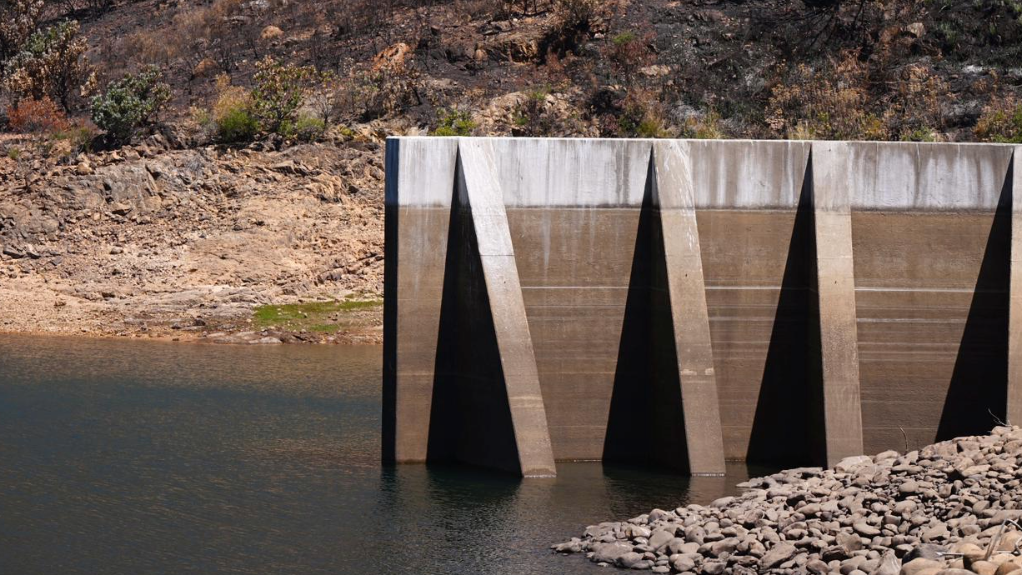
DEVELOPMENT IMPERATIVE Wemmershoek Dam sits at lower levels than this time last year, highlighting the need for water supply diversification


Data indicates that dam levels are “frighteningly low” and daily water use is “relentlessly” high, the City of Cape Town (CoCT) shared in a media briefing on February 23, providing insight into operational information and projections for the coming months.
At the time, dam levels were at just over 55%, about 19% lower year-on-year, which the CoCT stated, indicated that the system was entering a “more sensitive” period ahead of winter rainfall.
Daily water use spiked to 1.07-billion litres a day by Monday, February 23, with average per-person consumption at about 178 litres a day.
Although summer demand is expected to be higher, sustained high usage at this level reduces savings in the system before unpredictable winter rainfall replenishment.
“Residents saving water at a household level is now essential to reducing collective consumption and returning our status to below the 975-million-litres-a-day mark.”
The city noted that its updated projections raised concerns about how dam levels would be impacted in the coming months if high water use trends continued and rainfall was low to average, stressing that it was important to plan strategically up until May.
“Minor amendments in water use over the next few weeks can still shift the curve, keeping dams fuller. If demand is reduced, the system retains more flexibility going into winter. If demand remains high, the city’s options narrow,” the CoCT averred.
Actionable Solutions
CoCT Water and Sanitation MMC Zahid Badroodien said that the city’s aim was to act early, based on risk, rather than wait for crisis conditions. “The Drought Management Framework flags when behaviour change can still make a meaningful difference.”
He added that water restrictions were not a punishment, but rather a tool to protect supply when risk was “too high to ignore”.
“The projections show that early, moderate demand management now can help avoid more severe restrictions later, when there is far less room to manoeuvre,” he says.
There are several other initiatives that the city will implement to reduce water losses, including yearly upgrades to aged water pipes, finding and fixing leaks, removing alien invasive plant species, enhancing aquifers for groundwater access and improving pressure management.
Securing CoCT’s Water Future
In a previous statement the city noted that it was proactively investing in and progressing with strategic plans for Cape Town’s new water supply, which aims to add 300-million litres a day from 2031.
There are several projects in focus, such as groundwater schemes which form a key part of Cape Town’s diversified water supply, aiming to deliver more than 100-million litres of water a day, once fully implemented.
These projects span three aquifer systems, the Cape Flats, Atlantis and Table Mountain Group aquifers, and are at various stages of development.
Additional groundwater projects are under construction or commissioning, and expected to become operational in the coming years, with 15 production boreholes drilled at Table Mountain Group aquifer, 66 at Cape Flats aquifer and 47 at the Atlantis aquifer.
Additionally, it noted that the clearing of alien invasive plants had delivered “real results” for Cape Town’s water supply, adding about 18.77-billion litres of water a year to the city’s supply.
The city will also invest in water reuse, with the expectation that these processes will produce 70-million to 100-million litres a day from purified recycled wastewater. Plans to begin procurement for the Faure New Water Scheme using a public-private partnership (PPP) model are progressing.
Further, desalination aims to convert seawater into between 50-million to 70-million litres of potable water a day. Plans to begin procurement for the Paarden Eiland Desalination Plant using a PPP model are progressing.
Meanwhile, the second yearly Catchment Management Forum (CMF) event was hosted by the Water and Sanitation Directorate on February 7, 2026, where CMF representatives were awarded grant funding to support their efforts to reduce water pollution and increase community participation in the protection of rivers and urban waterways.
A total of R622 000 was awarded to four of the ten CoCT CMFs for various water and sanitation purposes, including clean-ups along canals and rivers in the Eerste-Kuils; installation of a litter storage cage; river wardens and a revegetation project at the Soet River CMF; management and restoration work at the Zandvlei CMF, along the Westlake River and tributary streams in Orchard Village, Lakeside; and a solid waste reduction programme at the Zeekoe CMF.
The event also provided a platform for city officials and the leadership of the CMFs to discuss challenges, share lessons and plan for collaboration to increase the footprint of activities working on the ground.
Article Enquiry
Email Article
Save Article
Feedback
To advertise email advertising@creamermedia.co.za or click here


Projects

Latest Multimedia
Latest News


Showroom
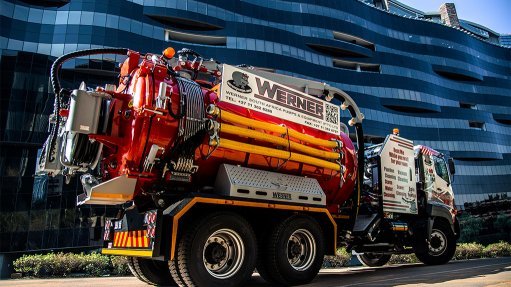
For over 30 years, Werner South Africa Pumps & Equipment (PTY) LTD has been designing, manufacturing, supplying and maintaining specialist...
VISIT SHOWROOM
Established in 1983, the ASTPM is an industry association and representative body of the welded carbon steel tube and pipe manufacturers of South...
VISIT SHOWROOM



Announcements
What's On
Subscribe to improve your user experience...
Option 1 (equivalent of R125 a month):
Receive a weekly copy of Creamer Media's Engineering News & Mining Weekly magazine
(print copy for those in South Africa and e-magazine for those outside of South Africa)
Receive daily email newsletters
Access to full search results
Access archive of magazine back copies
Access to Projects in Progress
Access to ONE Research Report of your choice in PDF format
Option 2 (equivalent of R375 a month):
All benefits from Option 1
PLUS
Access to Creamer Media's Research Channel Africa for ALL Research Reports, in PDF format, on various industrial and mining sectors
including Electricity; Water; Energy Transition; Hydrogen; Roads, Rail and Ports; Coal; Gold; Platinum; Battery Metals; etc.
Already a subscriber?
Forgotten your password?
Receive weekly copy of Creamer Media's Engineering News & Mining Weekly magazine (print copy for those in South Africa and e-magazine for those outside of South Africa)
➕
Recieve daily email newsletters
➕
Access to full search results
➕
Access archive of magazine back copies
➕
Access to Projects in Progress
➕
Access to ONE Research Report of your choice in PDF format
RESEARCH CHANNEL AFRICA
R4500 (equivalent of R375 a month)
SUBSCRIBEAll benefits from Option 1
➕
Access to Creamer Media's Research Channel Africa for ALL Research Reports on various industrial and mining sectors, in PDF format, including on:
Electricity
➕
Water
➕
Energy Transition
➕
Hydrogen
➕
Roads, Rail and Ports
➕
Coal
➕
Gold
➕
Platinum
➕
Battery Metals
➕
etc.
Receive all benefits from Option 1 or Option 2 delivered to numerous people at your company
➕
Multiple User names and Passwords for simultaneous log-ins
➕
Intranet integration access to all in your organisation