Looks like South African mining’s going to have great year, says Menar at Mining Indaba

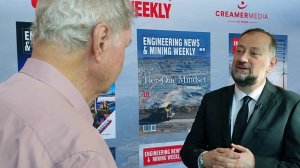
Menar MD Vuslat Bayoglu interviewed by Mining Weekly's Martin Creamer. Video: Creamer Media's Shadwyn Dickinson


CAPE TOWN (miningweekly.com) – In general, if you look at the commodities produced in South Africa, we’re doing very well, and it looks like 2026 is going to be a great year.
That’s the view of Menar MD Vuslat Bayoglu, who spoke to Mining Weekly at the Investing in African Mining Indaba. (Also watch attached Creamer Media video.)
“The Mining Indaba is bringing a lot of good spirit to South Africa and to the continent,” said Bayoglu, who is going all out to return the former Metalloys ferromanganese smelter, now called Khwelamet, back into operation.
Bayoglu expressed the view that once competitively priced electricity is available, ferrochrome smelters will return.
Currently, he points out, South Africa has got more power than it is putting to use. He notes that Eskom went from minus 7 000 MW to plus 12 000 MW and finds that negotiations taking place now indicate that Eskom is on the way towards supplying competitively priced power, which will help South Africa to recapture lost value from its natural resource endowment.
“I think we're going to re-industrialise South Africa, which we need to do because that's how we create jobs in this country.”
Mining Weekly: What is your general outlook for the local mining industry in South Africa for the year, and which highlights are you looking forward to at Menar?
Bayoglu: The mining industry is very much dependent on commodity prices. As we all know, it's very cyclical and the success of a CEO is dependent on the commodity prices. If the best CEO is caught up with a low cycle, he cannot make much. He can deal only with the costs and certain efficiencies. But if an average CEO gets caught up in a high cycle, then he can be really successful. If you look at commodity prices in general, gold is doing extremely well. It went from $2 500 to $5 500 and it’s now back down at $4 800 but it's amazing for the gold mining industry. As we all know, South African mines are deep, but they are still profitable, and contribute a lot to the country's GDP, because they are doing well. Platinum mining is doing extremely well, again because of the platinum prices. Platinum is the other commodity that people like and because gold is expensive, some people are interested in investing in platinum. Manganese is a little bit up and with the strong rand, iron-ore is not doing badly. Coal is flat. It moved up a little bit again, but with the strong rand, in rand price terms, coal is not doing well at the moment. Chrome is doing extremely well and in terms of pricing, ferrochrome is doing well. So, in general, if you look at the commodities or minerals produced in South Africa, we’re doing very well, and it looks like it's going to be a great year. The only challenge that we have is with the weak dollar and commodity prices going up, especially gold. The rand is very strong, and that doesn't help the flat prices of manganese and coal. But other than that, I think South African mining industry is going to have a great year into 2026. It looks very exciting. I spoke to the CEOs at certain Indaba events and they're all smiling. I should add something about diamonds. Diamonds are a different story and because of lab diamonds, they're struggling, but attempts are being made to find other applications for diamonds, and diamonds have been caught in the low cycle at the moment, but it's a cyclical business, and it will change for diamonds as well. But overall, it’s very positive.
As discussions around beneficiation gain momentum, where do you see the most opportunities for South Africa and other African countries?
For South Africa, it's slightly different than with other African countries, because we’ve got established smelting capacity in South Africa. We don't have issues with gold smelting capacity, and we don’t have issues with platinum smelting capacity. We don't take our concentrate for smelting in other countries, so in terms of gold and platinum, we’re covered. Our challenges are in the ferroalloys industry, mainly in ferrochrome and ferromanganese. In ferrochrome, most of the furnaces have been shut down in the last three to four months because of the power prices and power availability. It's very tricky because the same applies to the ferromanganese industry. We bought Metalloys about six months ago from Samancor Manganese, which shut it down in 2020 because of power availability and power price and also because the market was down during Covid. They still care about this asset because they're in manganese mining in South Africa, and they’re committed to South Africa. Both Anglo American and South32 want to see the smelter back in production. Eskom has surplus energy, and now they’re struggling to find customers, which is dangerous for the country, because we need to re-industrialise South Africa. To be able to re-industrialise, we need power, but currently we’ve got more power than we need, and the reason for that is because the smelters have been shut down. Secondly, Eskom lost a lot of customers to solar panels, especially for the households, so the country needs an overall change. Both the Minister of Energy and the Minister of Mineral and Petroleum Resources have made statements about this. Government is very positive and understands where we made the mistake and how we can fix it. This is not a mistake of government, by the way, but a mistake of all of us in the mining industry. Everybody has a role and we need to fix it, because we have to re-industrialise the country. I can tell you, for instance, the CEO of Glencore Ferroalloys Japie Fullard is doing a fantastic job with some Samancor Chrome guys. They're negotiating a price with the Department of Energy and Eskom, and I think they're getting to a point where Eskom is going to supply competitively priced power. Once that happens, I think ferrochrome smelters are going to come back. That would mean a lot to the mining industry, because that will allow anthracite mines to be reopened. All of the anthracite mines are in trouble at the moment. We’ve put three anthracite mines into care and maintenance. We can't produce because there's no market locally. The other thing is the jobs that are relevant for chrome mining and ferrochrome manufacturing industries, plus the stakeholders, all the suppliers to the ferrochrome smelters are going to be back in business. When it comes to ferromanganese, we had three ferromanganese smelters. Assmang’s Cato Ridge ferrromanganese smelter has closed down now, because it’s old and came to the end of its life. Transalloys is producing, but at a low capacity, and then we've got Khwelamet, formerly known as Metalloys. We want to bring two furnaces back into production once we get the power price from Eskom. We are hoping that we'll be treated the same as the ferrochrome industry, and we'll get the same price from Eskom so that we can start the two furnaces which will put 250 000 t of ferromanganese into a total world market of about 1.5-million tons. Metalloys, now named Khwelamet, was actually producing 500 000 t/y with four furnaces. That was the largest ferromanganese smelting operation in the world. In South Africa, we’ve got the assets and we’ve got the infrastructure. To give you an idea, Transnet Infrastructure Rail Management company, they gave us a location to move our own manganese from Northern Cape to Meyerton, and then to take our ferromanganese from Meyerton to Durban, so our logistics solution is sorted as well. So, government has come to the party. They're addressing the challenges and I think industry is also coming to the party. I think we're going to bring all these smelters back, and we're going to re-industrialise South Africa, which we need to do because that's how we create jobs in this country.
With this year’s Mining Indaba focused on the theme of strong partnerships, which industry concerns do you think can be better resolved through collaboration?
Collaboration is important in all industries, especially in mining, because companies need each other for certain things. I saw that in the coal mining industry. Richards Bay Coal Terminal is a great story of collaboration of mining companies and also Transnet. I heard Transnet at the coal conference before this Indaba, expressing appreciation about the collaboration between Richards Bay Coal Terminal and Transnet, especially on the security side. They had massive challenges on the security side, and Richards Bay Coal Terminal shareholders stepped in with support and currently it's a good working relationship. Transnet is doing extremely well on the coal side. Yes, they have still room to go in terms of reaching to the coal exportation level of 75-million tons to 77-million tons to the port. Currently they are running at the tempo of 62-million tons to 63-million tons and they're hoping to make it 65-million tons but there's a great story of collaboration on that front and the same collaboration could happen in the manganese mining front. To give you an example, manganese mining industry players are trying to work together to build a port -Manganese Ports Company, they call it - and that's a great example of companies trying to work together and Transnet is very supportive of the manganese mining industry and iron-ore mining industry. Overall, the spirit is there when it comes to the benefits of the country, which is how it should be. Our chrome smelters should be run by South African companies, because if it's run by our customers, then you cannot control the environment, and then you start getting prices that dominate. It's like our coal mines should be run by independent South African companies. If we start giving our coal mines to our customers, that could be dangerous for the country. There should be that balance. Even though we are living in a free market environment, there are certain strategic things one has to be very careful with, otherwise this distorts industry balance, so collaboration is already happening. There can be more on the manganese side. I hear from the different players that they're happy to do that, and they're happy to work together to create strong partnerships so that South Africa benefits.
Do you see investor confidence for South Africa improving going forward, considering the ongoing geopolitical tensions?
South Africa has got the right infrastructure. We’ve got the right human capital, and we've got Eskom, we’ve got Transnet, we’ve got great ports. Even though we’ve got some inefficiencies, we have the infrastructure. South Africa is a world-class country when it comes to mining. We don't see geopolitical tension as a problem. There will be some noise, but at the end of the day, sanity will prevail.
Article Enquiry
Email Article
Save Article
Feedback
To advertise email advertising@creamermedia.co.za or click here

Projects
Latest Multimedia
Latest News
Showroom
ALBIS FLANGES — founded in 1965 — is a petro-chemical approved manufacturer of flanges and fittings in most grades of steel, listed with Sasol,...
VISIT SHOWROOM
ISO-certified Condra manufactures overhead cranes, portal cranes, cantilever cranes and crane components: hoists, drives, end-carriages, brakes and...
VISIT SHOWROOM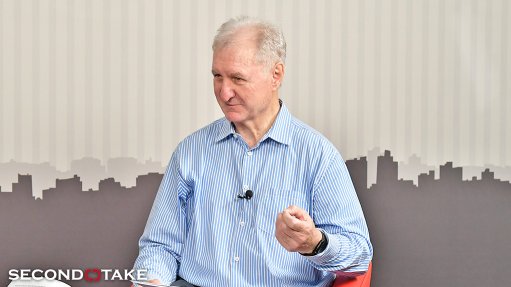
Announcements
What's On
Subscribe to improve your user experience...
Option 1 (equivalent of R125 a month):
Receive a weekly copy of Creamer Media's Engineering News & Mining Weekly magazine
(print copy for those in South Africa and e-magazine for those outside of South Africa)
Receive daily email newsletters
Access to full search results
Access archive of magazine back copies
Access to Projects in Progress
Access to ONE Research Report of your choice in PDF format
Option 2 (equivalent of R375 a month):
All benefits from Option 1
PLUS
Access to Creamer Media's Research Channel Africa for ALL Research Reports, in PDF format, on various industrial and mining sectors
including Electricity; Water; Energy Transition; Hydrogen; Roads, Rail and Ports; Coal; Gold; Platinum; Battery Metals; etc.
Already a subscriber?
Forgotten your password?
Receive weekly copy of Creamer Media's Engineering News & Mining Weekly magazine (print copy for those in South Africa and e-magazine for those outside of South Africa)
➕
Recieve daily email newsletters
➕
Access to full search results
➕
Access archive of magazine back copies
➕
Access to Projects in Progress
➕
Access to ONE Research Report of your choice in PDF format
RESEARCH CHANNEL AFRICA
R4500 (equivalent of R375 a month)
SUBSCRIBEAll benefits from Option 1
➕
Access to Creamer Media's Research Channel Africa for ALL Research Reports on various industrial and mining sectors, in PDF format, including on:
Electricity
➕
Water
➕
Energy Transition
➕
Hydrogen
➕
Roads, Rail and Ports
➕
Coal
➕
Gold
➕
Platinum
➕
Battery Metals
➕
etc.
Receive all benefits from Option 1 or Option 2 delivered to numerous people at your company
➕
Multiple User names and Passwords for simultaneous log-ins
➕
Intranet integration access to all in your organisation