Mantashe flags licensing failures as illegal mining crisis grows

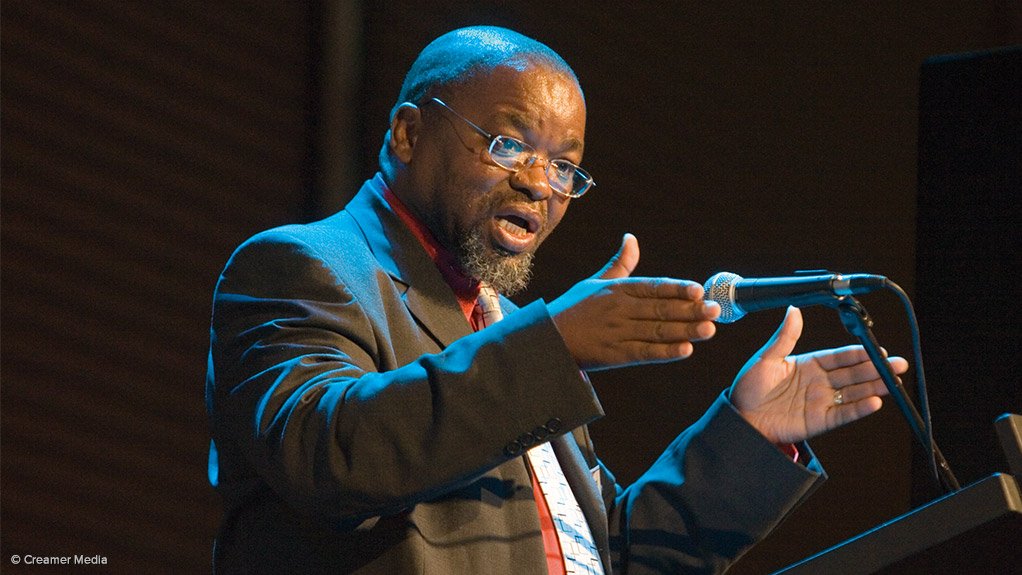


Mineral and Petroleum Resources Minister Gwede Mantashe has warned that South Africa’s sluggish development of a reliable cadastre for exploration and licensing is exacerbating an already serious illegal mining crisis, contributing to decline in the junior mining and exploration sector.
Speaking at the Investing in African Mining Indaba, in Cape Town, on February 9, he acknowledged that, without a functioning pipeline of new exploration and an efficient licensing process, unregulated mining activities would continue to expand.
“If we don't [ramp up exploration], additional and junior mining is going to be replaced by illegal mining, where people do additional mining on their own, unregulated,” he said, describing the consequence of ongoing policy and administrative delays.
Illegal mining in South Africa is already a widespread and entrenched problem, not a future risk. Illegal miners, commonly known as zama-zamas, operate in thousands of abandoned shafts, and analysts estimate there are about 30 000 illegal miners producing an estimated 10% of South Africa’s gold output from about 6 000 old workings.
The sector is linked to organised crime syndicates that exploit vulnerable labour and control illicit supply chains. Estimates from industry reports suggest illegal mining now costs the South African economy about R60‑billion in lost economic value each year, up sharply from about R7‑billion in 2017, underlining how serious the problem has become.
Mantashe cited data on formal rights granted over the past year as evidence of some movement, noting that 358 prospecting rights and 32 mining rights were issued and that the exploration fund had grown to about R2‑billion from an initial government seed of R400‑million.
The exploration fund is a government-backed financing mechanism aimed at supporting junior miners and early-stage exploration projects.
“We gave [money to] eight projects. Of those, four are ready for development of a mine. We are drilling for gold in Limpopo, and our people must just use this more and more and do more exploration now. It is quite important,” he said.
However, the reality for junior mining and exploration is one of long‑term decline. South Africa’s share of global exploration investment has collapsed from about 5% two decades ago to less than 1% currently, reflecting a dramatic loss of investor confidence and sector activity.
In 2007, the country still drew about $403‑million of African exploration capital, but by 2024 this had fallen to about $121‑million, underlining how much the industry has contracted.
More broadly, the country’s mining industry has shrunk over the past few decades, with gold production, for example, once accounting for more than half of global output in the 1970s, now having fallen sharply to much smaller volumes. The workforce in the sector has also declined from more than 500 000 in the late 1980s to fewer than 100 000 today.
A central bottleneck remained the licensing system. Mantashe said the Department of Mineral and Petroleum Resources was attempting to improve its processes and to develop a reliable cadastre – something he has promised for years – but that progress was being hampered by poor data quality and slow procedures.
“Our administration is working very hard to improve our licensing system, and it is urgent. It is slow. Actually, we have discovered that the veracity of the information loaded determines the efficiency of the system, and that is making us slower than we imagined,” he said.
Efforts to modernise the system with a digital cadastre have been protracted. The cadastre is intended to allow companies and regulators to manage mining rights applications online, improve transparency and reduce delays, but it is only now being piloted in selected provinces, several years after government finally committed to developing it.
Commenting on Mantashe’s address, law firm Herbert Smith Freehills Kramer partner Ziyanda Ntshona said the cadastre’s delayed implementation remained a major challenge for the sector.
“One of the greatest challenges remains implementing a capable, workable online cadastre system, which will unlock many benefits along the value chain, including access to data that will allow the use of AI.
“Although promised since 2022, the cadastre system is only now in piloting stage, with a phased roll‑out under way in selected provinces. The use of data from the cadastre system will enable more accurate exploration data, and with visibility we hope confidence will rise. If the system works efficiently and transparently, investment should hopefully follow,” she said.
Ntshona also noted that Mantashe did not mention the revised Mineral Resources Development Amendment Bill in his speech, even though industry stakeholders were expecting its publication in the first quarter of this year.
She said the mining industry was hoping that the Bill would clarify long‑standing regulatory grey areas, prescribe processing timelines and align mining law with other legislation.
“Government has been receptive of stakeholder comments and therefore we expect a Bill that encourages partnership amongst the industry players, through clear and transparent regulation,” Ntshona said.
GEOPOLITICAL VIEWS
Beyond the immediate concerns of domestic exploration and licensing, Mantashe used his Mining Indaba address to place South Africa’s mineral sector within a broader African and global geopolitical context, warning that African countries needed to take responsibility for protecting their natural resources in the face of intensifying international competition.
“We may [be] daft and pretend as if there is no such [thing, but] we are witnessing heightened geopolitical tensions in the world, driven largely by competition of some developed economies seeking greater control over natural resources of developing nations. It's not our fault we have deposits here, but the great nations want to have control over those deposits, though they're with us, so we have a responsibility to protect them,” he said.
He described Africa’s situation as a paradox: the continent was endowed with vast mineral wealth but remained the poorest in the world. He argued that this was because African countries had historically ceded control of their assets to external actors.
“We're in the poorest continent, though we have the richest deposits of minerals in the world. That is a contradiction. This is not a function of resources. It is a function of leadership. We have given away our leadership, and we have given away our role. We have given it to everybody else except ourselves. As a result, we are at the mercy of everybody else for our own resources. That must change,” he said.
Mantashe stressed that African nations must coordinate policies and collaborate rather than competing against each other for foreign investment. He suggested that harmonised approaches would strengthen bargaining power with external investors and prevent companies from leveraging competition between countries to secure more favourable terms.
“This continent owes it to itself to unite, work together [and] talk to the outside world as one. It's a long way to go, but let's try it. Let's give it a go. It is what we need most as a continent.
“Our partnership must move beyond extraction to industrialisation. We should add value close to the point of production. Those who want our critical minerals must not find it easy to move from one country to the next and actually play us against each other. We must have a uniform framework that guides all of us on the continent, then we are going to be able to compete everywhere,” he said.
He also called for a reassessment of how critical minerals were defined and managed in Africa, emphasising that the continent’s priorities may differ from those of other regions, citing coal as an example.
“In Africa, [the definition of critical minerals] should have a different meaning . . . Here, we need the role of the critical minerals of the economy. We need to talk of export earnings. We need to talk about it in terms of its contribution to development in the continent.
“That's why, in our critical minerals, we are also having coal as one of them. On other continents, it's a dirty product. For us, it's quite an important product because it employs many people and it earns foreign earnings, and it does many things in Africa. So we must not be following the fashion of others. We must assess the impact on our own continent,” he said.
Mantashe noted the importance of working with the private sector as a partner in realising Africa’s mineral potential.
“In Africa, working with the private sector is like taboo, because it is our resources. We must own them and must run them. [But] I'm a great believer of working with the private sector, because together, we can do more. Our resources can give us better results. But if we compete with one another, we are not going to achieve what we want to achieve,” he said.
Article Enquiry
Email Article
Save Article
Feedback
To advertise email advertising@creamermedia.co.za or click here
Research Reports

Projects
Latest Multimedia
Latest News

Showroom

Industrial Nozzles & Systems (Pty) Ltd (Est. 2000) exclusive representative in Southern Africa for LECHLER GmbH (Est. 1879) - Europe's leading...
VISIT SHOWROOM
Complete range of security sealing solutions including security seals bags and labels.
VISIT SHOWROOM
Press Office
Announcements
What's On
Subscribe to improve your user experience...
Option 1 (equivalent of R125 a month):
Receive a weekly copy of Creamer Media's Engineering News & Mining Weekly magazine
(print copy for those in South Africa and e-magazine for those outside of South Africa)
Receive daily email newsletters
Access to full search results
Access archive of magazine back copies
Access to Projects in Progress
Access to ONE Research Report of your choice in PDF format
Option 2 (equivalent of R375 a month):
All benefits from Option 1
PLUS
Access to Creamer Media's Research Channel Africa for ALL Research Reports, in PDF format, on various industrial and mining sectors
including Electricity; Water; Energy Transition; Hydrogen; Roads, Rail and Ports; Coal; Gold; Platinum; Battery Metals; etc.
Already a subscriber?
Forgotten your password?
Receive weekly copy of Creamer Media's Engineering News & Mining Weekly magazine (print copy for those in South Africa and e-magazine for those outside of South Africa)
➕
Recieve daily email newsletters
➕
Access to full search results
➕
Access archive of magazine back copies
➕
Access to Projects in Progress
➕
Access to ONE Research Report of your choice in PDF format
RESEARCH CHANNEL AFRICA
R4500 (equivalent of R375 a month)
SUBSCRIBEAll benefits from Option 1
➕
Access to Creamer Media's Research Channel Africa for ALL Research Reports on various industrial and mining sectors, in PDF format, including on:
Electricity
➕
Water
➕
Energy Transition
➕
Hydrogen
➕
Roads, Rail and Ports
➕
Coal
➕
Gold
➕
Platinum
➕
Battery Metals
➕
etc.
Receive all benefits from Option 1 or Option 2 delivered to numerous people at your company
➕
Multiple User names and Passwords for simultaneous log-ins
➕
Intranet integration access to all in your organisation