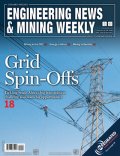
Reforms advance certainty, implementation risks remain


MIHLALI SITEFANE Investors require commercial certainty to ensure that energy will be procured by the market and the government, especially



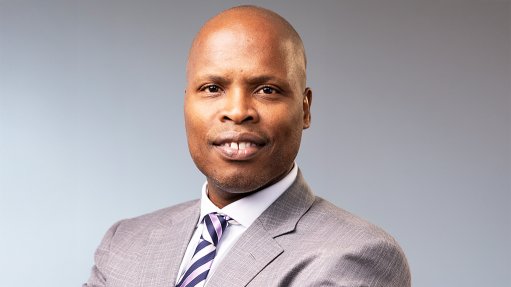
South Africa has made significant strides in establishing a clear electricity regulatory framework, but implementation threatens to undermine its impact, highlights law firm Sitef & Co director Mihlali Sitefane.
In assessing whether South Africa has created enough certainty to sustain electricity law reform, Sitefane says the amendments to the Electricity Regulation Act provide much-needed clarity for private-sector investment; however, the progress may be curtailed if the amendments are not properly implemented.
In highlighting the risks, Sitefane notes that the reforms are transitional and phased over five years, with the State-owned Transmission System Operator (TSO) gaining its full independence at the end of this phased period. In the interim, all of the TSO’s functions will be performed by the State-owned National Transmission Company South Africa (NTCSA). However, detailed regulations must still be published to regulate the TSO and the NTCSA in the exercise of their powers.
Further, she notes that the national grid still has elements of fragility, with power outages and related issues, which may adversely impact on the progress sought by the promulgation of the Electricity Regulation Amendment Act, 2024 (ERAA) and the NTCSA, consequently posing a slight risk of reversal.
The grid and transmission infrastructure are set to be supplemented by independent transmission projects to help ease grid constraints, as reflected in the NTCSA’s ten-year 2035 vision.
Additionally, Sitefane notes that the NTCSA’s Transmission Development Plan recognises the importance of private investment, as it shares the risks associated with the construction and maintenance of transmission infrastructure.
“It will be critical to meticulously implement appropriate measures, such as the ERAA, to ensure the integrity of South Africa’s energy grid and the successful operation of the key institutions, introduced by this Act, to South Africa’s electricity and energy landscape.”
Investor Requirements
Sitefane says that investors often require control of the entity that will develop renewable-energy projects, so that they can predict and make key decisions regarding the fate and direction of the company.
She cites political and legal certainty as integral to ensuring that the regulatory regime will not constantly change and create confusion or additional regulatory compliance obligations and costs for independent power producers.
“Investors require commercial certainty to ensure that the energy produced will be procured by the market and the government, especially. This is achieved by securing various licences and approvals, and the conclusion of various agreements including power purchase agreements, energy offtake agreements or undertakings to purchase energy at prevailing market prices to ensure that revenue streams are secured prior to investments being made,” Sitefane explains.
Moreover, investors also require that the necessary land rights and land-use authorisations have been secured or are readily securable prior to investing long-term capital in renewable-energy projects in the current electricity reform climate.
Sitefane says that, if she could prioritise one regulatory reform, it would be the speed and efficiency at which licence and approval applications are reviewed and assessed.
She notes that South Africa has made great progress in this regard and that it has tried to introduce legislative reforms that streamline licensing processes, with the effectiveness of screening such applications being an important factor that can hinder access to the industry and markets for energy producers other than State-owned power utility Eskom.
Article Enquiry
Email Article
Save Article
Feedback
To advertise email advertising@creamermedia.co.za or click here
Research Reports
Projects
Latest Multimedia

Latest News

Showroom
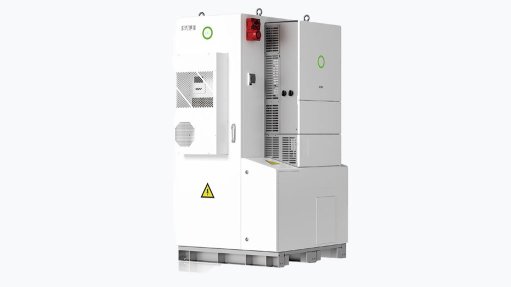
Smart energy storage solutions for efficient, safe, and profitable power.
VISIT SHOWROOM
AirNox (Pty) Ltd is a level 1 BBBEE manufacturer of complete AdBlue® solutions for operators of SCR diesel engines and AUS40 across South Africa...
VISIT SHOWROOM

Press Office
Announcements
What's On
Subscribe to improve your user experience...
Option 1 (equivalent of R125 a month):
Receive a weekly copy of Creamer Media's Engineering News & Mining Weekly magazine
(print copy for those in South Africa and e-magazine for those outside of South Africa)
Receive daily email newsletters
Access to full search results
Access archive of magazine back copies
Access to Projects in Progress
Access to ONE Research Report of your choice in PDF format
Option 2 (equivalent of R375 a month):
All benefits from Option 1
PLUS
Access to Creamer Media's Research Channel Africa for ALL Research Reports, in PDF format, on various industrial and mining sectors
including Electricity; Water; Energy Transition; Hydrogen; Roads, Rail and Ports; Coal; Gold; Platinum; Battery Metals; etc.
Already a subscriber?
Forgotten your password?
Receive weekly copy of Creamer Media's Engineering News & Mining Weekly magazine (print copy for those in South Africa and e-magazine for those outside of South Africa)
➕
Recieve daily email newsletters
➕
Access to full search results
➕
Access archive of magazine back copies
➕
Access to Projects in Progress
➕
Access to ONE Research Report of your choice in PDF format
RESEARCH CHANNEL AFRICA
R4500 (equivalent of R375 a month)
SUBSCRIBEAll benefits from Option 1
➕
Access to Creamer Media's Research Channel Africa for ALL Research Reports on various industrial and mining sectors, in PDF format, including on:
Electricity
➕
Water
➕
Energy Transition
➕
Hydrogen
➕
Roads, Rail and Ports
➕
Coal
➕
Gold
➕
Platinum
➕
Battery Metals
➕
etc.
Receive all benefits from Option 1 or Option 2 delivered to numerous people at your company
➕
Multiple User names and Passwords for simultaneous log-ins
➕
Intranet integration access to all in your organisation