Exciting trends shaping agriculture supply chains


This article has been supplied.
By Gerhard Stander – Director: Retail and Agriculture, CHEP Sub-Saharan Africa
The global pandemic has brought renewed focus on one of the most fundamental components of the global economy: food supply chains. While delivery times for some manufactured goods have come under pressure during lockdowns, and as demand surges during the recovery, there is no such latitude for agricultural produce.
Earth’s 7 billion people require feeding – promptly, constantly, and efficiently – which is why the supply chains for agricultural products and fresh produce are a space of constant innovation. The complex systems that feed the world also reflect many of the same trends shaping our society today.
These are some of the trends we are seeing emerging, from our perspective as provider of the platforms that underpin most of those global supply chains.
Digital twinning
Agriculture supply chains are complicated. This means that a change in any variable – such as climate demand or input prices – has far-reaching consequences. Fortunately, modern AI and machine-learning capabilities now allow companies to model the effect of these changes.
Digital twinning also allows producers to create value by applying digital and analytics technologies to new business models and product offerings before launching them in the physical world.
Using the data, they capture, agriculture players can build digital twins of their physical supply chains, virtual replicas that allow them to run simulations and find the most efficient ways of moving crops through the system.
Thanks to the Internet of Things, the agriculture industry is generating more data than ever, on everything from agronomy to the weather, to logistics, to market price volatility.
Digital twinning can process this data to determine the most effective strategy for procurement, production, inventory, transportation, and points of sale. Businesses can model functions to optimise their operations – and their profits.
Logistics organisations such as ours are supporting this industry evolution through sophisticated track-and-trace technology, that also generates data and can further optimise supply chains for both efficiency and sustainability.
Sustainability
With organisations and individuals across the planet looking to embrace sustainability wherever they can, it has now become almost non-negotiable that supply chains be built on sustainable principles.
At CHEP, we have been sustainably providing the platforms for agricultural supply chains for decades, through our share-and-reuse system of pallet, crate & bin pooling. The next frontier for sustainability is to build regenerative supply chains – systems that put back more into the environment than we take out.
In our business, we are making progress to achieve this vision, through initiatives such as our vertical integration strategy, whereby we plant two trees for every tree we use in the manufacture and repair of our pallets.
The goal is to restore, replenish and create more value for society and the environment than the business takes out. This vision is articulated in our 2025 Sustainability Targets.
Customised platforms
In the agricultural sector, fresh-produce logistics require speed, reliability and availability of platforms that meet the specific needs of the product.
Increasingly, resourceful logistics firms are producing platforms that can accommodate and protect delicate produce – apples, bananas, or peaches, for example – which require reusable plastic containers (RPCs) that are robust, but also flexible, lightweight, and well ventilated.
For the highest produce grades, sensors may also be installed to measure and report on the temperature, humidity, and integrity of the produce throughout its journey from farm to fork. At CHEP, we pride ourselves on being able to cater to these kinds of requirements for our agriculture customers.
We do this by offering a variety of platforms that meet the unique requirements of each produce category, or which can also be customised to cater to customer needs as required.
Partnerships and outsourcing
Increasingly, producers are coming to accept that platform logistics is a specialist competence and that there are real efficiency and sustainability benefits to be gained from engaging organisations with the right equipment for their needs, and the business model to manage it efficiently.
A rental, pallet & container-pooling model, for instance, offers lower, more transparent costs than having to purchase pallets or containers.
A large network – in CHEP’s case involving 7 million pallets, 4 million crates, 500 thousand bins available at 85 service centres across Sub-Saharan Africa – makes a “just in time” system possible, for optimal efficiency and the precise number of platforms required, as and when they are required.
The trend is increasing for growers, farmers, and agri-processors alike to engage with specialist platform suppliers for their logistics needs, so that they can focus on their own area of expertise – producing the food that feeds the world.
Article Enquiry
Email Article
Save Article
Feedback
To advertise email advertising@creamermedia.co.za or click here
Research Reports


Projects


Latest Multimedia

Latest News

Showroom

ZF Aftermarket is the after-sales division of the world-renowned German ZF group, a global leader in mobility technology.
VISIT SHOWROOM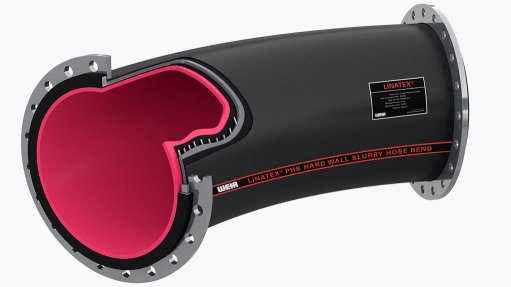
Weir is a global leader in mining technology. We recognise that our planet’s future depends on the transition to renewable energy, and that...
VISIT SHOWROOM



Press Office
Announcements
What's On
Subscribe to improve your user experience...
Option 1 (equivalent of R125 a month):
Receive a weekly copy of Creamer Media's Engineering News & Mining Weekly magazine
(print copy for those in South Africa and e-magazine for those outside of South Africa)
Receive daily email newsletters
Access to full search results
Access archive of magazine back copies
Access to Projects in Progress
Access to ONE Research Report of your choice in PDF format
Option 2 (equivalent of R375 a month):
All benefits from Option 1
PLUS
Access to Creamer Media's Research Channel Africa for ALL Research Reports, in PDF format, on various industrial and mining sectors
including Electricity; Water; Energy Transition; Hydrogen; Roads, Rail and Ports; Coal; Gold; Platinum; Battery Metals; etc.
Already a subscriber?
Forgotten your password?
Receive weekly copy of Creamer Media's Engineering News & Mining Weekly magazine (print copy for those in South Africa and e-magazine for those outside of South Africa)
➕
Recieve daily email newsletters
➕
Access to full search results
➕
Access archive of magazine back copies
➕
Access to Projects in Progress
➕
Access to ONE Research Report of your choice in PDF format
RESEARCH CHANNEL AFRICA
R4500 (equivalent of R375 a month)
SUBSCRIBEAll benefits from Option 1
➕
Access to Creamer Media's Research Channel Africa for ALL Research Reports on various industrial and mining sectors, in PDF format, including on:
Electricity
➕
Water
➕
Energy Transition
➕
Hydrogen
➕
Roads, Rail and Ports
➕
Coal
➕
Gold
➕
Platinum
➕
Battery Metals
➕
etc.
Receive all benefits from Option 1 or Option 2 delivered to numerous people at your company
➕
Multiple User names and Passwords for simultaneous log-ins
➕
Intranet integration access to all in your organisation