NdPr oxide price forecast to rise to $90 000/t this year – report




BMI – a Fitch Solutions company – has revised upwards its 2026 average yearly neodymium/praseodymium (NdPr) oxide price forecast to average $90 000/t, reflecting a robust start to the year underpinned by tightening fundamentals and heightened political momentum.
BMI notes that NdPr oxide prices reached a multi-year high of $97 969/t on January 15, following announcements from Mainland China's Northern Rare Earth and Baotou Steel regarding an increase in the rare earth concentrate transaction price for the first quarter of this year, which reinforced bullish sentiment, with the rally extending later in the month to touch $99 935/t on January 27.
The price uptrend also came amid a shifting geopolitical and regulatory landscape, including renewed claims by US President Donald Trump over Greenland, where rare-earth resources are among the region’s most attractive, and the subsequent announcement of the formation of "the framework of a future deal"; China's export restrictions on rare earths to Japan; as well as Vietnam's ban on unprocessed rare earth ore exports, effective January 1.
“We anticipate NdPr oxide prices to fluctuate rangebound in the coming months, as tightening supply expectations along with NdPr's crucial role in the production of permanent magnets for clean energy technologies in high-growth sectors including electric vehicles (EVs) and wind turbines will continue to paint an optimistic picture,” says BMI.
“That said, while underlying NdPr oxide fundamentals remain strong, current market dynamics, in our view, are not yet sufficient to sustain the ongoing rally solely fuelled by supply-demand factors, with prevailing sentiment continuing to shape the bullish narrative,” it adds.
The company says the market is also likely to remain highly sensitive to any potential announcements regarding Beijing's rare-earth quotas, although appearing unlikely amid Beijing’s opaque rhetoric regarding rare earths.
BMI argues that regulatory developments will remain pivotal through this year, adding that it does not expect China's “chokehold” on strategic minerals to be loosened in the short to medium term.
BMI notes that China’s second wave of rare earth export controls has been suspended until November, with the prospect of further prolonged de-escalation uncertain at this stage.
The company says it expects prices to ease from current levels to average $93 000/t and $87 000/t in the first and second quarters of this year, respectively. It does, however, not rule out bouts of policy-driven volatility this year, noting that the balance of risks is tilted to the upside towards the end of this year.
In 2026, still-robust demand is expected to lend support to prices, reflecting NdPr's pivotal role in the manufacturing of rare earth permanent magnets, which are indispensable to clean energy technologies including EV motors and wind turbines.
BMI posits that the dynamic expansion across these future-facing markets is set to further fuel demand growth for magnet rare earths.
“Our NdPr demand expectations and our proprietary NdPr demand index are based on our Autos team’s EV sales forecasts and our Power & Renewables team’s wind power capacity outlook, and we anticipate global NdPr oxide demand to increase by 7.7% year-on-year in 2026, respectively”.
When it comes to the EV market, BMI says its Autos team forecasts that global passenger EV sales, including battery electric vehicle (BEV) and plug-in hybrid electric vehicle (PHEV) sales, will reach 22.9-million units this year, representing a 6.6% year-on-year growth.
It argues that this expansion will inevitably catalyse a corresponding uplift in NdPr demand, anchored by their usage in the traction motors of most EVs.
“While rare earth-free motors are emerging and gaining pace, we do not expect permanent magnet motors to cede leadership, remaining the dominant EV motor over our forecast period, propelled by their superior efficiency and power density”.
Further, BMI notes that the rapidly expanding market for wind turbines with permanent magnets, particularly for offshore projects, is another catalyst for rare earths demand.
Offshore wind installations are currently dominated by direct-drive permanent magnet synchronous generator turbines, which use a larger amount of NdPr in kilogramme per megawatt relative to gearbox-based designs.
BMI explains that offshore wind sites typically require larger turbines to harness stronger wind resources and are engineered for greater resilience against harsh weather conditions, such as higher wind speeds, and thus generally opt for permanent magnet synchronous generator-based configurations.
The company explains that its Power & Renewables team forecasts that global offshore wind capacity will grow by 14.3% year-on-year to reach 109.1 GW this year.
Offshore wind is also expected to become even more widespread globally over the next decade.
While offshore wind technology has been predominantly concentrated in Western Europe and China, where favourable geographic conditions and supportive policies have facilitated substantial developments, offshore wind projects are set to expand more rapidly in markets outside of the traditional base, with developed Asian markets set to experience the largest growth, says BMI.
On the supply side, BMI says it expects NdPr oxide production to rise by 7.4% year-on-year in 2026, driven mainly by China, while emerging capacities in the US will also make a major contribution to the global total.
When it comes to rare earths mining, total global output is projected to expand marginally by 4.8% year-on-year in 2026, reaching 397 900 t rare-earth oxide, driven primarily by China and further underpinned by project ramp-ups in Australia, US and Brazil.
At the same time, over the longer term, the combined market share of the top three producers, Mainland China, Myanmar and the US, is forecast to decline from an estimated 90.7% in 2026 to 74.7% by 2035, owing to the burgeoning output from Latin America, Asia-Pacific and Africa, reflecting the sector’s ongoing diversification pivot.
“We forecast the NdPr market will remain in deficit for the second consecutive year in 2026.
“Even with the influx of new, long-awaited ex-China supply from emerging producers, output is unlikely to keep pace with rapidly expanding demand from high-growth sectors related to the transition to net zero,” says BMI.
LONG-TERM OUTLOOK
Looking beyond this year, BMI says it expects the market to remain in deficit through the end of its forecast period up to 2030, as NdPr supply, despite an ongoing Western push to establish a resilient ex-China supply chain, is not anticipated to keep pace with rapidly expanding demand, with the longer-term outlook being favourable for NdPr prices, underpinned by the relentless momentum of global decarbonisation.
That said, as persistent bottlenecks across the entire rare earth supply chain, compounded by price volatility, remain a perennial concern for end-use markets, BMI points out that EV and wind turbine manufacturers in particular are intensifying their efforts to identify and transition to viable substitutes for rare earth-based technologies.
While permanent magnet synchronous motors are projected to retain market dominance, as stated previously, technological breakthroughs in magnet-free motors including induction, externally excited synchronous and switched reluctance motors, or alternative magnet designs, including ferrite, aluminium/nickel/cobalt or the recently attention-gaining “next-gen” iron nitride magnets, have the potential to shift this dynamic in the longer term, should their adoption progress, says BMI.
The company notes that the scale of long-term demand growth from the wind sector is also contingent on the choice of turbine technologies, with manufacturers possibly similarly gradually transitioning to non-magnet solutions and project developers opting for configurations that are less reliant on rare earths.
RISKS
BMI says it sees a number of upside and downside risks to its current NdPr forecasts, given the volatile global economic and geopolitical backdrop.
On the upside, the company notes that more pronounced supply-side constraints stemming from restrictive Chinese policies or delays in commissioning of new supply have the potential to propel prices higher, as would stronger-than-expected demand for NdPr from emerging technologies.
On the downside, a faster-than-anticipated advancement of rare earth-free technologies, though highly unlikely at this point, might dampen projected demand for NdPr and, therefore, exert downward pressure on prices, it argues.
Article Enquiry
Email Article
Save Article
Feedback
To advertise email advertising@creamermedia.co.za or click here
Research Reports


Projects
Latest Multimedia


Latest News


Showroom

From batteries for boats and jet skis, to batteries for cars and quad bikes, SABAT Batteries has positioned itself as the lifestyle battery of...
VISIT SHOWROOM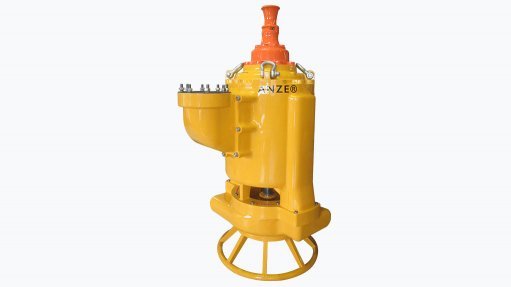
Goodwin Submersible Pumps Africa is sole distributors for Goodwin electrically driven, submersible, abrasion resistance slurry pumps.
VISIT SHOWROOM



Press Office
Announcements
What's On
Subscribe to improve your user experience...
Option 1 (equivalent of R125 a month):
Receive a weekly copy of Creamer Media's Engineering News & Mining Weekly magazine
(print copy for those in South Africa and e-magazine for those outside of South Africa)
Receive daily email newsletters
Access to full search results
Access archive of magazine back copies
Access to Projects in Progress
Access to ONE Research Report of your choice in PDF format
Option 2 (equivalent of R375 a month):
All benefits from Option 1
PLUS
Access to Creamer Media's Research Channel Africa for ALL Research Reports, in PDF format, on various industrial and mining sectors
including Electricity; Water; Energy Transition; Hydrogen; Roads, Rail and Ports; Coal; Gold; Platinum; Battery Metals; etc.
Already a subscriber?
Forgotten your password?
Receive weekly copy of Creamer Media's Engineering News & Mining Weekly magazine (print copy for those in South Africa and e-magazine for those outside of South Africa)
➕
Recieve daily email newsletters
➕
Access to full search results
➕
Access archive of magazine back copies
➕
Access to Projects in Progress
➕
Access to ONE Research Report of your choice in PDF format
RESEARCH CHANNEL AFRICA
R4500 (equivalent of R375 a month)
SUBSCRIBEAll benefits from Option 1
➕
Access to Creamer Media's Research Channel Africa for ALL Research Reports on various industrial and mining sectors, in PDF format, including on:
Electricity
➕
Water
➕
Energy Transition
➕
Hydrogen
➕
Roads, Rail and Ports
➕
Coal
➕
Gold
➕
Platinum
➕
Battery Metals
➕
etc.
Receive all benefits from Option 1 or Option 2 delivered to numerous people at your company
➕
Multiple User names and Passwords for simultaneous log-ins
➕
Intranet integration access to all in your organisation