SA’s risk profile is undergoing a notable shift from operational to political


This article has been supplied and will be available for a limited time only on this website.
While energy and currency pressures ease, trade fragmentation, cyber risk and freight volatility intensify procurement concerns, says CIPS Southern Africa
Although short-term supply chain anxiety has reached its highest level ever recorded globally, South Africa’s risk profile is undergoing a notable shift from operational to political.
Local organisations are feeling the pressure as geopolitical uncertainty, freight volatility and supplier fragility converge, a fact illustrated by findings contained in the latest Chartered Institute for Procurement & Supply (CIPS) Global State of Procurement & Supply Pulse Survey.
The survey found that average short-term concern over supply chains rose to 4.59 out of 7 in Q4 2025.
At the same time, some of South Africa’s traditional pressure points have eased.
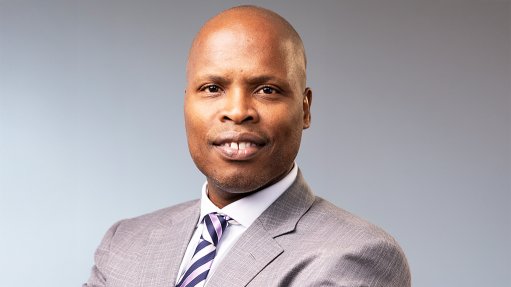
“Energy supply has stabilised and currency volatility has moderated, which helps with planning,” notes Paul Vos, Regional Managing Director of CIPS Southern Africa.
However, Vos points out that those gains are being offset by escalating geopolitical risk, trade uncertainty and, importantly, freight instability.
The latest Ctrack Transport and Freight Index, published quarterly to provide a clear view of key trends and performance metrics across the country’s logistics and freight landscape, shows that road freight payload declined by 7.7% in 2024 and further by 0.4% in the first 10 months of 2025
The road freight sector accounts for roughly 85% of all freight payload.
Vos also highlights the lack of clarity around the country’s trade relationships, particularly with the US.
Vos says when heightened diplomatic tensions, instability in the Middle East and global trade fragmentation are factored in, procurement anxiety becomes “less about execution and more about exposure”.
The Pulse Survey supports this view, with geopolitical risk still ranked as the single biggest supply chain threat globally, despite easing slightly from Q3 levels. Cybercrime and insecurity also entered the top tier of risks for the first time, reflecting the growing vulnerability of digitally interconnected supply chains.
While the rand’s recent stability has provided some relief, local procurement teams are experiencing intense pressure elsewhere. Vos notes that pricing uncertainty is being driven far more by freight volatility and supplier risk premiums than by exchange rates. “Shipping route disruptions, longer lead times and supplier fragility are making cost forecasting extremely difficult.”
The survey shows logistics and shipping as the category most likely to experience price increases above 10%, a trend already evident in sharp freight rate swings of 20-30% on major global routes. For South African firms, the impact is amplified by longer transit times and increased working capital requirements as cargo is rerouted via European hubs.
Despite record short-term concern, long-term anxiety eased slightly in Q4, falling to 4.8 out of 7, the lowest level recorded in 2025. Vos says this speaks to organisations becoming better at planning for disruption.
“We’re seeing greater use of analytics, scenario planning and long-term supplier partnerships. But this is cautious confidence. Structural risks such as infrastructure constraints, political unpredictability and global trade realignments haven’t gone away.”
The Pulse Survey also shows supplier diversification at a joint all-time high, reflecting a global push to build resilience. In South Africa, however, diversification is easier in theory than in practice.
“Our manufacturing base has eroded, infrastructure inefficiencies persist, and diversification comes with real cost. The most realistic approach is a hybrid model: regional partners, selective local supplier development, and differentiated global sourcing.”
Cybercrime’s emergence among the top supply chain risks has particular relevance locally, Vos adds.
“Procurement systems in South Africa remain fragmented, with uneven cybersecurity maturity across suppliers, logistics providers and public infrastructure. A single breach can cascade across ports, banks and freight systems. Cyber risk is no longer an IT issue but a supply continuity issue.”
CIPS expects procurement-driven cost pressures to continue feeding through into the economy this year, though not at runaway levels. Consumers are likely to experience sticky but controlled inflation, with volatility most visible in food, household goods and electronics, driven by logistics costs and geopolitical shocks rather than currency weakness.
A key moderating factor will be the South African Reserve Bank’s intention to lower the inflation target band, which may help anchor expectations and limit unchecked price pass-through.
The Pulse data underscores a fundamental shift in what is expected of procurement leaders.
“Disruption is no longer exceptional. It’s the baseline. Procurement leadership must move beyond cost control toward strategic integration, digital intelligence and resilience-by-design,” Vos says.
“Those organisations that institutionalise readiness rather than react to shocks will be the ones that remain competitive.”
Article Enquiry
Email Article
Save Article
Feedback
To advertise email advertising@creamermedia.co.za or click here

Projects
Latest Multimedia

Latest News


Showroom

Rooted in the hearts of South Africans, combining technology and a quest for perfection to bring you a battery of peerless standing. Willard...
VISIT SHOWROOM
Rentech provides renewable energy products and services to the local and selected African markets. Supplying inverters, lithium and lead-acid...
VISIT SHOWROOM

Announcements
What's On
Subscribe to improve your user experience...
Option 1 (equivalent of R125 a month):
Receive a weekly copy of Creamer Media's Engineering News & Mining Weekly magazine
(print copy for those in South Africa and e-magazine for those outside of South Africa)
Receive daily email newsletters
Access to full search results
Access archive of magazine back copies
Access to Projects in Progress
Access to ONE Research Report of your choice in PDF format
Option 2 (equivalent of R375 a month):
All benefits from Option 1
PLUS
Access to Creamer Media's Research Channel Africa for ALL Research Reports, in PDF format, on various industrial and mining sectors
including Electricity; Water; Energy Transition; Hydrogen; Roads, Rail and Ports; Coal; Gold; Platinum; Battery Metals; etc.
Already a subscriber?
Forgotten your password?
Receive weekly copy of Creamer Media's Engineering News & Mining Weekly magazine (print copy for those in South Africa and e-magazine for those outside of South Africa)
➕
Recieve daily email newsletters
➕
Access to full search results
➕
Access archive of magazine back copies
➕
Access to Projects in Progress
➕
Access to ONE Research Report of your choice in PDF format
RESEARCH CHANNEL AFRICA
R4500 (equivalent of R375 a month)
SUBSCRIBEAll benefits from Option 1
➕
Access to Creamer Media's Research Channel Africa for ALL Research Reports on various industrial and mining sectors, in PDF format, including on:
Electricity
➕
Water
➕
Energy Transition
➕
Hydrogen
➕
Roads, Rail and Ports
➕
Coal
➕
Gold
➕
Platinum
➕
Battery Metals
➕
etc.
Receive all benefits from Option 1 or Option 2 delivered to numerous people at your company
➕
Multiple User names and Passwords for simultaneous log-ins
➕
Intranet integration access to all in your organisation